

Audio By Carbonatix
The Bank of Ghana (BoG) has reaffirmed its commitment to fostering innovation through a regulatory framework that promotes growth while protecting consumers, stressing that regulation should enable innovation rather than hinder it.
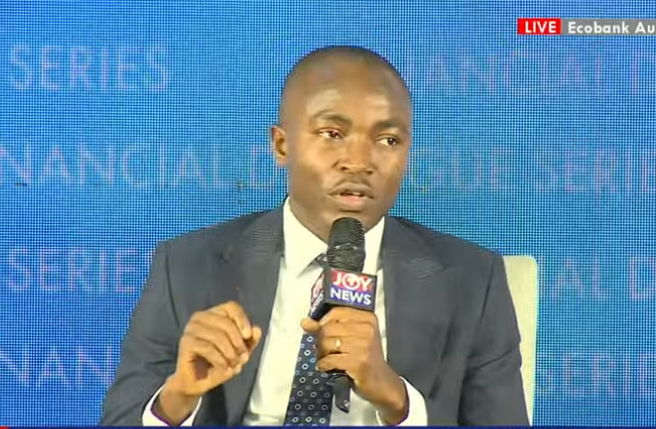
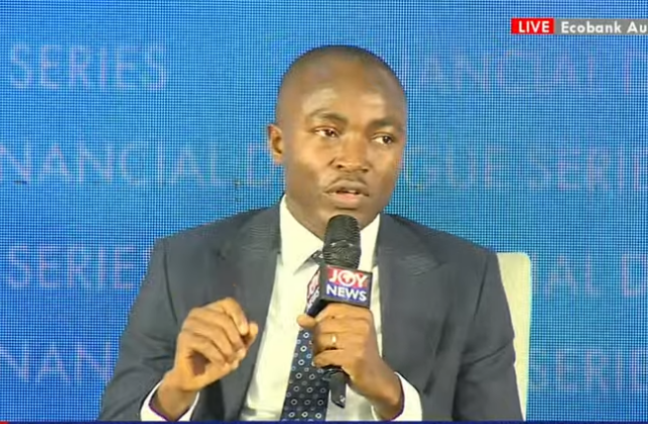
Speaking at the Ecobank–JoyNews Business Financial Dialogue held at the Ecobank Auditorium on Tuesday, July 28, Head of the DEMI & PSP Office at the FinTech & Innovation Department of the Bank of Ghana, Hayford Kumah, said the central bank is deliberately pursuing a balanced and proportionate regulatory approach to encourage innovation while maintaining the safety and stability of the financial system.
"Our regulatory framework is based on what we call a balanced and proportionate risk framework," he said. "We are trying to bring on board as much innovation as possible but also ensuring that this is safe and sound."
According to Mr. Kumah, innovation and regulation should complement each other rather than exist in conflict.
"Innovation and regulation should not be in tension. Rather, regulation should help safeguard innovation in a manner that protects the informal sector worker, the less educated person, and everyone using digital financial services," he noted.
He explained that while Ghana has made significant progress in expanding access to financial services, the country must now focus on increasing the meaningful use of those services.
Citing the Ministry of Finance's National Financial Inclusion Development Strategy, Mr. Kumah said Ghana has achieved a financial inclusion rate of about 96 percent, while the World Bank estimates it at approximately 81.4 percent due to differences in methodology.
"By and large, in terms of access, we have done well. The challenge now is usage," he said.
He observed that many mobile money users continue to limit their transactions to cash deposits and withdrawals, missing opportunities to benefit from a wider range of financial products.
"If we can keep the funds flowing within the ecosystem so that people are accessing insurance, savings, and pensions, especially those in the informal sector, it will deepen financial inclusion and improve financial resilience," he said.
Mr. Kumah also acknowledged that concerns over fraud have discouraged some people from using mobile money and other digital financial services, underscoring the need for stronger consumer protection and financial literacy initiatives.
"We need to plug these gaps, and that has been the work we've been focusing on at the central bank," he added.
Latest Stories
-
When the gold engine stutters: What Ghana’s Cedi and reserves are telling us about the new economic architecture
1 minute -
Two reportedly die after being trapped in mining pit at Juaboso
11 minutes -
Petrosol cleans up Wa Municipal Hospital, to donate medical equipment
12 minutes -
KiDi brings the hits to London in sold-out UK headline concert
40 minutes -
The last goodbye of Ghanaian shot dead in the US
58 minutes -
MCC opens door to Ghana again as MiDA revives development partnership
1 hour -
CSIR moves to turn scientific research into jobs, national growth
1 hour -
More patrons troop in as 3rd Republic Bank-JoyNews Habitat Fair clinic enters final day stretch
1 hour -
German, Russian foreign ministers hold rare talks amid rising tensions
1 hour -
Gov’t to develop policy for Ghanaian Sign Language in education
2 hours -
Accra Academy defend ODADEƐ ’90 5-a-side title
2 hours -
Ghana risks EU gas market access over methane emissions – Expert warns
2 hours -
Salt Pond’s $200m warning: Why Ghana cannot afford to exclude Fisheries Commission from future decommissioning
2 hours -
Venezuela frees 39 political prisoners after post-Maduro talks
3 hours -
GoldBod financing model faces test as cedi, reserves come under pressure – Gideon Boako
3 hours