

Audio By Carbonatix
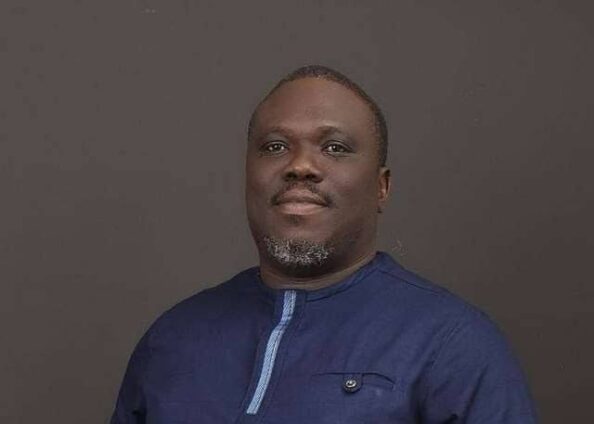
Associate Professor of Development Economics at the University of Ghana, Prof Ebo Turkson, has rejected claims that the Ghana Gold Board (GoldBod) made a US$1.7 billion loss, saying the figure cited by the International Monetary Fund (IMF) relates to losses incurred by the Bank of Ghana through its Domestic Gold Purchase Programme.
The IMF, in its 2026 Article IV Consultation report on Ghana, said the significant scaling-up of the Domestic Gold Purchase Programme in 2025 resulted in losses of more than US$1.7 billion, equivalent to about 1.5% of Ghana's GDP.
Speaking on JoyNews' Newsfile on Saturday, August 15, Prof Turkson said the figure should not be attributed to GoldBod as an entity.
“No, GoldBod has not made 1.7 billion losses. It is a cost that has come to the central bank through the gold purchase programme.”
He said the distinction was important because GoldBod itself was not operating at a loss.
“In terms of GoldBod appreciation itself, if I read from what their financial statements and others are showing clearly, GoldBod as an entity itself is not running a loss.”
Prof Turkson explained that the Domestic Gold Purchase Programme was an economic policy intervention designed to help Ghana build its reserve buffers with gold while reducing incentives for the smuggling of artisanal and small-scale mining gold.
He said GoldBod purchases gold at prices close to international market rates, while the Bank of Ghana records the value of the gold using its own exchange rate for accounting purposes.
According to him, the difference between the two rates creates a translation cost that is borne by the central bank.
“So the way between the two rates, by design, will mean that it will come at a cost to the central bank. And so that is one of the translational costs that has been on the central bank's book.”
He therefore argued that the IMF's reported figure should be understood as the cost of the gold purchase programme to the Bank of Ghana, rather than a loss incurred by GoldBod.
Prof Turkson said the debate should not focus only on the cost of the programme but also on the economic benefits he believes it has delivered.
He said the programme helped Ghana accumulate significant gold reserves and supported foreign exchange market interventions that contributed to the appreciation of the cedi in 2025.
According to him, GoldBod added almost 40 tonnes of gold, valued at nearly US$4 billion, to Ghana's reserves in its first year.
He said the stronger cedi subsequently helped reduce Ghana's debt-to-GDP ratio from about 68 per cent to 45 per cent and generated savings of nearly GH¢7 billion on external debt servicing.
“That came with a huge savings to Ghana, almost 7 billion cedis to Ghana, huge savings from that.”
Prof Turkson also linked the improved exchange rate to the decline in inflation, saying the appreciation of the cedi helped bring inflation down to 9.5 per cent at the end of 2025.
He said these benefits should form part of the conversation whenever the cost of the Domestic Gold Purchase Programme is discussed.
“For me, as much as we talk about the losses from the gold purchase programme, I choose to call it that way and not GoldBod losses because the gold purchase programme is what GoldBod is supporting the central bank.”
He said Ghana must therefore look beyond the reported loss and assess whether the policy intervention has helped strengthen the country's reserves and economic resilience.
“I think that we need to look beyond this amount and look at the benefits of the gold purchase programme and also to look at the way forward in Ghana, trying to build reserves to sustain the stability that we need for the resilience that we need for this economy to transform quickly.”
Latest Stories
-
FoSCel foundation calls for end to stigma and stereotyping against people living with sickle cell disease
4 minutes -
Auditor-General to track audit recommendations as GH¢280.5m in surcharges remains unpaid
4 minutes -
Walewale MP withdraws ‘rude’ comment on Bagbin’s Parliament recall, apologises
21 minutes -
FoSCel founder urges curriculum reform to strengthen sickle cell education in Ghana
28 minutes -
United States launches America.Gov for public services 5 years after Dr. Bawumia launched Ghana’s version Ghana.Gov
39 minutes -
Cocaine probe: Majority used super majority with Speaker’s support to weaken Parliament – Afenyo-Markin
43 minutes -
UGMC Research Director urges stronger clinical trials to bridge gap between research and patient care
53 minutes -
IEAG calls on FDA to resolve delays in import code issuance
53 minutes -
UGMC research must translate laboratory findings into healthcare solutions – Prof Evelyn Yayra Bonney
1 hour -
Court remands 3 over alleged gold concentrate robbery
1 hour -
Two bodies stuck at St. Anne’s mortuary after refrigeration engines break down
2 hours -
‘We will not let this matter rest’ – Afenyo-Markin after Bagbin rejects narcotics probe
2 hours -
AFCON 2027Q: Ghana suffer 4-2 defeat to Gambia
2 hours -
Your strike could disrupt academic calendar – GES urges teachers to return
2 hours -
Speaker’s ruling has failed integrity test required of Parliament to discharge its duties – Afenyo-Markin
2 hours