


Audio By Carbonatix
A health walk through some of Accra’s busiest streets has found that people can be exposed to high levels of air pollution even while walking through the city.
The Global Shapers Accra Hub, in partnership with the UrbanBetter Accra Hub, organized the 7-kilometre walk on Saturday, August 15, 2026, as part of the Roots & Routes: Health Walk and Urban Canopy Initiative.
The walk started and ended at Independence Square and passed through several parts of Accra, including the Parliament, Electoral Commission, Police Headquarters, the UK Embassy, UniMAC-IJ, and the Liberation Road towards the National Theatre.
Participants carried small AirBeam monitors connected to the AirCasting app to measure the quality of the air around them as they walked.
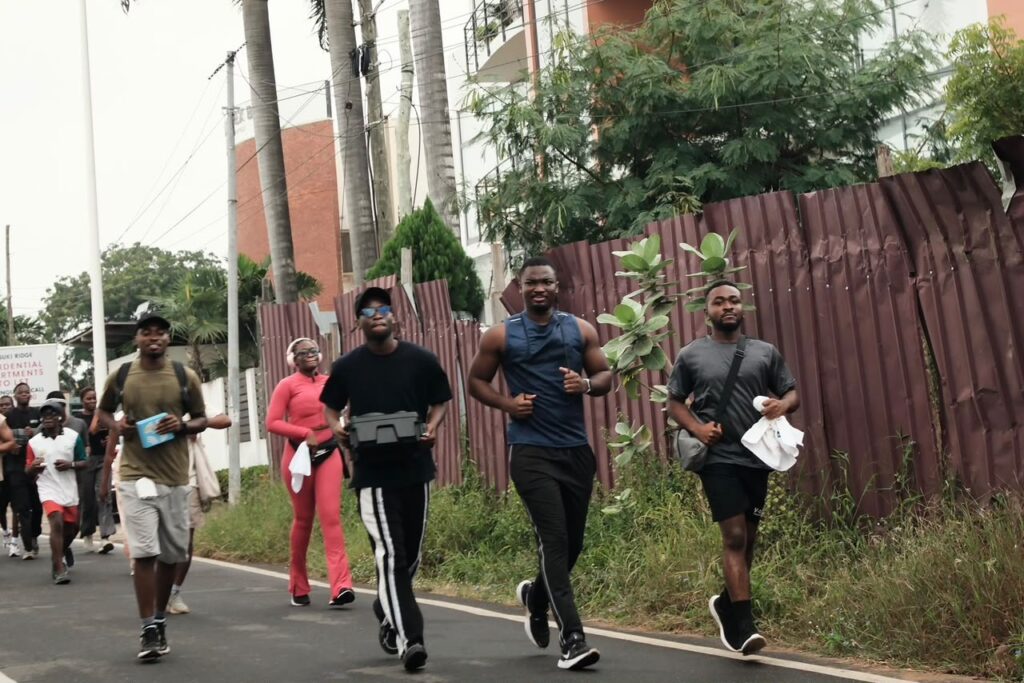
The monitors measured PM2.5, tiny particles in the air that are so small they can enter deep into the lungs and, with repeated exposure, affect human health.
“This walk showed us that air pollution can change significantly within just a few kilometres, making clean air a daily issue that affects how we live, work and move around Accra.” - Godwin Doe, Curator, Global Shaper Accra Hub

During the two-hour walk, the lowest PM2.5 reading was 8 micrograms per cubic meter, while the average reading was 28 micrograms per cubic meter. The World Health Organization recommends that people should not be exposed to more than an average of 15 micrograms per cubic meter over 24 hours.
While the readings from the walk represent short-term snapshots rather than a 24-hour average, they provide an indication of the pollution participants encountered at different points along the route.
On the Liberation Road, pollution levels rose sharply, particularly when heavily polluting vehicles passed close to the group. At some points, the monitor recorded more than 100 micrograms per cubic meter.
Healthy cities are not only about the infrastructure we build, but also about the environments people experience every day. These kinds of community-led activities can help make conversations around healthier and more liveable cities more grounded in people’s everyday experiences - Lord Offei-Darko, Accra Hub Coordinator, UrbanBetter
The highest reading, 107 micrograms per cubic meter, was recorded near the Niger Embassy, where participants observed open burning.
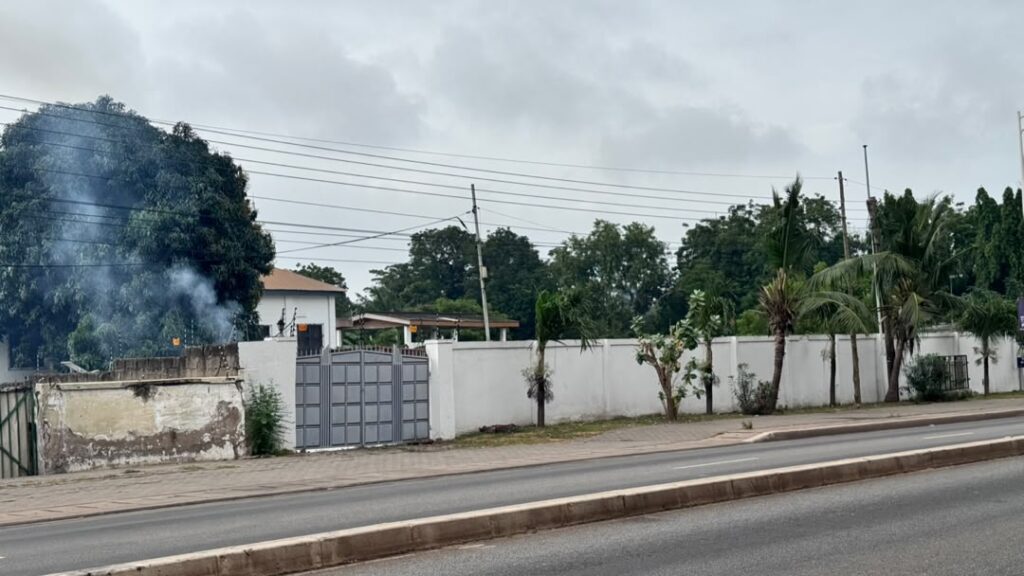
Open burning of waste is prohibited under Ghana’s Environmental Protection Act, 2025 (Act 1124).
Some quieter roads recorded lower levels, but the exercise showed that pollution can change quickly depending on where people are and what is happening around them.
"The air around us is shaping our health every day. If we want to live long, healthy lives, we must take responsibility to call out and clean up what's polluting it - Dr. Jonathan Akuaku, Project Lead, Roots and Routes under the World Economic Forum Equal Air Collaborative
For the organizers, the exercise was not just about walking. It was also about allowing ordinary people to collect information about the air they breathe and understand how pollution affects different parts of the city.
By using portable sensors along the route, we were able to capture real-time data on the air people were breathing while walking and being physically active. The data will help us better understand these exposures and strengthen the case for creating urban spaces where people can move safely, breathe cleaner air, and enjoy healthier environments - Adotei Jacob Nii Akwei, Head Run Leader, UrbanBetter Accra Hub
The data collected will be used to support conversations about cleaner and safer ways of moving around Accra and creating healthier urban spaces.
Latest Stories
-
Rescuers dig through Ukraine mall wreckage as Zelensky condemns ‘despicable’ Russian strike
19 minutes -
Galamsey: Akufo-Addo’s gov’t tried and failed, NDC gov’t is not trying – Kofi Bentil
21 minutes -
NSMQ 2026: Adiembra SHS outwits T.I. Amass in riddles to secure automatic one-eighth spot
39 minutes -
Galamsey fight has failed; water quality shows we’re retrogressing – Senyo Hosi
42 minutes -
NSMQ 2026: ‘Wey Gey Hey’ shrugs off SIMMS SHS, Nkwatia Presby to secure one-eighth spot
59 minutes -
Sammy Gyamfi accepts Vanderpuye’s apology, urges NDC unity
59 minutes -
Man assaults over 90-year-old aunt over witchcraft allegations in Navrongo
59 minutes -
Toobu says Big Push road works on N12 will curb robberies
1 hour -
Galamsey has become a livelihood, an endemic problem – Senyo Hosi
1 hour -
NSMQ 2026: Wesley Grammar escapes Kofi Agyei’s grasp in nail-biting battle to book one-eighth spot
1 hour -
Sky Train case: Solomon Asamoah challenges no-case ruling at Supreme Court
1 hour -
Power outages are fixable; leadership must prioritise solutions – Kofi Bentil
1 hour -
I dare Afenyo-Markin to face me – Sammy Gyamfi points to ‘underlying issues’ in GoldBod claims
1 hour -
Health walk finds pockets of dirty air on some Accra streets
2 hours -
Ghana must rethink spending priorities amid recurring blackouts – Kofi Bentil
2 hours