

Audio By Carbonatix
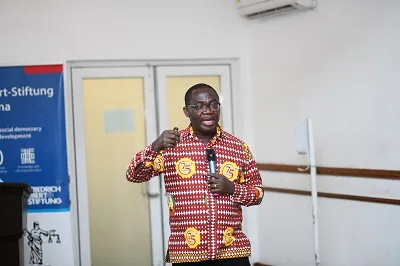
Deputy General Secretary of Trades Union Congress (TUC), Dr Kwabena Nyarko Otoo has cautioned that Ghana’s declining inflation rate should not be interpreted to mean that the prices of goods and services are falling.
Speaking on Joy FM’s Super Morning Show on August 25, he explained that although inflation has dropped significantly over the past one-and-a-half years, consumers are still paying much more for essential goods and services than they did previously.
According to him, the fall in inflation simply means that the rate at which prices are increasing has slowed, rather than prices actually declining.
“Falling inflation does not mean that prices are not increasing,” Dr Otoo explained.
He said the distinction is important because many Ghanaians may expect lower inflation to translate directly into cheaper goods and services.
“The rate of growth of price has updated a little bit. But you see, the original price is still there,” he said.
Dr Otoo pointed out that prices have already reached significantly higher levels, meaning that even when inflation slows, consumers continue to bear the impact of previous price increases.
He used the housing market to illustrate the situation, noting that the cost of renting a two-bedroom property has not returned to the levels seen before the sharp increases in the cost of living.
“The original two-bedroom rental price hasn’t gone down. In fact, it’s increasing, as we show, at a slower rate,” he added.
He explained that this creates a difficult situation for households because incomes have not necessarily increased at the same pace as the cost of goods and services.
According to Dr Otoo, the gap between income growth and price levels continues to put pressure on household budgets, despite the improvement in the inflation rate.
He further noted that the current situation provides some relief because prices are no longer increasing as rapidly as they were previously.
However, he stressed that this should not be confused with an actual reduction in the prices consumers are paying.
Dr Otoo comments highlight the difference between falling inflation and falling prices. While lower inflation indicates that the pace of price increases is slowing, it does not automatically reverse the price increases that have already occurred.
He therefore urged stakeholders to look beyond the headline inflation figure and consider the actual prices consumers face in their daily lives, particularly when assessing the country’s cost-of-living situation.
Latest Stories
-
Self-reliance driving Rwanda’s governance and service delivery — Paul Kagame
2 minutes -
NSMQ 2026: One-Eighth stage beckons as 81 schools chase national glory
5 minutes -
UCC launches Africa Ocean Institute to tackle growing coastal challenges
6 minutes -
George Dela Coffie elected Ghana YMCA National President
11 minutes -
Prudential Bank’s CIO calls for AI literacy and human‑centred skills at Ghana AI Summit
13 minutes -
Ghanaian politicians, wake up: The old communication playbook is obsolete
14 minutes -
Invincible Lives: 13-year-old Emma dreams of school but poverty forces him to beg for survival
16 minutes -
I’m not on NDC gov’t payroll; my work is sacrifice for nation-building – KSM
32 minutes -
IMF programme ends, Policy Partnership begins: Ghana’s next economic chapter
40 minutes -
EV boom: Ghana moves to standardise charging infrastructure to protect power grid
42 minutes -
See 3D photos of multi-purpose car park, hotels project at Accra International Airport
44 minutes -
I’ll work tirelessly with Bawumia to return NPP to power in 2028 – Paul Afoko
45 minutes -
Dismissal of our plea for adjournment strange – Adu Boahene’s cousel
46 minutes -
Vigilantism threatens democracy, not individual political parties – Gbevlo-Lartey
48 minutes -
Ghana’s online passport application platform restored after technical disruption
56 minutes