

Audio By Carbonatix
The Public Utilities Regulatory Commission (PURC) is set to bring road contractors and utility service providers together to address the growing damage to water and other utility infrastructure during road construction.
The move follows concerns over major pipelines and other facilities being interfered with in parts of the country as government intensifies road construction under the Big Push programme.
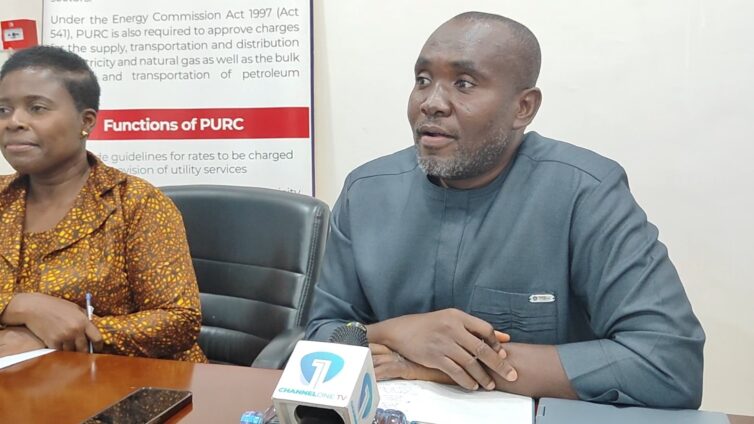
Speaking during a media engagement in the Western Region, PURC Executive Secretary, Dr Shafic Suleman, said the Commission will engage the Ministry of Roads and Highways, contractors and utility providers to find a more proactive approach to protecting critical infrastructure.
He said utility providers will be required to make maps showing major transmission and distribution lines and pipelines available to contractors to guide construction activities.
“We’ll require the utility service providers to make available to the contractors all the maps that indicate all major pipelines, including transmission and distribution lines, to the contractors, so that they will use it as a guide in their construction activities.”
Dr Suleman said contractors who damage critical utility infrastructure despite having access to the relevant information could be made to bear the cost of restoring services.
He said PURC would provide a platform for affected utility companies to restore services while ensuring that the contractor responsible pays for the repairs.
The PURC Executive Secretary also urged consumers whose water or electricity supply is disrupted by construction activities to report the matter to the Commission.
He said the Commission has already received and resolved some complaints and has communicated with the Ministry of Roads and Highways on the need for contractors to protect utility installations.
The PURC delegation also visited the Daboase Water Treatment Plant, where a €70-million expansion project is nearing completion.
The new facility is expected to significantly increase water production for the Sekondi-Takoradi area and surrounding communities.
Project documents indicate that the new treatment plant has a design capacity of 100,000 cubic metres of water per day, equivalent to about 22 million gallons daily.
Dr Suleman said the completion of the facility could significantly improve water supply in Takoradi and Sekondi, although challenges with transmission pipelines remain.
He said Ghana Water has given assurances that the pipeline linking the Daboase plant to the twin cities will also be expanded as part of the second phase of the project.
The second phase is expected to include an additional treatment plant and pipeline expansion.
However, the PURC Executive Secretary warned that improved treatment capacity alone will not resolve the region’s water challenges if illegal mining continues to pollute raw water sources.
He said galamsey activities along the water sources continue to increase the cost of treating water and pose a threat to sustainable water supply.
PURC has previously identified siltation from construction and galamsey activities among the challenges affecting water supply in the Western Region. (PURC)
For consumers, Dr Suleman said the Commission would continue to take up complaints relating to poor quality of service and ensure that utility providers and contractors take steps to restore affected services.
Latest Stories
-
John Boadu files nomination for NPP National Chairman race
1 minute -
Ghana’s roads nearing ‘unsafe for human use’ status – Ghana Institute of Engineers
1 minute -
Black Stars defender Kojo Oppong Peprah set to join Fenerbahce
2 minutes -
95% of timber dealers in Kumasi operate without licences – Timber Monitoring Team
3 minutes -
Israel is fighting Hamas, not Palestinians – Israeli Ambassador rejects Mahama’s ‘genocide’ claim
5 minutes -
Asunafo North NDC denies MCE described Ahafo Region creation as ‘useless’
6 minutes -
Fire destroys homes along Aboabo Pelele stream in Asokore Mampong
7 minutes -
Cocoa Board law lacks clear strategy to attract young farmers and technology – Cocoa Farmers Association
8 minutes -
Stanine grading system is appropriate for BECE placement but needs review – IFEST
9 minutes -
Cocoa Board Bill consultation was inadequate – Ghana National Cocoa Farmers Association
10 minutes -
NSMQ 2026: Aburi Girls stage stunning late comeback against St. Joseph to retain seeded status
10 minutes -
COCOBOD model is outdated and limiting Ghana’s cocoa economy – Cocoa Farmers Association
11 minutes -
About 80% of Ghana’s road crash deaths are men – GhIE
13 minutes -
Miners must reclaim degraded lands after operations – Mahama Ayariga
16 minutes -
I will not meddle in chieftaincy matters if approved – Mahama Ayariga
25 minutes