

Audio By Carbonatix
…The Inaugural Executive Dialogue brought together government, business, academia and development partners together to move from diagnosis to implementation
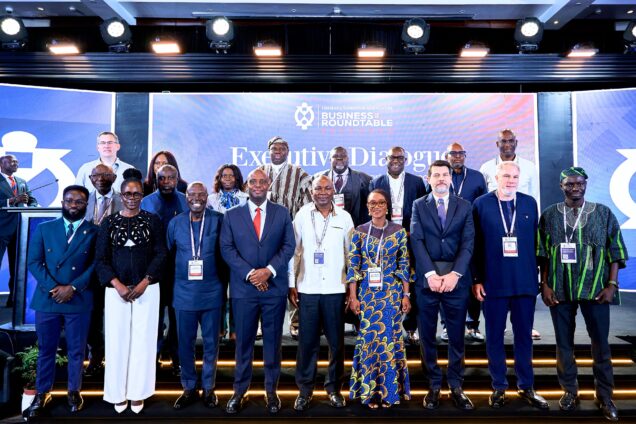
The inaugural Business Roundtable Extended 2026 Executive Dialogue has called for Ghana to use its current period of macroeconomic stabilisation to build a more productive, diversified, competitive and resilient economy. Held at the Mövenpick Ambassador Hotel in Accra under the theme ‘After the Corrections: Building Resilient Economic Pillars for the Next Decade’, the executive forum was convened by Ishmael Yamson & Associates through the Ishmael & Yamson Foundation. The event brought together senior public officials, private-sector leaders, development partners, academics, members of the media and other stakeholders for a focused conversation on how Ghana can sustain its recent economic gains and translate them into broad-based prosperity.
BRT Extended builds on twelve years of the annual Ishmael Yamson & Associates Business Roundtable. Unlike the larger Roundtable, the extended format is designed as a smaller, more focused forum in which decision-makers can test ideas, confront difficult questions and leave with practical commitments rather than general consensus.
From diagnosis to follow-through
Opening the event, Mr. Ishmael Yamson Jnr., President and Chief Executive Officer of Ishmael Yamson & Associates, argued that Ghana’s most persistent challenge is not a lack of understanding of its economic problems, but a failure to sustain implementation. “Ghana does not have a diagnosis problem. We know precisely what is wrong with this economy, and we have for thirty years,” he said. He explained that the smaller format was intentional: “A large room is good for consensus. A small room is better for commitment.” He also challenged the private sector to accept its share of responsibility for recurring economic crises, including the pursuit of exemptions, short-term capital allocation and advantage through proximity to power rather than productivity.
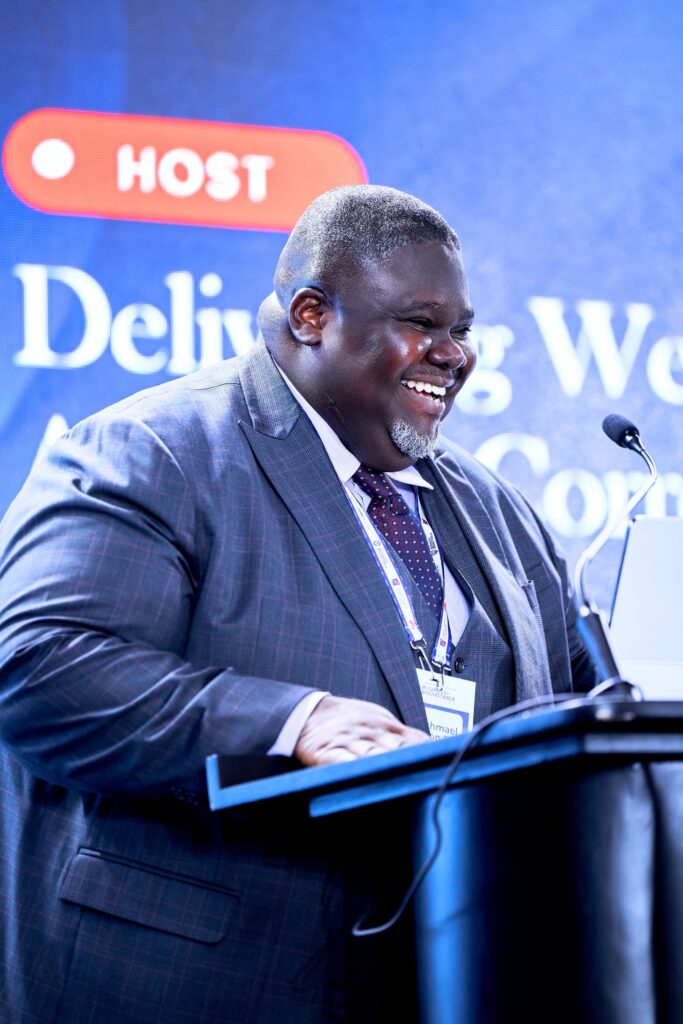
Mr. Yamson Jnr. urged participants to listen beyond the parts of the discussion with which they already agreed, ask difficult rather than flattering questions, and leave the event with at least one concrete commitment.
Government presents a five-pillar framework
Representing the Minister for Finance, Hon. Thomas Nyarko Ampem, Deputy Minister for Finance, acknowledged Ghana’s recent macroeconomic improvements and presented the government’s framework for moving from correction to construction. The Deputy Minister said the country must not become complacent because of favourable indicators. “Macroeconomic stability matters, but it is not enough,” he said, stressing that stability must reach factories, farms, markets, small businesses and households through value addition, productivity enhancement and job creation. He outlined five pillars for the decade ahead: stronger economic buffers; a more productive economy; a private sector capable of investing; institutions stronger than the political cycle; and growth that Ghanaians can feel.
The first pillar focuses on preparing Ghana for future shocks through stronger reserves, sustainable debt, fiscal buffers, energy security and food security. The second calls for a change in what Ghana produces, how much it produces and how productively it produces, with stronger connections between agriculture and agro-processing, mining and domestic value chains, energy and industry, technology and enterprise, and skills and jobs.
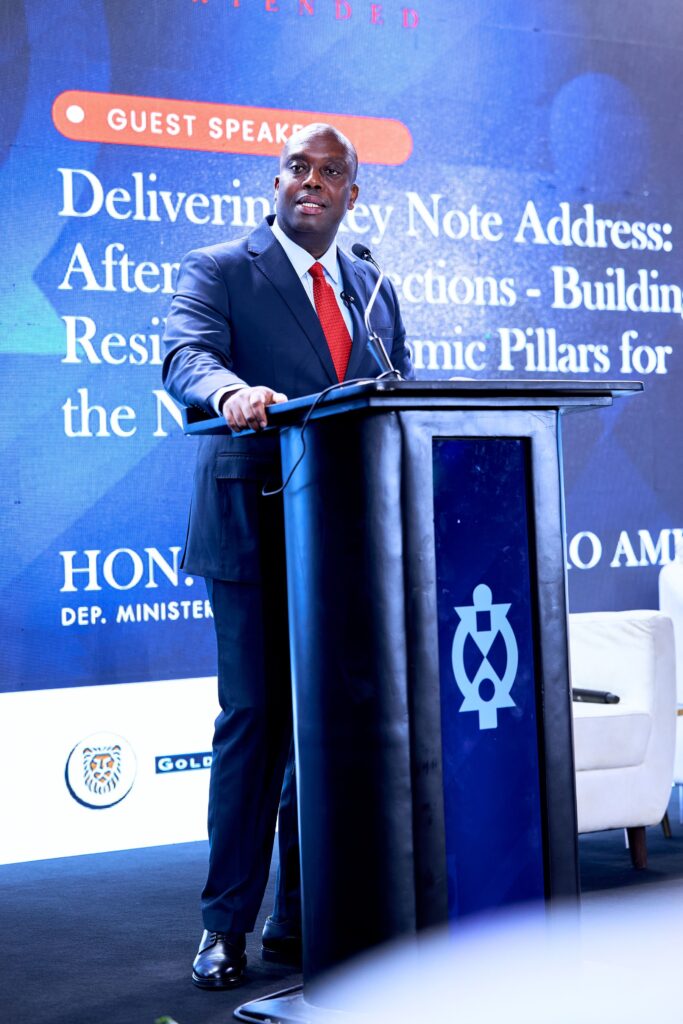
The third pillar centres on enabling private-sector investment. The Deputy Minister emphasised that lower financing costs must translate into productive credit for production, innovation, exports and long-term investment. “Ghanaian businesses must not just be protected from competition. They must be equipped to win competition,” he said.
The fourth pillar is institutional. “We cannot build a ten-year economy with four-year thinking,” he stated, calling for fiscal rules, commitment controls, procurement rules and debt limits to be enforced across political cycles. The fifth pillar places a human face on resilience by linking economic policy to infrastructure, enterprise development, skills, apprenticeships, digital capabilities, exports and employment.
The Deputy Minister framed the government’s expectations of the private sector as a new compact: government must provide stability, predictability, infrastructure, efficient regulation and fiscal discipline, while business must respond with investment, innovation, productivity, exports and jobs.
The Executive Dialogue Session from – Accountability and continuity under scrutiny
The moderated panel, chaired by Jerry Adjorlolo, featured Dr. Adrian Alter, IMF Resident Representative and Head of Office in Ghana; Hon. Abena Osei-Asare, Member of Parliament for Atiwa East and Chairperson of the Public Accounts Committee; and Prof. Godfred Alufar Bokpin, Economist and Professor of Finance at the University of Ghana Business School.
The discussion tested whether the government’s proposed pillars could become durable structural reforms or remain dependent on the priorities of individual ministers and political administrations.
Prof. Godfred Alufar Bokpin: Stability must become a productive, knowledge-led economy
Prof. Bokpin acknowledged Ghana’s macroeconomic progress but warned that headline indicators alone do not fully describe the condition of households and businesses. “GDP is not the economy. GDP is a proxy, is a snapshot for the economy,” he said, urging policymakers to focus on the quality and distribution of growth.
He argued that fiscal discipline should not be reduced to spending less. It must mean spending well, achieving value for money and directing resources towards infrastructure, productive capacity and long-term development. He also called for environmental sustainability to be integrated into economic planning, particularly in response to irresponsible mining and the degradation of natural resources.
A recurring theme in his contribution was the need to broaden Ghana’s taxable economy rather than placing ever-higher pressure on a narrow formal tax base. He advocated deeper integration of agriculture into the formal economy, stronger indigenous businesses, research-led development and the deliberate scaling of enterprises from micro firms into larger, trackable Ghanaian companies.
Hon. Abena Osei-Asare: Macroeconomic gains must reach citizens through institutions
Hon. Abena Osei-Asare insisted that macroeconomic stability is not the final objective. It must produce tangible benefits for citizens through employment, stronger livelihoods and a more effective economic environment. She identified weak institutional discipline as a central risk, arguing that the country often lacks the resolve to say no to unbudgeted or politically attractive spending. She also called for a shift from post-mortem accountability, which investigates problems after public resources have been lost, towards preventive accountability that stops infractions before they occur.
Her contribution emphasised the need for continuity beyond electoral cycles, stronger qualifications and standards for public boards, and a public culture in which citizens and institutions hold leaders accountable. She also cautioned against weakening fiscal resilience by reducing targets for short-term political convenience.
Dr. Adrian Alter: Reform continuity will determine whether stability lasts
Dr. Adrian Alter focused on the importance of policy continuity and institutional durability. Successful economic transformation, he argued, requires reforms to endure beyond changes in ministers, governments and political cycles.
He highlighted the importance of maintaining fiscal discipline, managing fiscal risks, improving governance and transparency in state-owned enterprises, strengthening the energy sector and creating the conditions for private-sector-led growth and jobs. He also pointed to the Policy Coordination Instrument as an anchor for sustaining reform after the IMF-supported programme.
Dr. Alter’s central test for the next decade was whether macroeconomic stabilisation can be converted into inclusive and durable growth. That conversion, he noted, will require a sustained partnership between government, business and society rather than reliance on government action alone.
Audience questions broaden the national conversation
The audience engagement reinforced the event’s emphasis on implementation and shared responsibility. Questions addressed the ability of Ghana’s political system to preserve economic reforms across administrations, the tax burden on farmers and agro-processors, the formalisation of the informal sector, board governance, the relationship between foreign and domestic investment, and the need to widen the tax base without simply increasing rates.
Participants also raised the challenge of youth unemployment and asked how policy can create an enabling environment for productive enterprise rather than merely announcing interventions. The discussion repeatedly returned to the need for value-for-money spending, credible budgets, stronger oversight and a business culture that rewards productivity over access.
The debate produced a broad consensus that Ghana must do more than protect businesses from competition. It must build the capabilities, finance, infrastructure, skills and institutions that allow Ghanaian firms to compete successfully in regional and global markets.
Closing Remarks: The country must change its mindset and hold power accountable.
In his closing remarks, Dr. Ishmael Evans Yamson, Chairman of Ishmael Yamson & Associates, thanked the speakers and participants but warned against allowing another high-level conversation to end without implementation. He observed that many of the issues raised at the conference have been discussed repeatedly over several decades.
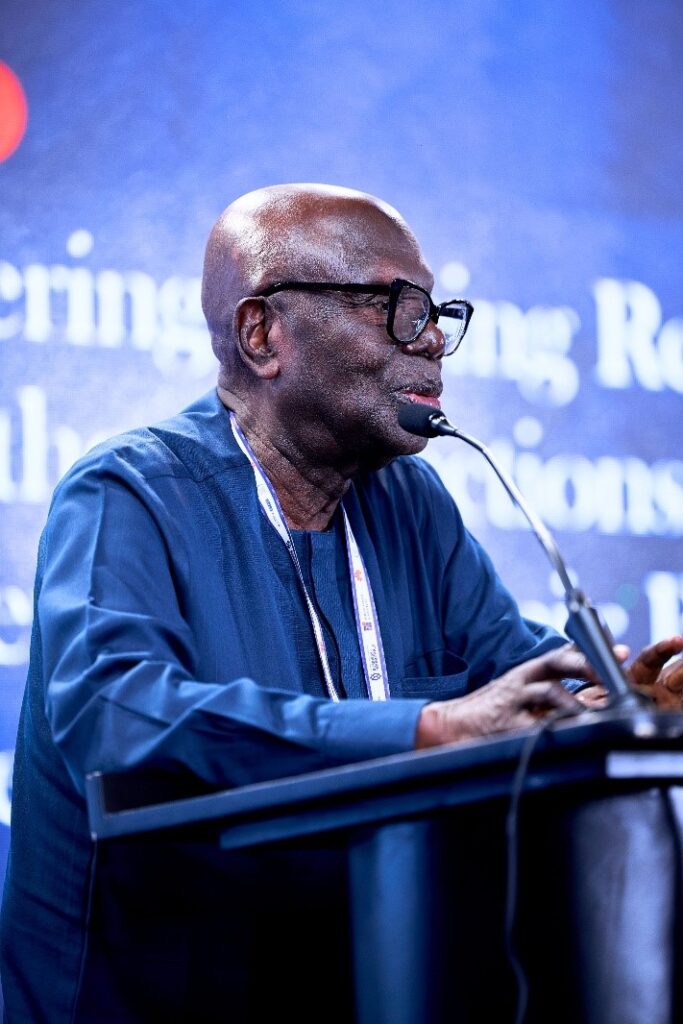
The challenge, he suggested, is therefore rooted not only in policy design but also in national culture, leadership behaviour and the collective willingness to enforce rules. “There’s nothing that has been said today that has not been said before, five years, ten years, fifteen years, twenty years ago,” Dr. Yamson said.
His closing message placed responsibility on citizens as well as political leaders. Political parties, he argued, do not own the country; they hold power on lease from the people. “The people own the country,” he said, calling for stronger accountability, respect for the rule of law and a more active citizen role in determining whether national commitments are fulfilled. The closing reflections also stressed that Ghana must change its mindset as technology reshapes the global economy. Leaders must consider the legacy they are building, confront disorder and environmental destruction, and act with urgency because the country cannot afford to lose more time.
Calls to action from BRT Extended 2026
The conference concluded with a practical agenda for the period ahead:
| Stakeholder | Immediate call to action |
| Government and public institutions | Protect the gains of stabilisation by enforcing fiscal rules, improving budget credibility, strengthening preventive accountability, operationalising oversight institutions and maintaining policy continuity across political cycles. |
| Private sector | Direct more capital towards productive assets, innovation, value addition, exports and job creation; build competitive Ghanaian firms; and replace dependence on proximity to power with productivity and enterprise. |
| Financial institutions and investors | Ensure that improved liquidity and lower financing costs become productive credit for businesses, long-term investment, infrastructure and enterprise expansion. |
| Academia, research institutions and professional bodies | Turn knowledge into usable policy, strengthen evidence-based decision-making, support ethical board governance and help track whether commitments produce measurable results. |
| Citizens, media and civil society | Demand transparency, protect institutional independence, hold political leaders accountable and insist that public power is exercised as a responsibility held on behalf of the people. |
| BRT participants and the wider business community | Take away one specific commitment, document it, act on it and use the BRT network to sustain professional collaboration and accountability beyond the conference room. |
The purpose of BRT Extended is to move national and continental conversations beyond broad diagnosis towards focused dialogue, practical recommendations and measurable follow-through. The event’s central challenge to Ghana is therefore clear: the country has corrected the immediate crisis; it must now build the institutions, businesses and habits that will secure the future.
About BRT Extended
BRT Extended is an executive dialogue series convened by Ishmael Yamson & Associates through the Ishmael & Yamson Foundation. Building on twelve years of the annual Ishmael Yamson & Associates Business Roundtable, the series isolates high-impact national and continental issues for deeper analysis among decision-makers, policymakers, business leaders, development partners, academics and emerging leaders. Its purpose is to move important conversations from broad discussion to focused dialogue, practical insight and actionable recommendations.
The Next BRT Session is scheduled for 5th November 2026 at the Movenpick Ambassador Hotel. It will be held under the Theme: Beyond the Political Cycle: Building Policy Continuity for Africa’s Long-Term Transformation with keynote speaker Dr. Nii Moi Thompson; Chairman of the National Development Planning Commission (NDPC) - Government of Ghana. This second and final session for the year will focus on the critical role of national development plans, institutional stability, and cross-party commitment in ensuring that Africa's strategic priorities outlast individual governments and electoral cycles.
Latest Stories
-
2026 U-20 WWC: Black Princesses face South Korea in must-win game
1 minute -
GH¢3.1bn bond sale strengthens fiscal self-reliance, deepens domestic market
3 minutes -
Black Stars ‘can’t afford to miss another AFCON’ – GFA ahead of qualifiers
4 minutes -
4,574 health facilities enrolled in free primary healthcare programme
8 minutes -
Weija Dam spillage: Residents appeal for controlled discharge to minimise risks
8 minutes -
Limited opportunities driving engineers out of Ghana – IET GH
9 minutes -
TUC rejects World Bank private sector participation plan for ECG and NEDCo
10 minutes -
Glass door breaks as anxious parents seek SHS placement for wards at GNAT Hall
13 minutes -
Policy consistency needed to boost oil and gas sector – Deloitte Tax Partner
13 minutes -
Ghanaians urged to intensify tree planting and forest protection to combat climate change
15 minutes -
NPP backs 4G rural upgrade, urges government to connect unserved communities first
15 minutes -
Sam George launches AI, robotics bootcamp for 100 young Ghanaians
18 minutes -
GIGS hails UN Equal Earth map adoption as correction to 450 years of injustice
19 minutes -
Two denied bail over alleged lynching of young man at Daboya
22 minutes -
NPP demands answers over 46 rural communities still without telephony service
22 minutes