

Audio By Carbonatix
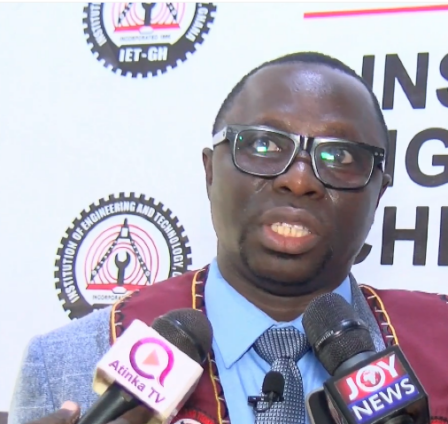
President of the Institution of Engineering and Technology Ghana (IET-GH), Engr. Wonder Salami Davor has raised concerns over the growing number of engineers leaving Ghana due to a lack of opportunities for them to apply their skills and expertise locally.
Ing. Davor said Ghanaian engineers possess the capacity and technical skills required to execute sophisticated projects but are often not given sufficient opportunities to contribute to major projects being undertaken in the country.
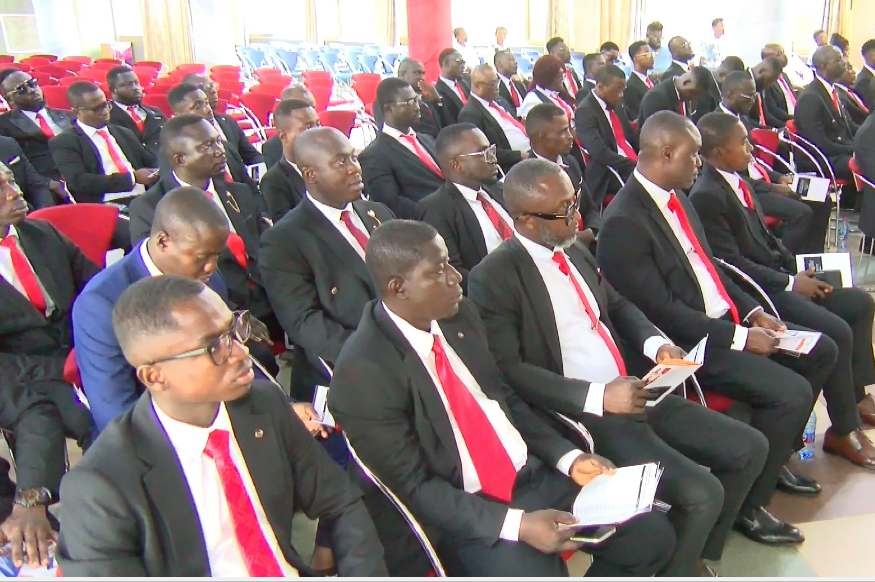
He made the remarks at the induction ceremony of new members into the Institution of Engineering and Technology Ghana, held under the theme "Engineering Ghana’s Future, Innovation, Integrity and Sustainable Development," on September 8.
According to the IET-GH President, foreign professionals who come into Ghana to undertake projects frequently rely on Ghanaian engineers because of their competence and ability to deliver.
He questioned why Ghanaian engineers were not being given greater opportunities to lead and execute projects in their own country, despite having the necessary expertise.
He said the situation was contributing to the departure of trained and certified engineers from Ghana in search of better professional opportunities abroad.
Ing. Davor warned that Ghana risks losing highly skilled professionals after investing significant resources in their training and certification if they are not provided with opportunities to practise and develop their expertise locally.
He said engineers who are trained and certified to work in Ghana could eventually be compelled to leave when suitable opportunities are unavailable.
“If we train our engineers and we certify them and ask them to work in the country and they are not being given opportunity, then they will have to leave the country,” he said.
He added that such departures would mean that the talents, knowledge and capabilities developed in Ghana would ultimately be used outside the country.
The concern, he said, is therefore not only about the movement of individual engineers but also about the potential loss of technical expertise that could contribute to Ghana's development.
Speaking to the new inductees, Ing. Davor also urged them to embrace innovation, maintain high standards of integrity, and make sustainable development a central consideration in their professional practice.
He said innovation should not simply involve creating something new for its own sake, but should focus on developing practical solutions to Ghana's challenges.
“Being innovative doesn't mean that you should do something that is not usable, but they should also not copy and paste,” he said.
He encouraged the engineers to study the country's circumstances carefully and develop engineering solutions that directly address local problems.
“Let us look at our situation and design engineering solutions that will solve these problems. We can do it,” he said.
According to him, other countries have been able to identify their challenges and develop solutions to address them, and Ghanaian engineers have the ability to do the same.
He further urged the new inductees to learn from their mentors, study their professional practices, and apply the knowledge gained in their own careers.
The Dean of the Faculty of Engineering at the Kumasi Technical University, Professor Julius Cudjoe Ahiekpor, also stressed the importance of integrity in the engineering profession.
He described engineering as a public trust, noting that society places lives, resources, safety, and national investments in the hands of engineers.
He said engineers must therefore approach every aspect of their professional responsibilities with a high level of professionalism and honesty.
“Therefore, every design you approve, every drawing you sign, every quantity you certify, every project you supervise, and every recommendation you make must be guided by the professionalism and honesty it deserves,” Professor Ahiekpor said.
He emphasised that integrity should be regarded as a fundamental responsibility rather than a personal choice within the profession.
The induction ceremony therefore highlighted three key principles for the profession's future: innovation, integrity and sustainable development, alongside the need to create an environment in which Ghanaian engineers can contribute meaningfully to the country's development.
Latest Stories
-
‘Our missing players are more important’ – Gambia coach fires shot at Ghana
3 minutes -
Today’s front pages: Tuesday, September 29, 2026
6 minutes -
Ghana ‘showing up differently’ on global stage – Joyce Bawah Mogtari
34 minutes -
Ghana’s tuna industry in crisis as 20 hook-and-line vessels collapse
1 hour -
South Tongu MP launches apprenticeship programme for 159 young people
1 hour -
The Pusiga connection behind Gertrude Atongi’s work in New York
2 hours -
Teachers took promotion exams in December to beat government clearance deadline – GNAT
2 hours -
NPA launches 2026 staff welfare week with focus on teamwork and employee wellbeing
2 hours -
Ghana, Saint Kitts and Nevis sign labour deal to strengthen protections for Ghanaian nurses
2 hours -
Delayed promotions put teachers’ retirement benefits at risk – GNAT
2 hours -
No ‘Bawumia candidates’ in NPP executive elections – Anthony Karbo
2 hours -
Over 3,000 displaced as flooding overwhelms Hohoe communities
2 hours -
Sunyani East NPP executives begin reconciliation drive ahead of 2028 polls
2 hours -
Agric Minister engages Ga Mantse on agriculture transformation agenda
2 hours -
Aayalolo expansion targets private car users, not trotro operators – Mahama Ayariga
2 hours