

Audio By Carbonatix
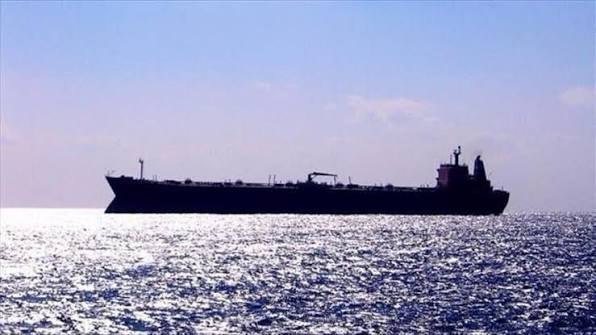
Iran has issued severe threats against oil tankers operating near the territorial waters of Bahrain and Kuwait following American military strikes that targeted multiple Iranian oil tankers near Kharg Island and off the coast of Jask on Tuesday. Two United States officials confirmed that the strikes hit vessels tied to the Islamic Revolutionary Guard Corps.
The military action followed attempted missile attacks by the IRGC against a US Navy warship, an aircraft carrier, and a destroyer over the weekend. American officials reported that the Iranian attacks failed to hit any US ships and caused no personnel injuries.
One targeted tanker was situated four miles from Kharg Island, a primary hub for Iranian petroleum exports, while a second tanker sustained hits off Jask. Crews from both vessels abandoned the ship into lifeboats as rescue operations commenced. These events follow a previous weekend strike where US forces hit an Iranian tanker roughly six miles from Kharg Island, sinking one vessel and permanently disabling two others.
Iranian Threats to Regional Shipping
In response to the maritime strikes, the Iranian military accused both Gulf nations of complicity by hosting American forces and facilitating hostile operations. State broadcaster IRIB broadcast an explicit warning from the Islamic Revolutionary Guard Corps.
"We warn all crews aboard oil tankers in the vicinity of ports in Kuwait and Bahrain — which host these (American) terrorists and are partners in their hostile actions — to immediately leave their vessels, whether they are at anchor or docked at the ports, as the vessels will be targeted," state broadcaster IRIB quoted the Islamic Revolutionary Guard Corps (IRGC) as saying.
A parallel statement released through the semi-official Fars news agency reiterated the directive.
"Following the actions of the American military in targeting several Iranian oil tankers, we warn all oil tanker crews in the areas around the ports of Kuwait and Bahrain, which are hosting these forces and are complicit in their actions, to immediately evacuate their vessels, whether they are at anchor or docked, as they will be targeted," the IRGC Navy said in a statement posted by the semi-official Fars news agency.
Naval Blockade and Commercial Transit
The Strait of Hormuz remains the central theatre of the ongoing six-month conflict, having previously handled roughly twenty per cent of global oil flow prior to hostilities. The United States maintains a strict naval blockade on Iranian ports alongside escort operations for select commercial vessels traversing a secure corridor off the coast of Oman. Washington has pursued a comprehensive economic pressure campaign to restrict Iranian oil exports. Conversely, Tehran demands that international shipping adhere strictly to transit lanes designated by Iran, turning the crucial waterway into a contested zone of frequent skirmishes.
Broad Aviation Sanctions and Economic Pressure
The Trump administration expanded its economic containment strategy on Tuesday by enforcing sweeping sanctions across Iran's commercial aviation sector. The Treasury Department targeted twenty-seven Iranian airlines alongside nine foreign cargo service providers and sales agents. Officials stated these entities provided vital operational support to Mahan Air, an airline facing sanctions since 2011 due to its material backing of the Islamic Revolutionary Guard Corps. This diplomatic and financial manoeuvre aims to isolate Tehran completely from remaining international trading partners while reinforcing the broader wartime strategy of maximum economic strangulation.
Diplomatic and Regional Outlook
As retaliatory threats and maritime actions heighten tensions across the Persian Gulf, international observers emphasise that the path toward de-escalation will depend heavily on diplomatic back-channels and restraint from all regional stakeholders to prevent a broader economic and military confrontation.
Latest Stories
-
Only Category C schools available for placement resolution – Northern Region parents say
4 minutes -
More students benefited under Mahama gov’t than previous 20 years combined – SLTF CEO
20 minutes -
Gov’t reviewing policy for stipends, assistive devices for disabled students – SLTF CEO
27 minutes -
Israel sets deadline for Britain to close consulate as settlers warn of sanctions hit
28 minutes -
Community leaders call for 24-hour operation of African Mall in Ejisu-Kwamo
38 minutes -
Bozoma Saint John wedding highlights Ghana’s untapped tourism dividend
41 minutes -
Brent crude oil rises above $100 a barrel as Middle East conflict intensifies
54 minutes -
59,300 students receive GH¢210m in enhanced student loans – SLTF
1 hour -
Trump gave $45,000 cash gifts to close aide Natalie Harp and others
1 hour -
Beauty Kabukie Apedoe appointed CEO of Inter Tourism Expo Accra
1 hour -
New Ghanaian movie ‘Two’ to explore crime, faith and moral ambiguity
2 hours -
Indo-Ghana begins local liquid oxygen supply
2 hours -
Atwima-Techiman residents decry poultry farm nuisance as assembly sues farmer over siting of farm
2 hours -
Vice President urges Catholic youth to promote peace and prosperity across West Africa
2 hours -
Double-track was about demand, not lack of space in all schools – Adutwum
2 hours