

Audio By Carbonatix
Oil prices rose past $100 (£74) a barrel on Wednesday after further strikes in the US and Iran conflict and continuing Houthi attacks in Saudi Arabia.
In back and forth attacks, the US hit five Iranian tankers in reprisal strikes after Tehran targeted one of its warships.
Brent crude - which is the global benchmark for prices - has not been as expensive since the end of July, when a ceasefire between Iran and the US collapsed.
Yemen's Iran-backed Houthi movement also attacked oil facilities in Saudi Arabia on Tuesday and have been targeting tankers in the Red Sea.
Brent crude did dip back down to $99.90 a barrel, but any fresh flare-ups in the Middle East could see it pushed higher again.
The US strikes on the five Iranian tankers saw four in the Gulf of Oman linked to Iran's Revolutionary Guards Corps (IRGC) hit as well as another near Kharg Island.
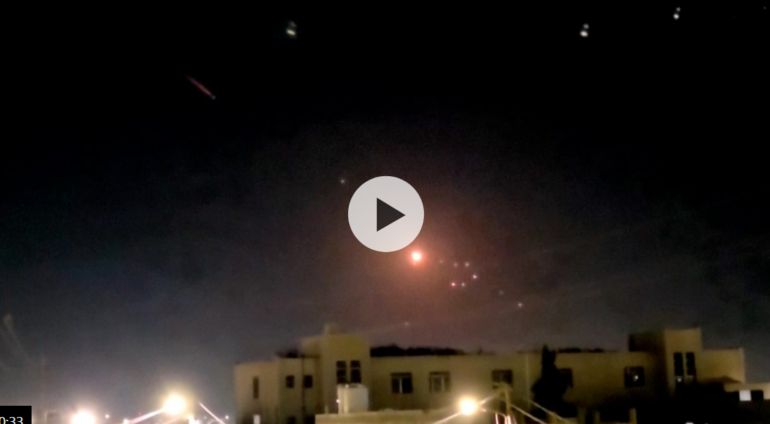
Tehran responded by launching missiles at a US base in Jordan - most of which were shot down - and said it attacked two US vessels and eight oil tankers in the Strait of Hormuz.
The Houthis and Saudi Arabia have also been exchanging strikes since July after their own informal ceasefire unravelled.
Houthi missile attacks started on Saudi airports, oil facilities and tankers in the Red Sea.
They said it was retaliation for a Saudi blockade of ports and airports and an air strike on Sanaa airport they accused Saudi Arabia of carrying out.
On Monday they accused Saudi Arabia of bombing a prison in al-Hazm and killing 11 people.
Then on Tuesday the Saudi authorities said Houthis had struck civilian and economic sites in the cities of Abha, Khamis Mushait, Jazan and Najran.
Oil prices have fluctuated wildly during the Iran US war, which started on 28 February this year.
Before the conflict Brent crude had been priced at about $70 (£52) a barrel.
But the war saw the effective closure of the Strait of Hormuz, which carries 20% of the world's oil and liquefied natural gas (LNG).
The rising costs have sparked huge price leaps in petrol around the world for motorists at the pumps.
Tit-for-tat strikes between Iran and the US have escalated in the past week, more than six months after the US and Israel launched attacks on Iran on 28 February..
Jordan said it had shot down 18 of the 20 Iranian missiles, while two of them fell in unpopulated areas, an official spokesperson for the Jordanian Armed Forces said.
After warning of further retaliatory strikes, Iran's Revolutionary Guards said on Wednesday they had attacked two US vessels, eight oil tankers and 10 "non-compliant vessels" trying to pass through the Strait of Hormuz.
The latest round of escalation comes after Iran targeted a US warship with ballistic missiles, which Centcom said were "successfully evaded". It added that no American troops were harmed during the attacks.
In response, the US said that the five Iranian oil tankers it targeted were "part of a multi-billion-dollar shadow network that funds the IRGC and its regional proxies".
One of the ships it had struck, the M/T Riesco, sunk in the Gulf of Oman, Centcom later said, posting a video on X of the damaged vessel.
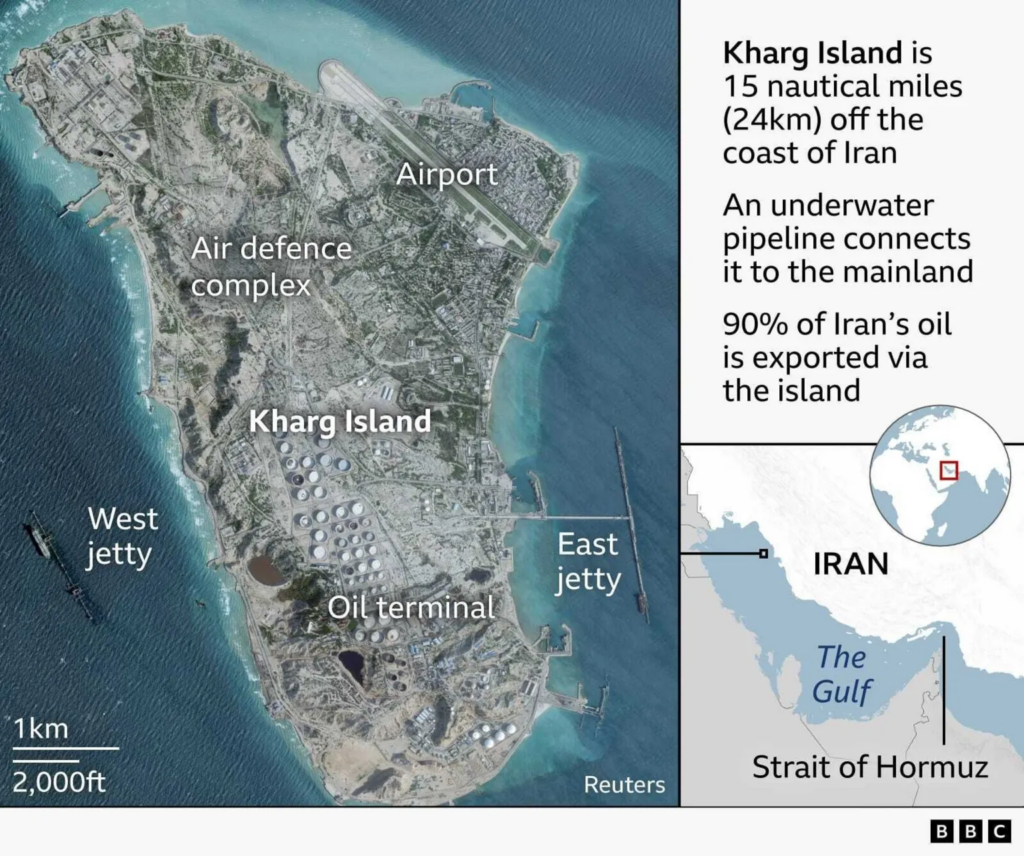
Kharg Island - where one Iranian tanker was attacked in the latest round of US strikes - hosts Iran's main terminal for exporting oil.
Some 90% of the country's crude oil passes through the island in the Gulf, transported through pipes from the mainland.
Pressure on oil prices has been exacerbated by wider regional instability.
Also on Tuesday, Yemen's Iran-backed Houthi movement attacked energy facilities and civilian infrastructure in Saudi Arabia, injuring 73 people, according to Saudi authorities.
The drone and missile attack caused fires at oil facilities and installations that led to a temporary halt in operations, Saudi Arabia's military and energy ministry said.
When asked by reporters about the latest tit-for-tat strikes between the US and Iran, US Secretary of State Marco Rubio said the situation was "pretty straightforward".
"Iran continues to try to hit US naval ships. And, for every time they do that or try to do that, they're going to lose tankers. And I think you'll see that again today," Rubio told reporters during a trip in Colombia.
The US strikes on Tuesday came hours after Iran's Navy claimed it had seized an uncrewed US submarine in the Strait of Hormuz.
US Navy Capt Tim Hawkins, a spokesperson for Centcom, said that the "underwater drone operated by US forces malfunctioned more than a day ago" and was used to survey regional waters "in support of ongoing operations".
The defective drone was "an older model that neither collected sensitive data nor carried any classified sonar or radar equipment", he said, adding that US operations in regional waters were ongoing.
Latest Stories
-
PHOTOS: Proposed Vice-Presidential Villa abandoned for 13 years after over $2.4m spent
13 minutes -
Buem MP Kofi Adams raises alarm over flooding, damaged roads in constituency
18 minutes -
Kotoko should hire best local coach available – Kojo Addae Mensah
23 minutes -
GPL 2026/27: Asante Kotoko, Coach Boadu and two players charged by GFA
28 minutes -
Hohoe flood: Over 700 residents seek shelter in classrooms, MP appeals for help
28 minutes -
Armah-Kofi Buah has not resigned from GoldBod – Lands Ministry
30 minutes -
Attacks on Lordina Mahama, Samira Bawumia reinforce unequal power – Victoria Hamah
46 minutes -
Ghana’s Starlets step up training ahead of second friendly with Morocco
1 hour -
COCOBOD says $1.4bn domestic funding is a strategic shift, not market exclusion
2 hours -
Richmond Quarcoo appointed Ghana’s Chef de Mission for 2028 Olympics
3 hours -
‘Our missing players are more important’ – Gambia coach fires shot at Ghana
4 hours -
Today’s front pages: Tuesday, September 29, 2026
4 hours -
Ghana ‘showing up differently’ on global stage – Joyce Bawah Mogtari
4 hours -
Ghana’s tuna industry in crisis as 20 hook-and-line vessels collapse
5 hours -
South Tongu MP launches apprenticeship programme for 159 young people
5 hours