

Audio By Carbonatix
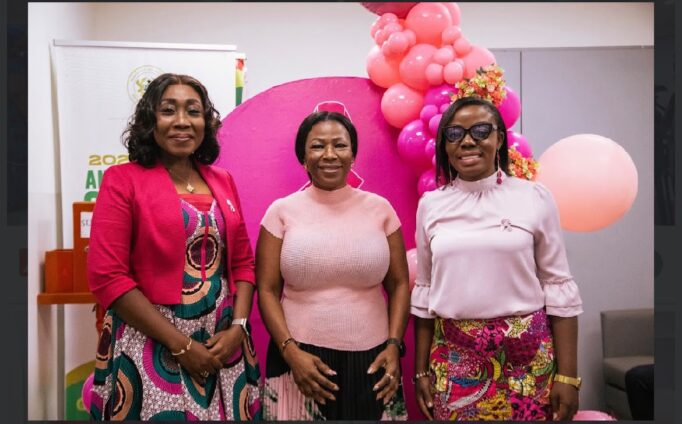
As Ghana prepares to join the world in marking Breast Cancer Awareness Month in October 2026, the Breast Society of Ghana has called on women across the country to prioritise breast screening, stressing that early detection can significantly improve survival outcomes.
The Society’s Pinktober 2026 message, themed “Early Action, Better Outcomes,” says breast cancer remains a major health challenge in Ghana and is the leading cause of cancer and cancer deaths among women.
The statement was signed by Prof. Josephine Nsaful, President of the Breast Society of Ghana, and Enam Setsoafia, General Secretary.
The Society expressed concern that too many women continue to present for treatment when the disease is already advanced, at which point it is no longer curable.
It, however, stressed that early breast cancer is curable and that Ghana has the modalities necessary to treat and cure the disease.
According to the Society, there is no need for patients to automatically seek breast cancer treatment abroad, noting that Ghana has become a hub for specialist care in the subregion, with patients from across West Africa coming to the country for treatment.
It said the survival rate of early breast cancer treated in Ghana was over 90 per cent, which it described as being comparable to outcomes in developed countries.
The Society said the presence of breast cancer survivors in communities across Ghana was evidence that successful treatment was possible when the disease was detected early.
Late diagnosis remains a challenge
Despite the treatment capacity available in Ghana, the Society said advanced presentation remained a major challenge.
When breast cancer is diagnosed at an advanced stage, treatment options become limited and prolonged, while the cost of treatment increases and survival outcomes become poor.
It attributed delayed diagnosis to a combination of factors, including limited awareness, fear, stigma, misinformation, financial constraints, geographical barriers and delays within the healthcare system.
“We must change this,” the Society stated.
It said early action begins with recognising that breast cancer can affect anyone, mostly women but also a few men, and that breast symptoms should never be ignored.
A lump, nipple discharge, changes in the shape or size of the breast, skin changes or any persistent abnormality, it said, should prompt timely medical attention.
However, the Society emphasised that the best way to diagnose cancer early is before symptoms develop through breast screening.
It therefore called on all women to take advantage of free primary healthcare and present themselves for breast screening at health facilities across the country.
Confronting Myths and Stigma
The Society also called for persistent myths and misconceptions surrounding breast cancer and its treatment to be confronted.
It said no woman should delay seeking medical attention because she is afraid of losing her breast, fears chemotherapy, believes breast cancer is a spiritual curse or relies solely on unproven remedies.
“Breast cancer is a disease that requires timely and appropriate medical care,” it stressed.
The Society urged the public to seek reliable information and consult qualified healthcare professionals whenever breast symptoms arise.
It also called on families and communities to support rather than stigmatise people affected by breast cancer.
The media, religious and traditional leaders, civil society organisations and community leaders were urged to use their influence to promote accurate information and encourage timely care-seeking.
Healthcare System Must Respond Promptly
The Society further called on healthcare professionals and health institutions to strengthen systems that reduce avoidable delays.
It encouraged healthcare providers to assess, investigate and refer clients with breast symptoms promptly.
It said every person diagnosed with breast cancer deserves access to evidence-based, patient-centred and comprehensive treatment.
The Society also highlighted the World Health Organisation’s Global Breast Cancer Initiative targets established in 2021.
The targets seek to have at least 60 per cent of all breast cancers diagnosed at an early stage, ensure diagnosis is completed within 60 days and have 80 per cent of diagnosed patients complete their treatment.
The Society said improving breast cancer outcomes was a shared responsibility involving individuals, families, communities, religious bodies, healthcare systems, policymakers and government agencies.
It called for breast cancer to be diagnosed early through screening, symptoms to be recognised and reported early, patients to reach appropriate health facilities without unnecessary delay and everyone diagnosed with the disease to have a fair opportunity to receive timely, quality and comprehensive care.
“Because early action can lead to earlier diagnosis. Earlier diagnosis can expand treatment options. Timely treatment can achieve a cure and improve survival outcomes,” the Society stated.
“Early Action. Better Outcomes. The time to act is now.”
Latest Stories
-
51,000 teachers’ promotion arrears to be validated for October payment – Education Minister
18 minutes -
Kwabena Boamah appointed Board Chair for Impact Investing Ghana
26 minutes -
Striking teacher unions to meet Fair Wages and Salaries Commission on October 6
40 minutes -
EOCO working with AG to arraign Nana Baffour Awuah before weekend court
43 minutes -
Duraplast reassures customers after fire, announces October 5 reopening
51 minutes -
Call off strike, gov’t will not renege on promotion arrears pledge – Haruna Iddrisu appeals to teacher unions
53 minutes -
Committee set up to validate teachers eligible for 20% deprived-area allowance – Education Minister
57 minutes -
Five-member committee to search for new Black Stars coach after Sports Ministry-GFA meeting
2 hours -
Pinktober: Breast cancer survival exceeds 90% when detected early – Breast Society of Ghana
2 hours -
TCDA to adopt Upper West’s MATCO mango farm as northern prototype, issues warning against felling shea trees
2 hours -
‘Fear delegates’ tag: Afoko touts genuineness among delegates ahead of NPP delegates conference
2 hours -
John Boadu: The leader our party needs at this time – Amb. Edward Akwasi Boateng
2 hours -
Baffour Awuah: EOCO arrested, detained MP after hours of waiting, questioning – Afenyo-Markin
2 hours -
EOCO court warrant authorised search of Baffour Awuah’s law firm, not residence – Afenyo-Markin
3 hours -
NPP delegates conference: 3,000 to 4,000 police personnel deployed for security in Kumasi – Anthony Karbo
3 hours