

Audio By Carbonatix
The Food and Agriculture Organization (FAO) of the United Nations (UN) is calling for stronger policy, institutional and technical systems across Africa to help countries access climate finance under the Reducing Emissions from Deforestation and Forest Degradation (REDD+) programme.
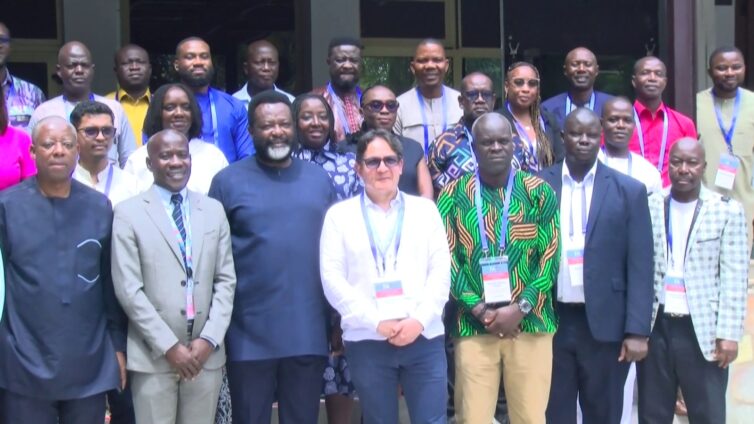
The call was made at a South-South Workshop on Accelerating REDD+ Readiness and Preparing for Results-Based Payments in West Africa, held in Ghana.
The workshop brought together representatives from Benin, The Gambia, Guinea, Guinea-Bissau and Sierra Leone to share experiences with Ghana and strengthen their readiness to access results-based climate finance.
FAO Representative in Ghana, Dr Meshack Malo, said countries must establish the right systems to ensure they can effectively benefit from carbon finance.
He identified policy, institutional arrangements and technical capacity as key requirements for accessing the funds.
“There is the policy mix that needs to be in place to ensure that the country is set to receive this fund,” Dr Malo said.
He added that institutions, including relevant government agencies, must be properly positioned to manage REDD+ programmes, while countries build the capacity needed for monitoring, reporting and verification of carbon reductions.
“There is a lot of monitoring, there is a lot of reporting, there is a lot of verification and the carbon is a market,” he said.
Meanwhile, Acting Director of the Climate Change Unit at the Forestry Commission, Dr Joseph Appiah-Gyapong, says protecting forests must also consider the livelihoods of communities that depend on them.
He said many farmers, particularly cocoa farmers, live around forest reserves and require support to improve productivity outside the reserves.
“We have to understand that the communities depend on the forest. So, we cannot take them out of that dependency,” Dr Appiah-Gyapong said.
He called for stronger collaboration between the Ministry of Agriculture, Ghana Cocoa Board and other stakeholders to promote climate-smart farming practices.
According to him, improving productivity on existing farmland will help farmers earn more without expanding farms into forest reserves.
“We need a lot of climate-smart interventions that will make sure that the same piece of land will be able to yield enough so the farmer can earn more,” he said.
The workshop is expected to deepen regional cooperation and help participating countries strengthen forest governance, protect forest resources and position themselves to access results-based climate finance.
Latest Stories
-
Galamsey activities redirect Mankran Stream, destroy farms, and threaten flooding in Okroase
47 seconds -
WiSTEM Ghana Camp assembles 320 girls to explore STEM education
52 seconds -
Russia launches heavy strikes at Ukraine, killing at least 20
58 seconds -
Freddie Blay accuses government of politically motivated demolitions targeting his family
7 minutes -
Ghana targets rice self-sufficiency by 2028 as government secures $18.8m AfDB grant
11 minutes -
Israelis mark three years since October 7 as Palestinians mourn Gaza’s destruction
13 minutes -
Support constitutional amendment to fix voting day on Tuesday – Asiedu Nketiah urges SDA Church
14 minutes -
‘It’s a systemic problem’ – All Black PRO dismisses Kurt’s resignation calls
19 minutes -
Vance says Iran must cut enrichment to end war
20 minutes -
Mahama orders sanctions for officials who fail to enforce building safety rules
22 minutes -
Court grants bail to banker accused of stealing GH¢1 million
26 minutes -
We have a winning team for 2028 – NPP Atwima Nwabiagya South Secretary
28 minutes -
Bono East Minister cracks whip on contractors over delayed 24-Hour Economy Market projects
30 minutes -
Zelensky condemns ‘vile’ large-scale Russian attacks that killed 15
33 minutes -
Trump to speak to Putin about plague lab worker’s death in Russia
34 minutes