

Audio By Carbonatix
Ghana is targeting full self-sufficiency in rice production by 2028 as the government steps up efforts to close the country’s 44% rice supply gap.
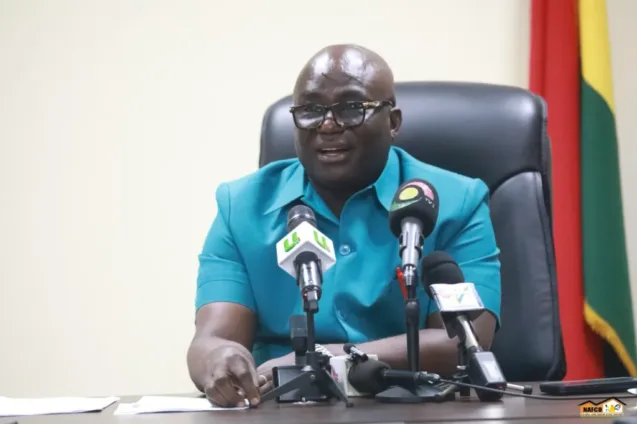
Minister of Food and Agriculture, Eric Opoku, says the government is targeting total paddy rice production of 3.31 million metric tonnes by 2028, with the aim of ending the country’s reliance on rice imports.
Speaking at a press briefing on the Regional West African Resilient Rice Value Chains Project, the Minister said Ghana’s rice production has increased significantly, but local output remains insufficient to meet national demand.
“Rice is now Ghana's second most important area after maize. Population growth, urbanization, and changing consumer preferences have pushed demand well ahead of what we produce,” Mr Opoku said.
According to him, milled rice production increased from about 650,000 tonnes in 2024 to 960,000 tonnes in 2025.
Despite the increase, he said local production currently meets only about 56% of national demand, leaving about 44% to be supplied through imports.
“This gap comes at a cost. Ghana spends approximately 500 million US dollars every year on rice imports. That is money that could be earned by Ghanaian farmers, millers, and traders,” he said.
The Minister said the government is determined to close the production gap within the next two years.
“Our national target is to become self-sufficient in rice by 2028, just two years ahead of us, with total paddy production of 3.31 million metric tons,” he said.
The government is also leveraging an $18.8 million grant from the African Development Bank (AfDB) under the Regional West African Resilient Rice Value Chains Project, known as REWARD, to support the rice sector.
Mr Opoku stressed that the funding is a grant and not a loan.
“We have received 18.8 million dollars for the development of our rice value chain, and this is a grant. It's not a loan. A grant from the African Development Bank ,” he said.
The project will support policy and regulatory reforms, develop 3,200 hectares of land for rice production in the northern savanna ecological zone and improve access to quality seeds and mechanisation.
The intervention will also provide farm machinery, improve rice processing centres, reduce post-harvest losses and strengthen links between farmers, markets and the private sector.
The project is expected to reach more than 20,000 smallholder farmers across selected districts, while creating opportunities for aggregators, processors and service providers.
Mr Opoku said the initiative forms part of the government’s broader Feed Ghana programme.
“REWARD is Feed Ghana in action for rice. It is a deliberate intervention in the rice value chain to raise local output and reduce the national import bill,” he said.
The Minister said rice produced under the project will also help supply schools, prisons and other public institutions with quality locally produced rice.
Latest Stories
-
WPL 2026/27: Hasaacas Ladies face Army Ladies in opening round as GFA announce Southern Zone fixtures
9 minutes -
Eduwatch calls for urgent resolution of teachers’ strike and reforms
10 minutes -
Media worker, journalist remanded over alleged GH¢800k fraud
12 minutes -
Safeguard all personal, financial information, including Mobile Money PINs, ATM PINs – BoG to general public
14 minutes -
Gov’t launches roadmap to implement Social Protection Act, Regulations and Affirmative Action Regulations
14 minutes -
Photos: Pete Edochie meets GoldBod CEO Sammy Gyamfi over African youth mentorship initiative
16 minutes -
Black Maidens: Ghana’s envious record at U-17 Women’s World Cup ahead of seventh appearance
28 minutes -
BoG cautions public against 20 unlicensed mobile loan apps
37 minutes -
Mahama urges tougher enforcement of building regulations over recent collapses
41 minutes -
FWSC denies reports of salary deductions for striking teachers
45 minutes -
Rooted like a tree, responsive like a river: Dr Amin Adam calls for new model of Imamship to meet modern realities
53 minutes -
La Traditional Council secures suspension of SSNIT’s La Pleasure Beach redevelopment plans
58 minutes -
Joy FM listeners support mother seeking treatment for 3-year-old daughter after alleged sexual abuse
1 hour -
German Unity Day celebrated with music, art and Ghana-Germany friendship in Accra
1 hour -
MEHSOG and GFD build capacity of Ashanti Region journalists on inclusive disability reporting
1 hour