

Audio By Carbonatix
As part of its strategic commitment to inclusive central banking and nationwide financial literacy, the Bank of Ghana (BoG) has held a high-level Regional Stakeholder Engagement Forum at the Jemima Grace Hotel, Techiman.
The meeting took place on Monday, 12 October 2026, on the theme: Strengthening Stakeholder Relations Through Dialogue and Engagement.
The forum forms part of the Bank’s 16-regional outreach programme aimed at demystifying the mandate of the central bank, deepening public confidence in the financial system, and creating direct feedback channels between the regulator and the public.
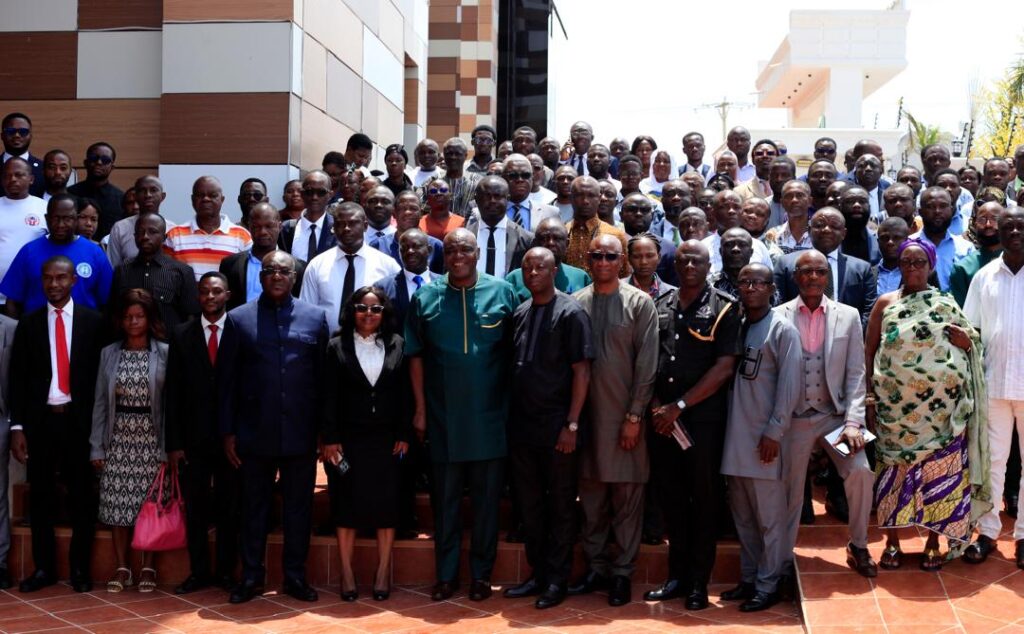
The engagement brought together a broad spectrum of stakeholders in the Bono East Region, including traditional leaders, religious leaders, market queens and trader associations, SMEs, representatives of rural and community banks, microfinance institutions, security agencies, and media practitioners. A total of 150 participants attended the programme.
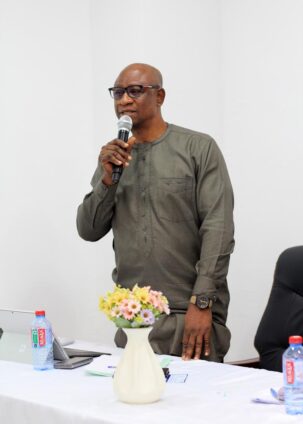
The delegation for the forum was led by Bernard Otabil, Director of Communications, together with Victor Akakpo, Head of Regional Branch Coordinating Office, and Abdulai Lawal Abubakar, Regional Director, Sunyani, who has oversight responsibility for the Bono East Region.
Technical presentations were delivered by seasoned experts from key departments of the Bank:
Banking Supervision Department (BSD),
Other Financial Institutions Supervision Department (OFISD),
Financial Stability Department (FSD),
and Currency Management Department (CMD)
“The Cedi Is Trust” – Director of Communications
In his opening remarks, Mr Otabil stressed that central banking cannot thrive in isolation, noting that stakeholder trust is the bedrock of monetary policy effectiveness.
“The Cedi is not just paper. It is trust. It is a social contract between the Bank of Ghana and every Ghanaian. We can formulate the best monetary policy, but if the trader in the Techiman market, arguably one of the largest open markets in West Africa, does not understand or trust it, we have failed. That is why we are here, not to lecture, but to listen, to dialogue, and to partner for financial stability,” he stated.
He added that BoG has deliberately shifted to a people-centred model where public voices shape policy response, especially in fighting unlicensed financial schemes, currency abuse, and misinformation.
Participants were taken through five critical thematic areas:
1. The Role and Mandate of the Bank of Ghana: Clarifying BoG’s core functions of price stability, financial stability, and currency management.
2. Microfinance Sector Reforms: Explaining the rationale behind the Microfinance sector reforms and implications for the industry.
3. Responsible Borrowing and Consumer Protection: Educating the public on their rights, loan disclosure requirements, and the need to avoid over-indebtedness.
4. Currency Education – FEEL, LOOK, TILT: A practical demonstration on how to identify genuine Ghana Cedi banknotes, detect counterfeits, and properly handle notes.
5. Dud Cheques – Causes, Implications and Prevention: Highlighting the legal and financial consequences of issuing dud cheques and measures to curb the practice.
Stakeholder Feedback
In an open forum, participants commended the Bank for bringing the engagement to their doorstep.
They raised pertinent concerns including access to affordable credit for SMEs and farmers, the persistence of high lending rates despite falling inflation, the activities of unregulated lenders and “black market” forex operators, and the need for sustained education on the security features of the new Heritage Series Banknotes.
Officials of the Bank provided detailed responses and assured participants that their concerns would be escalated to Management for policy consideration.
Mr Otabil reiterated the Bank’s commitment to sustaining open dialogue across all 16 regions as a tool for promoting financial inclusion, financial literacy, and resilience of the financial system. He urged the public to be vigilant and report suspected unlicensed financial institutions, counterfeit currency, and financial fraud cases to the Bank or law enforcement agencies.
The forum ended with a renewed call for partnership between the Bank of Ghana and regional stakeholders to protect the value of the Cedi and safeguard the stability of Ghana’s financial system.
Latest Stories
-
Atta Akyea denies seeking presidential pardon for Wontumi in galamsey case
36 minutes -
Photos: Mahama commissions 85-bed Police Hospital ward, donates two ambulances
44 minutes -
GTEC directs Ghana’s public universities to reopen by October 16 and begin lectures on October 19
46 minutes -
Star Oil donates GH¢1million towards construction of new CID facility
49 minutes -
Court hands Adjetey Sowah, two others lifetime bans after Amputee Football legal dispute
59 minutes -
NDC appoints Julius Kwame Anthony as a Deputy Communications Director
59 minutes -
Ghana repatriates 120 Nigerians rescued from suspected cybercrime centres
1 hour -
NPP rejects Emelia Agbenyo’s appointment as Deputy EC Chair, demands withdrawal
1 hour -
EOCO grants Suame MP John Darko enquiry bail in GH¢27m SIC investigation
1 hour -
NPP cannot question EC appointment after appointing own people to Commission – Kwakye Ofosu
1 hour -
BoG deepens public trust with regional stakeholder forum in Techiman
1 hour -
‘We have turned the tide’ – Ato Forson says Ghana is ready to take off
2 hours -
Police arrest man captured in viral video assaulting wife in Agona Nkwanta
2 hours -
KATH Mother and Baby Unit construction stalled for 14 months over unpaid contractor arrears
2 hours -
Government wanted to ‘tilt the balance’ with new EC appointments – Kwakye Ofosu
2 hours