

Audio By Carbonatix
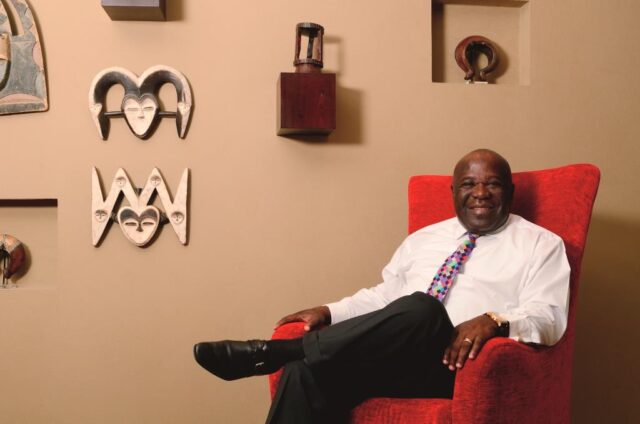
Business leader Sir Sam Jonah has warned that digital innovation could widen inequality in Africa if its benefits are concentrated among people who already have access to technology, education and economic opportunities.
He said governments, universities and businesses must ensure that digital policies and platforms do not exclude people who lack reliable internet access, electricity or the resources to participate in the digital economy.
“Every digital policy, every new platform, must ask a simple question: who is left out?” he said.
Sir Sam was speaking at Methodist University Ghana’s international conference in Accra on Thursday, October 15, where he delivered the keynote address for the university’s 25th anniversary celebrations.
He argued that a child in Dansoman with a laptop and reliable internet access has substantially different opportunities from a child in a village without electricity.
“If digital innovation only serves the connected, it will not close our inequalities. It will widen them,” he said.
Sir Sam also called attention to barriers facing women in accessing credit, owning land and attaining senior positions in institutions across Africa.
Drawing on his experience as patron of the Executive Women Network in Accra, he said women had demonstrated what they could achieve when given opportunities.
“An economy that underuses half its talent is running on one leg,” he said.
He argued that inclusive development required businesses and institutions to open up access to finance, markets, technology and decision-making.
The business leader also called for greater respect for technical and vocational education, saying not every young person needed a university degree but every young person needed a skill.
He said Africa’s industrial development depended on technicians, artisans and engineers, and urged the continent to give practical skills greater recognition.
Sir Sam further emphasised mentorship, describing the opportunity to learn from experienced people as one of the most valuable contributions leaders could make to the next generation.
He said his own career had benefited from managers at Ashanti Goldfields who recognised his potential early on.
“The greatest gift we can give the next generation is not money. It is a chance,” he said.
His address called for digital innovation, education and economic development to be accompanied by deliberate efforts to ensure that opportunities reach people who are often excluded.
Latest Stories
-
Popular Nigerian gospel singer Toluwanisings dies
4 minutes -
Spio-Garbrah proposes debt swaps to fund reparative justice in Africa and Caribbean
11 minutes -
Alban Bagbin calls for governance reforms and coordinated action to address Africa’s debt crisis
14 minutes -
AAK Academy Ghana trains 22 chocolate and confectionery companies in production techniques
16 minutes -
Adwumawura Programme trains second cohort of young entrepreneurs in Bono East
17 minutes -
Destroying Jimi River for gold could cost us our lives – Asantehene
24 minutes -
Sammy Gyamfi didn’t say BoG has ceded its forex role to us – GoldBod
1 hour -
High Court sets November 4 for ruling on Wontumi’s bail application
1 hour -
Tetteh Kwetey files nomination for NDC Greater Accra Regional Chairmanship
2 hours -
Korle Bu appeals for more doctors, nurses as A&E Centre struggles under pressure
2 hours -
AFCON 2027Q: ‘I’m optimistic Black Stars can turn things around’ – Agyemang-Badu
2 hours -
Digital innovation could widen Africa’s inequalities if people are left out – Sam Jonah
2 hours -
Galamsey is an economic, health and moral problem – Sam Jonah
2 hours -
Africa must create AI technology instead of paying to use it – Sam Jonah
2 hours -
2026 U-17 WWC: Black Maidens to face Norway, Brazil and Canada in Group C
2 hours