


Audio By Carbonatix
One person has died after he was diagnosed with Lassa Fever, a disease that has killed at least 54 people in Nigeria within the past seven weeks.
The man, 26, reportedly died at the Tema General hospital in the Greater Accra Region.
The infection was confirmed by the Noguchi Memorial Institute, Myjoyonline.com has learnt.
Interacting the media Thursday, Director-General of the Ghana Health Service, Dr Anthony Nsiah-Asare confirmed the death but said the Service is working to stop the spread of the disease.
Lassa Fever is transmitted to humans via contact with food or household items contaminated with the urine, saliva faeces, and blood of infected rodents.
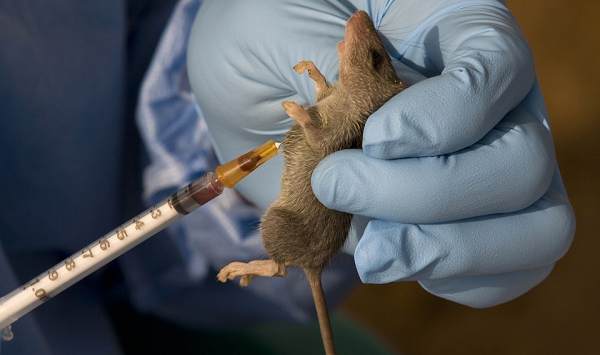
About 80% of the people who are infected with Lassa virus have no symptoms. One in five infections results in severe complications, with the virus affecting several organs such as the liver, spleen and kidneys.
It occurs in all age groups, both sexes and persons at the greatest risk are those living in rural areas, according to the World Health Organisation (WHO).
Demonstrating the preparation of the country, Dr Nsiah-Asare said currently all the frontline staff at the hospital that handled the patient before he died, were being screened.
He said further investigations to trace the background and all contacts of the deceased, were being pursued to prevent the spread of the virus.

Dr Anthony Nsiah-Asare
The GHS Director-General has called on the public to be extremely cautious of rodents, recommending good hygiene.
He also urged the public to report any suspected case of the disease.
Symptoms of Lassa fever
The incubation period of Lassa fever ranges from 6–21 days. The onset of the disease, when it is symptomatic, is usually gradual, starting with fever, general weakness, and malaise.
After a few days, headache, sore throat, muscle pain, chest pain, nausea, vomiting, diarrhoea, cough, and abdominal pain may follow. In severe cases, facial swelling, fluid in the lung cavity, bleeding from the mouth, nose, vagina or gastrointestinal tract and low blood pressure may develop.
Protein may be noted in the urine. Shock, seizures, tremor, disorientation, and coma may be seen in the later stages. Deafness occurs in 25% of patients who survive the disease. In half of these cases, hearing returns partially after 1–3 months. Transient hair loss and gait disturbance may occur during recovery.
Death usually occurs within 14 days of onset in fatal cases. The disease is especially severe late in pregnancy, with maternal death and/or fetal loss occurring in more than 80% of cases during the third trimester.
Latest Stories
-
GOIL CEO praises Star Oil counterpart despite fierce market rivalry
2 hours -
Como ease past Leipzig in dream Champions League debut
2 hours -
Gordon a better fit for Barca than Rashford – Deco
2 hours -
GOIL won’t give up ground as Star Oil battles for market share, says Edward Bawa
2 hours -
Kidnapped man begs family for help as captors threaten death over GH¢45,000 ransom
2 hours -
Fenerbahce boss stuns club by quitting after Roma draw
3 hours -
Spurs and Richarlison in dispute over contract
3 hours -
Arsenal close to finalising new contract for Arteta
3 hours -
Abandoned vehicles face auction under new road safety rules – National Road Safety Authority
3 hours -
KNUST Management responds to UTAG, says statutes review still ongoing
3 hours -
10 SOEs recorded net loss of GH¢8.8bn in 2024 – IMF
3 hours -
EOCO questions former Deputy AG Joseph Kpemka over BOST dealings, grants him bail
3 hours -
Alleged romance scam pastor’s case withdrawn from Circuit Court
4 hours -
Oil, gas and borrowing costs surge as fears over Middle East escalate
4 hours -
PRESEC’s ADO9 moment sparks social media frenzy after NSMQ victory
4 hours