

Audio By Carbonatix
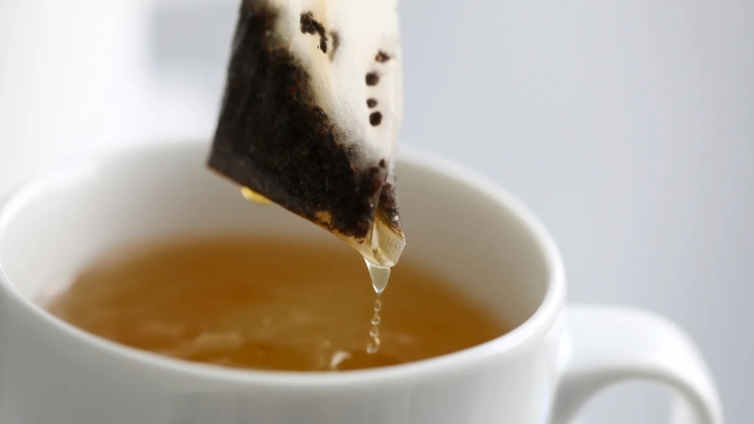
The British claim to know a thing or two when it comes to making a good cup of tea.
The beverage is a cultural institution in the UK, where an estimated 100 million cups are drunk every day.
But now a scientist based more than 3,000 miles (5,000km) away in the US claims to have found the secret to a perfect cuppa that many Brits would initially find absolutely absurd - adding salt.
Prof Michelle Francl's research has caused quite the stir in the UK, and has even drawn a diplomatic intervention from the US embassy.
"We want to ensure the good people of the UK that the unthinkable notion of adding salt to Britain's national drink is not official United States policy. And never will be," the embassy said on X, formerly known as Twitter.
It is not the first time the drink has caused controversy on both sides of the Atlantic.
Back in 1773, demonstrators in Boston, colonial Massachusetts, threw 300 chests full of tea into the harbour in protest at British taxes - a key moment which sparked the American Revolution.
"I certainly did not mean to cause a diplomatic incident," Prof Francl, a professor of chemistry at Bryn Mawr College in Pennsylvania, tells the BBC.
"My emails have been going crazy today. I did not anticipate waking up this morning to see loads of people talking about salt in their tea."
So why add salt?
It turns out that it is not a new idea - the ingredient is even mentioned in Eighth Century Chinese manuscripts, which Prof Francl analysed to perfect her recipe.
"What is new is our understanding of it as chemists," Prof Francl said.
She explains that salt acts as a blocker to the receptor which makes tea taste bitter, especially when it has been stewed.
By adding a pinch of table salt - an undetectable amount - you will counteract the bitterness of the drink.
"It is not like adding sugar. I think people are afraid they will be able to taste the salt."
She urges tea-loving Brits to have an open mind before prejudging her research, which she has documented in her new book Steeped: The Chemistry of Tea, published by the Royal Society of Chemistry.
"It is OK to experiment," she says. "I did experiments in my kitchen for this - channel your inner scientist."
Prof Francl has loved tea ever since her mother made her first brew when she was 10 years old.
Everyone has their own opinion on what makes the perfect cuppa, but Prof Francl recommends using loose leaves instead of tea bags and giving the drink a constant stir so the tea gets a good exposure to the water and milk.
Adding a small squeeze of lemon juice can also remove the "scum" that sometimes appears on the surface of the drink, she adds.
Other suggestions she makes include using short, stout mugs to keep the tea hotter, and warming up the mug and milk, with the latter added in only after pouring the tea.
But chief among her advice is to never, ever heat up the water in a microwave: "It's less healthy and it does not taste as good," Prof Francl says.
"You end up getting tea scum forming on the surface, and that scum contains some of the antioxidants and taste compounds."
While the concept of microwaving tea might sound a bit alien in the UK, it is "totally common" in the US.
"Americans have some truly awful tea-making habits," Prof Francl says.
"I have had better cups of tea at service stations in Ireland than I have had at fancy restaurants in the US.
"I think it is just that people do not know [how to make a good cuppa]. If you do not drink tea, you do not know you are making a horrible cup of tea for someone and giving them a miserable experience."
She says she loves coming to the UK, where she knows she will be able to locate a decent brew.
"I know when I land I can get a great cup of tea. It is good to have that common ground," she says.
So, what next for British-American tea relations?
The US embassy is not heeding Prof Francl's advice and says it will stick to what it calls the "proper way" of making tea - by microwaving it - while the UK Cabinet Office is adamant it can only be made using a kettle.
Latest Stories
-
Ghana housing finance conference adopts communiqué to improve affordable housing access
4 hours -
Special Initiatives Minister urges Wa Technical Institute to enrol more girls as EU-backed solar training lab opens
5 hours -
In the matter of my first year at the Bar
5 hours -
ActionAid Ghana calls for an end to child marriage, greater investment in girls’ rights
5 hours -
Newsfile to tackle World Cup visa scandal, beach demolitions, education strikes, BRICS bid
5 hours -
UK-Ghana Trade & Investment Summit: Trade Resource Centre to help businesses maximise UK-Ghana trade opportunities
6 hours -
Embassy of Denmark celebrates World Maritime Day
6 hours -
Linking LEAP to productive inclusion could cut extreme poverty by 2030 – UNICEF
7 hours -
Trade Ministry backs use of creative arts to rehabilitate prison inmates
7 hours -
Negotiations with government to continue despite strike suspension – GNAT
7 hours -
‘Ghana cannot afford to waste public resources; every cedi has a job’ – Ato Forson
7 hours -
Ghana expects economic boost as World Assemblies of God Congress brings 10,000 delegates to Accra
7 hours -
Joy in Nayilifong as Farouk Aliu Mahama donates 100kVA transformer to improve power supply
7 hours -
Chief Justice urges employers to tackle mental health stigma in workplaces
8 hours -
Analysis: Ghana’s yellow fever numbers reveal a gap between vaccination and protection
9 hours