

Audio By Carbonatix
CEO of the African Union Development Agency (AUDA–NEPAD), Nardos Bekele-Thomas, has called for bold actions to make Africa a global agricultural leader.
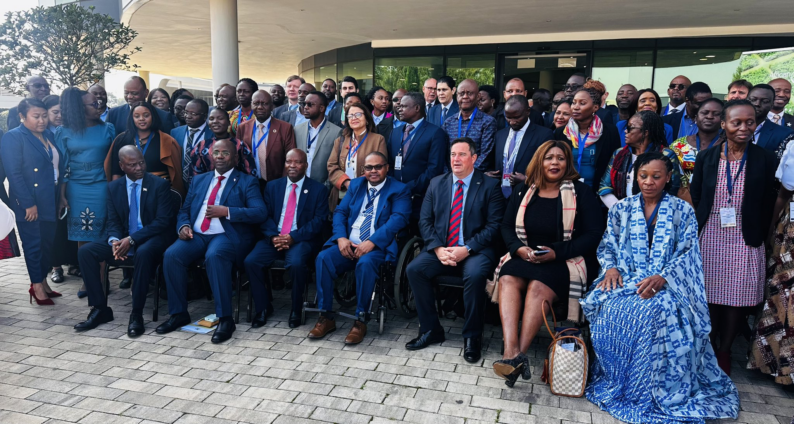
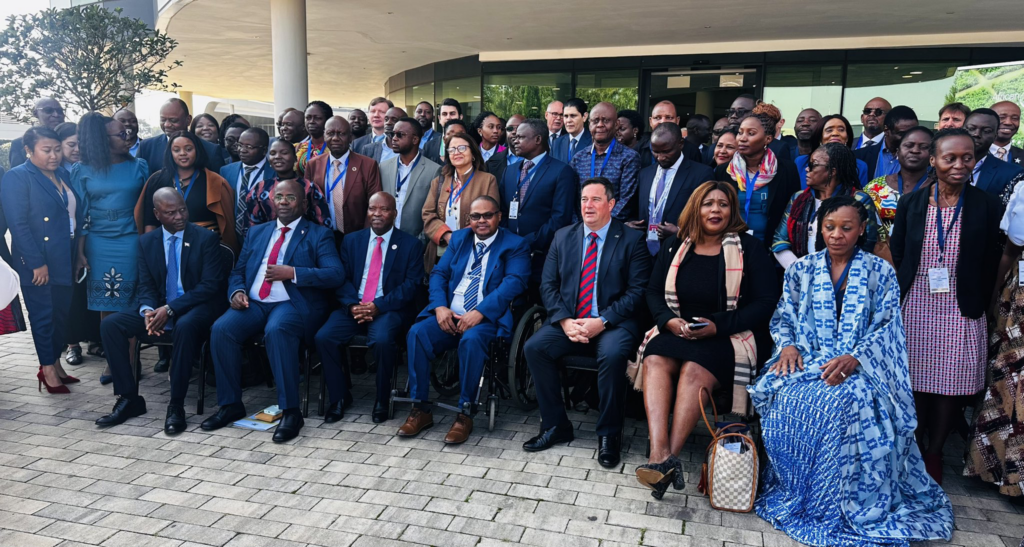
Speaking at the official launch of the new Comprehensive Africa Agriculture Development Programme (CAADP) Strategy and Action Plan (2026–2035) and the Kampala Declaration in Johannesburg – South Africa, she said “our continent's future lies in united action - from seed to table, and from farm gate to global markets.”
“With 60% of the world's uncultivated arable land, our vibrant youth, and rich biodiversity, Africa stands ready to become a global agri-food leader. But potential alone isn't enough - we need determined collaboration, innovation and investment,” she added.
Ms Bekele-Thomas said African governments are committed to implementing the African Continental Free Trade Area (AfCFTA) and other strategies to help boost the continent’s agricultural transformation efforts.
“We will accelerate the full implementation of the AfCFTA to boost intra-African trade, sustain the Programme for Infrastructural Development in Africa (PIDA) and its catalytic investments, and fast-track the post-Malabo Biennial Reviews that sharpen our policy compass,” she announced.
“We have witnessed youth-led agritech innovations flourish and regional value chains take off under our collective stewardship,” she observed.
African heads of state and governments in January this year held the Extraordinary Summit on the Post Malabo CAADP in Kampala, Uganda.
The summit adopted the CAADP Strategy and Action Plan (2026–2035) to guide the transformation of the agricultural sector over the next 10 years, along with the accompanying consensus document known as the Kampala Declaration 2025.
Over the past 20 years, CAADP has been the cornerstone framework driving agricultural transformation across Africa.
Launched in 2003 following the Maputo Declaration and reaffirmed in 2014 with the Malabo Declaration, CAADP has contributed to increasing agricultural GDP, higher average incomes, enhanced agricultural output, expanded agricultural trade, greater investments, and a reduction in hunger and poverty.
The Malabo Declaration expired at the end of 2024 after 10 years, and the Kampala Declaration has succeeded it.
The newly adopted strategy emphasises a food systems approach to address Africa’s complex agricultural needs, focusing on agro-processing, post-production, and resilience against climate shocks.
It prioritises inclusivity with a special focus on empowering women, youth, and marginalised groups to access resources and opportunities.
“Through the Kampala Declaration, heads of states have set a clear course to build resilient, inclusive and climate-smart food through systems guided by six strategic objectives that span production, processing, markets governance, nutrition, and financing,” Ms Bekele-Thomas said at the launch on Monday.
“Today's launch is neither an endpoint nor a ceremony. It is the ignition of a decade of acceleration,” she said.
“We will unleash the power of our youth and women builders, not beneficiaries, through the $100m micro, small and medium enterprises (MSME) initiative and the skills initiative for Africa, ensuring they gain land, finance and market linkages to drive rural entrepreneurship,” she said.
Representatives from key stakeholder groups called for commitment, action and long-term partnerships to ensure the strategy produces tangible benefits for Africans. Minister of Agriculture for the Republic of South Africa, John Steenhuisen, emphasized intra-African trade, transformative programming for smallholder farmers, knowledge creation and sharing, data-driven planning, and digital technology adoption as cornerstones for agricultural progress.
Executive director of the Forum for Agricultural Research in Africa (FARA) Dr. Aggrey Agumya highlighted the significance of science, innovation, education, and capacity development in facilitating implementation of the strategy. He said FARA is ready to support implementation of the Kampala Declaration with these appropriate tools to ensure success.
President of the Eastern Africa Farmers Federation Ms. Elizabeth Nsimadala said the African Union Commission had done well by involving farmers throughout the development of the Kampala Declaration and reaffirmed their commitment to its execution. She urged a supportive policy environment, enhanced investment flows, stronger extension systems, and deeper farmer engagement at the national level.
“We don’t wish to be summoned to eat when the food is already ready,” she said. “We request all partners to be truthful, commit to transparency, and concentrate on what is achievable,” she added.
Latest Stories
-
Tyson Fury dominates Makhmudov, calls out Joshua next
4 minutes -
I have supported highway authority financially to fix roads in my constituency – A Plus
1 hour -
US, Iran fail to reach peace agreement after marathon talks in Pakistan
2 hours -
ECG kicks off Phase Two of transformer upgrades at Lashibi; brief outages expected
2 hours -
Port crises loom as 11,000 drivers threaten four-day strike
3 hours -
A source of excellence across generations – Vice President Opoku-Agyemang lauds Mfantsipim
4 hours -
(Photos) Mfantsipim School launches historic 150th anniversary
4 hours -
Knights and Ladies of Marshall group backs Catholic Bishops’ stance on anti-LGBTQ+
5 hours -
Bright Simons writes: All the Filla in the Ibrahim Mahama/E&P – Gold Fields Saga
6 hours -
Monetise Idiocy In Ghana
6 hours -
The Ghanaian prophet and the mysterious death of his scottish wife Charmain Speirs
6 hours -
Nearly 400 sentenced in Nigeria for links to militant Islamists
7 hours -
Ghana’s recovery supported by gold strength despite global oil price pressures – Standard Bank Research
7 hours -
Methodist Church hails Mfantsipim@150; calls for “fresh consecration” to excellence
7 hours -
‘Excellence is our inheritance’ – Nana Sam Brew-Butler hails Mfantsipim’s 150-year reign in leadership
7 hours