


Audio By Carbonatix
My mother died in 2009. She lived a thousand miles away, and it was my responsibility to vacate her apartment in Florida. It was a small, one-bedroom place, but it was packed wall-to-wall with her belongings. Mom had great taste (she could have been an interior designer), and none of her stuff was junk.
Nevertheless, there was a lot of stuff in her home.
 Shutterstock
Mom was constantly shopping, always accumulating more stuff: She had antique furniture throughout her apartment, a stunning oak canopy bed that consumed almost her entire bedroom, two closets jam-packed with clothes, picture frames standing on every flat surface, original artwork adorning the walls, and tasteful decorations in every nook, cranny, and crevasse. There was 64 years of accumulation in that tiny apartment.
So I did what any son would do: I rented a large truck from U-Haul. Then I called a storage place back in Ohio to make sure they had a storage unit that was big enough. The truck was $1,600, the storage facility was $120 — financially I could afford it, but I quickly discovered the emotional cost was much higher.
Initially, I didn’t want to let go of anything. If you’ve ever lost a parent, a loved one, or been through a similarly emotional time, then you understand exactly how hard it was for me to let go of any of those possessions. So instead of letting go, I wanted to cram every trinket, figurine, and piece of oversized furniture into that storage locker in Ohio, floor to ceiling.
That way I knew that Mom’s stuff was there if I ever wanted it, if I ever needed access to it for some incomprehensible reason. I even planned to put a few pieces of Mom’s furniture in my home as subtle reminders of her.
I started boxing up her belongings: every picture frame, every porcelain doll, and every white doily on every shelf. I packed every bit of her that remained.
Or so I thought.
Holding onto pieces of the past
I looked under her bed. Among the organized chaos that comprised the crawlspace beneath her bed, there were four boxes, each labeled with a number. Each numbered box was sealed with packing tape. I cut through the tape, and when I folded back the boxes’ flaps I discovered old papers from my elementary school days from nearly a quarter-century ago: spelling tests, cursive writing lessons, artwork — it was all there, every shred of paper from my first four years of school. She obviously hadn’t accessed the sealed boxes in years, yet Mom had held on to these things because she was trying to hold on to pieces of me, pieces of the past — much like I was attempting to hold on to pieces of her and her past.
I realized my retention efforts were futile: I could hold on to her memories without her stuff, just as she had always remembered me, my childhood, and all our memories without ever accessing those sealed boxes under her bed. She didn’t need papers from 25 years ago to remember me, just as I didn’t need a storage locker filled with her stuff to remember her.
I called U-Haul and canceled the truck. And then, over the next twelve days, I donated her stuff to places and people who could use it.
Of course it was difficult to let go, but I realized many things about our relationship between memories and possessions during the experience:
I am not my stuff; we are more than our possessions. Our memories are within us, not within our things. Holding on to stuff imprisons us; letting go is freeing. You can take pictures of items you want to remember. Old photographs can be scanned. An item that is sentimental for us can be useful for someone else.
Traces of her everywhere
I don’t think sentimental items are bad, or evil, or that holding on to them is wrong; I think the danger of sentimental items (and sentimentality in general) is far more subtle.
If you want to get rid of an item, but the only reason you are holding on to it is for sentimental reasons — and if it is weighing on you — then perhaps it’s time to get rid of it, perhaps it’s time to free yourself of the weight. That doesn’t mean you must get rid of everything, though.
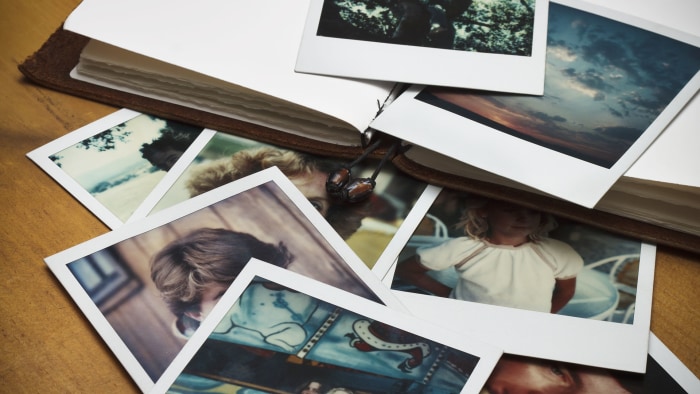
When I returned to Ohio, I had four boxes of Mom’s photographs in my trunk, which I would later scan and save online. I found a scanner that made scanning the photos easy. Those photos are digital now, and they can be used in digital picture frames instead of collecting dust in a basement. I no longer have the clutter of their boxes lying around and weighing me down, and they can never be destroyed in a fire.
Joshua Fields Millburn wrote the essay, "Letting Go of Sentimental Things" on The Minimalists.
Latest Stories
-
GPRTU wants full TRAFFITECH-GH implementation to start in 2027
1 minute -
Mahama announces plans to import electric wheelchairs for PWDs
5 minutes -
KGL U17 Colts 2026: Western beat Prempeh Elite Academy to set up final final with Greater Accra Region
24 minutes -
Late Solanke strike salvages 10-man Spurs draw at Man United
34 minutes -
Gender Ministry to monitor welfare of Nana Akua Addo’s children amid domestic violence case
40 minutes -
Benedict Okyere Yeboah: Ghana’s football problem goes beyond sacking a coach
50 minutes -
GPL 2026/27: Darkwah Wiafe’s winner sees All Blacks beat Kotoko
56 minutes -
ITF World Tour : Patel Wins Boys’ Singles Final at J100 Accra
1 hour -
Ghana must pursue BRICS partnership if it brings economic benefits – Kpebu
1 hour -
Success and Wright Claims J100 Accra Girls’ Doubles Championship
1 hour -
ITF J100: America’s Wright wins J100 Accra Girls’ Singles Title
1 hour -
Expedition hopes to find aviator Amelia Earhart’s plane on remote island
1 hour -
US seeks changes to rejected $109m health compact with Ghana – Mahama
2 hours -
Nine dead in mass shooting at Pennsylvania home
2 hours -
‘Time for Ukraine to get new president,’ says Trump after Zelensky condemns diesel deal
2 hours