

Audio By Carbonatix
The Minister of Food and Agriculture Eric Opoku, has called for coordinated measures to reset Ghana’s oil palm industry and transform its production potential into jobs, industrial growth, and reduced imports.
He said the country needed to move beyond policies and targets to practical action that would raise productivity, strengthen smallholder participation, expand processing, and ensure sustainable development of the sector.
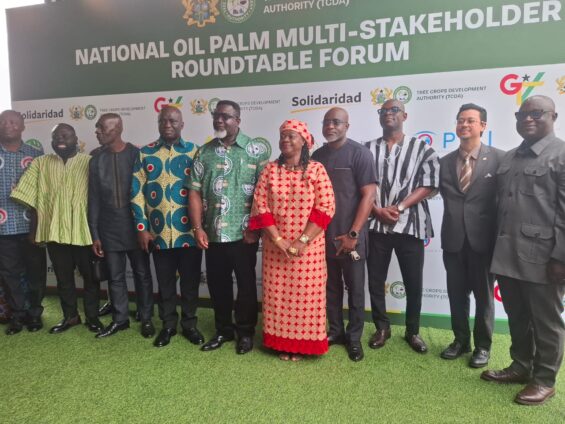
Mr Opoku made the call on Wednesday when the Tree Crop Development Authority (TCDA) convened the 2026 National Palm Stakeholders Forum in Accra on the theme "From Policy to Practice: The Role of TCDA in Resetting Ghana’s Oil Palm Industry.”
He said oil palm was a strategic link between agriculture and industry, supporting farmers, processors, traders, transporters, manufacturers, and service providers while providing raw materials for soap, cosmetics, pharmaceuticals, animal feed, and bioenergy.
The minister noted that Ghana’s annual demand for palm oil substantially exceeded domestic supply, resulting in a production deficit that was largely met through imports.
He said the gap represented lost jobs, underutilised processing capacity, unreliable markets for farmers, and foreign exchange that could otherwise remain in the economy.
“Policy acquires value only when it changes lives,” he said, urging stakeholders to leave the forum with clear responsibilities, timelines, resources, and measurable targets.
Mr Opoku said the government's 2026 budget target to establish 100,000 hectares of new oil palm plantations was not simply an acreage expansion programme, but part of efforts to build an integrated, sustainable, and competitive industry.
He said the programme would also focus on rehabilitating aging and low-yielding farms, closing productivity gaps, improving planting materials, and bringing suitable new areas into production without destroying forests or environmentally sensitive landscapes.
Mr Opoku said particular attention should be given to smallholder farmers, women, and young people, who should have access to secure markets, transparent pricing, extension services, affordable inputs, finance, and opportunities across the value chain.
He appealed to financial institutions to develop suitable financing products for nurseries, producers, aggregators and processors, while traditional authorities, landowners, district assemblies, and investors worked towards transparent and mutually beneficial land arrangements.
Mr Opoku said expansion of production must be matched by efficient mills, storage, logistics, quality control, and reliable market linkages as Ghana sought to move beyond producing fresh fruit bunches to manufacturing finished products for domestic and export markets.
The forum comes as the government pursues financing arrangements to expand Ghana’s oil palm industry.
The Minister of Finance, Dr Cassiel Ato Forson, told Parliament in July that the government was nearing a US$500 million financing deal for the oil palm sector, underscoring the scale of investment being mobilised to support the industry.
Dr Andy Osei Okrah, Chief Executive Officer of the TCDA, said the Authority was seeking to translate the government's vision for oil palm self-sufficiency into a clear execution plan.
He said the government had set a target of achieving total self-sufficiency in palm oil production by 2032, with TCDA serving as the key regulatory institution responsible for licensing, production planning, and industry data management.
“Our goal is focus and ambition,” he said, adding that the sector needed to expand plantations, create sustainable jobs, reduce reliance on imported edible oils, and position Ghana as a competitive player in the global palm oil market.
Eric Amoako Agyare, Country Representative, of Solidaridad West Africa, said translating policy into action required sustained access to quality planting materials, investment in productivity and processing infrastructure, and increased opportunities for women and youth.
He said climate finance could help artisanal processors adopt appropriate technologies, improve energy and resource efficiency, reduce environmental impacts, and strengthen their businesses.
The Tree Crop Development Authority (TCDA) was established under the Tree Crops Development Authority Act, 2019 (Act 1010), and operates with a legislative instrument, LI 2471, to regulate and develop Ghana’s strategic tree crop value chains.
The crops under its mandate are cashew, coconut, oil palm, rubber, mango, and shea.
Latest Stories
-
Caveman Watches partners with Mfantsipim School for 150th anniversary
13 minutes -
We’ll pursue GH¢15m defamation suit against Sammy Gyamfi to its logical conclusion – Afenyo-Markin’s lawyers
14 minutes -
Martin Kpebu urges Afenyo-Markin not to return to court over Sammy Gyamfi lawsuit
22 minutes -
GRA submits preliminary report on drug shipment case to Mahama – Commissioner-General
50 minutes -
Sammy Gyamfi using ‘procedural roadblocks’ to dodge defamation case? – Afenyo-Markin’s lawyers
51 minutes -
The illusion of a good deal: Why some everyday money-saving habits may be costing you more
1 hour -
Family seeks autopsy, police investigation into death of student 12 days after Abomosu SHS enrolment
1 hour -
Trade Minister urges employers to leverage industrial opportunities to create jobs
1 hour -
Asantehene plants trees to commence Jimi Watercourse Rehabilitation destroyed by galamsey
2 hours -
15 arrested, 6 trucks impounded over sandwinning activities on Kumasi-Accra Expressway
2 hours -
OFFICIAL: Vinicius will miss El Clásico, suspended four games
2 hours -
Prayer vigil held after four arson attack murders
2 hours -
GRA fully recovers $154k legacy debt owed by foreign entities between 2022 and 2024
2 hours -
Kwesi Pratt Jr warns bus preachers are adding to passengers’ stress with accident prophecies
2 hours -
MTN Ghana to spend $1.1bn in 3 years, build 500 new sites as MoMo hits 44% Growth
2 hours