

Audio By Carbonatix
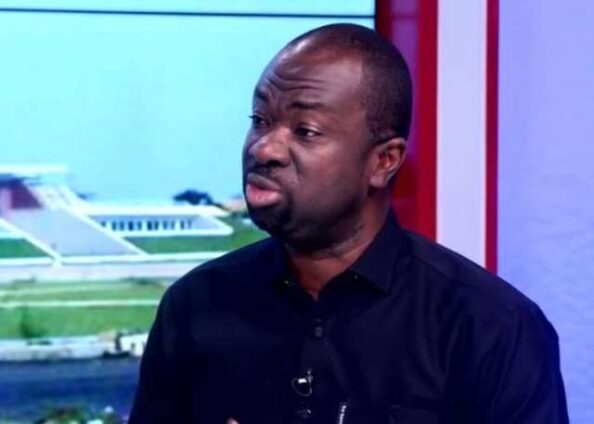
Vice Chair of the Subsidiary Legislation Committee and Member of Parliament’s Constitutional and Legal Affairs Committee, Nana Agyei Baffour Awuah, has raised concerns over the Attorney-General’s decision to take over cases from the Office of the Special Prosecutor (OSP), following a recent High Court ruling on prosecutorial authority.
Speaking on JoyNews’ Newsfile, he noted that while the court’s decision is binding, its practical implication is that the OSP cannot prosecute without authorisation from the Attorney-General, commonly referred to as a fiat.
However, he questioned the Attorney-General’s immediate move to assume control of ongoing cases instead of granting the OSP authorisation to continue its work.
“All that is required to cure the situation is to give the OSP the fiat. But instead, the reaction has been to take over the cases—cases the OSP has investigated and understands better,” he argued.
According to the Manhyia South MP, the development raises concerns over efficiency and continuity, particularly as many of the cases are already at advanced stages.
“When an institution has investigated and is already prosecuting cases, it is better placed to continue. Taking over midway raises questions about restarting processes and possible delays,” he added.
He further noted that significant state resources have been invested in the OSP, arguing that allowing the office to complete its prosecutions would be more practical than shifting responsibility to another institution already managing its own caseload.
He also suggested that the decision cannot be divorced from long-standing tensions between the OSP and sections of the political establishment, particularly following high-profile investigations.
“There is a history here. Attempts have been made in the past to weaken or even abolish the office. When such actions are viewed together, it raises legitimate concerns about intent,” he said.
He stressed the need for a clear transitional framework to guide the implementation of the court’s ruling, questioning the process for managing ongoing prosecutions.
“In every situation like this, there must be a transition plan. If the OSP is to seek fiat, then what is the process? What happens to cases already in progress?” he asked.
Latest Stories
-
French PM warns against escalation of school protests after 164 arrested
3 hours -
UK tries to stop Trump’s diesel export ban
3 hours -
Late Olise goal gives France win over Belgium
3 hours -
Mancini enjoys first win since return as Italy boss
3 hours -
Interest payments to average a high 20% of government revenue over next 4 years
3 hours -
Anthropic warns AI may pose ‘existential risks to humanity’ in IPO filing
3 hours -
Joe Hart trusts Man City chair Al Mubarak over ruling
4 hours -
Strategy of accumulating foreign reserves, gold carries high fiscal cost – S&P Global
4 hours -
Weak institutional arrangements, high debt servicing constrain Ghana’s rating – S&P
4 hours -
Man City CEO defiant over Premier League charges
4 hours -
Infantino makes bigger cash pledge to Fifa members
4 hours -
Bond market: Turnover declined by 28% to GH¢1.56bn
4 hours -
Volta Region National Public Speaking contest advances drug prevention conversation
4 hours -
New health training facility at Ampoma-Jema to address admission shortfalls, but Minister flags missing amenities
5 hours -
Black Challenge unveiled with sights set on Amputee World Cup glory
5 hours