

Audio By Carbonatix
The Director of Advocacy and Policy Engagement at the Centre for Democratic Development (CDD-Ghana) has described the Supreme Court’s decision to admit 14 civil society organisations as friends of the court in the case challenging the constitutionality of the Office of the Special Prosecutor Act as an important step toward ensuring balanced legal arguments before the court.
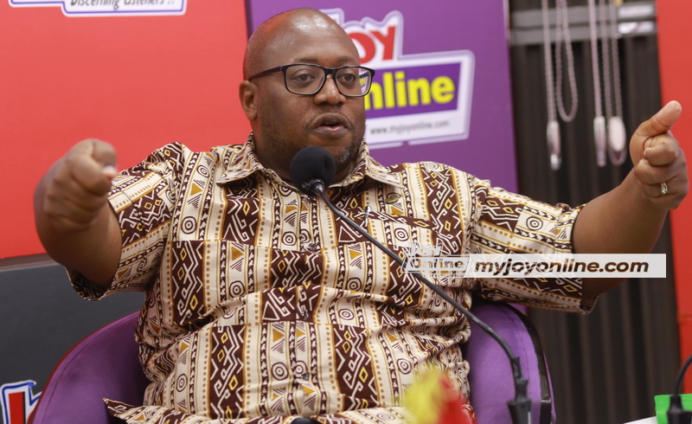
Speaking in an interview on Joy FM's Middaynews on Tuesday, May 19, Kojo Pumpuni Asante, explained that the CSOs sought to join the proceedings because both the applicant and the Attorney General’s Department appeared to hold similar positions on the matter, leaving the court without what he described as an alternative perspective on the constitutional issues surrounding the OSP law.
“I think it’s a very important step because the reason why we had entered this case was that the applicant and the Attorney General have taken a similar position.
“We thought that the court was left without an alternative perspective on the constitutionality of the OSP Act. So it was important that we actually enter as a friend of the court to provide those perspectives, given that we were very much involved in crafting the legislation,” he noted.
Mr Asante stated that organisations involved in developing the law in 2017 possess critical background information regarding the intentions behind the legislation and the legal considerations that informed its drafting.
Responding to questions on the specific information the CSOs intend to present before the court, he declined to go into details publicly, indicating that the issues would be addressed within the legal proceedings.
However, he indicated that the groups would provide insight into discussions on the Attorney General's delegated powers under the OSP Act and the accompanying Legislative Instrument.
“The fact that we were very much involved in the crafting of the law means that discussions around articulating the delegated powers of the Attorney General and how that was going to be addressed in the statute and later in the LI are all information and insights that we can provide to the court,” he said.
Mr Asante further noted that the Supreme Court would also have to consider the broader implications of any decision regarding the constitutionality of the OSP.
“The court is also looking at the overall implication of declaring the constitutionality or unconstitutionality of the OSP, and trying to understand what are the best ways to resolve that problem,” he stated.
The case before the Supreme Court is expected to determine the constitutional standing of the Office of the Special Prosecutor, a key anti-corruption institution established to investigate and prosecute corruption-related offences in Ghana.
Latest Stories
-
Telecel Ghana unveils Project X with Black Sherif partnership
2 minutes -
Rev. Kwadwo Bempah defies restriction on preaching on buses; warns it won’t succeed
16 minutes -
French Embassy to partner Kobby Kyei Media for bloggers’ training
19 minutes -
Nestlé and NBA announce multi-year international marketing partnership
33 minutes -
Mahama sends condolences to Nigeria over plane crash that killed 25
33 minutes -
Our lifestyles may be killing us but our spatial planning is too
43 minutes -
12 arrested as police seize firearms, suspected drugs in Tamale
44 minutes -
Chamber of Mines challenges Reuters report on proposed mining law
52 minutes -
LA 2028: Black Queens take first leg advantage with 3-0 win over Mauritius
55 minutes -
UG academic calendar could collapse if GAUA strike extends into next week – Awandare
58 minutes -
Black Sherif partners with Telecel Ghana to promote Telecel Cash
1 hour -
Nestlé Ghana expands Tema factory, raises evaporated milk production capacity
1 hour -
Telecel Ghana launches CARE Month with customer rewards and community outreach
1 hour -
Venezuela’s ex-leader Nicolás Maduro charged with conspiracy to commit torture
1 hour -
Nestlé Ghana expansion shows Ghana’s 24-hour economy in action – Mahama
1 hour