

Audio By Carbonatix
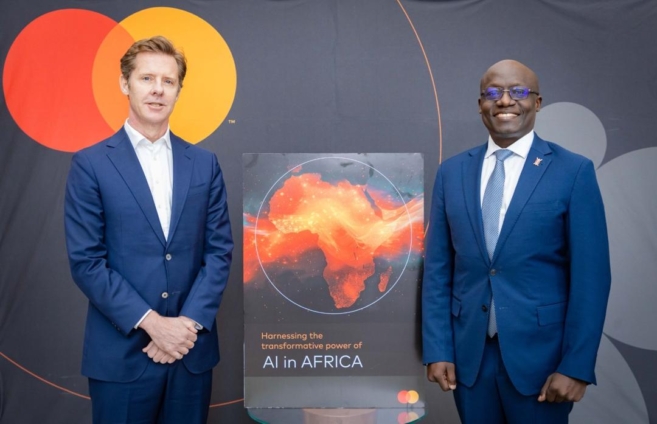
Mastercard has released its latest whitepaper, Harnessing the transformative power of AI in Africa, a pan-African study of the continent’s readiness, opportunity and roadmap for responsible artificial intelligence (AI) adoption.
The whitepaper provides detailed insights into how AI—if deployed responsibly and inclusively—can unlock transformative outcomes across the continent’s major industries, including agriculture, healthcare, education, energy and finance.
With Africa’s AI market projected to grow from US$4.5 billion in 2025 to US$16.5 billion by 2030 according to a recent report from Statista, the paper presents a clear case for multi-stakeholder collaboration and investment. It highlights how Africa’s unique demographics, mobile-first infrastructure and entrepreneurial spirit position it as an active architect of the future.
Mark Elliott, division president, Africa at Mastercard, commented: “Africa’s engagement with AI is already reshaping lives — not just in labs, but in farms, clinics and classrooms. To unlock its full potential, we need investment in infrastructure, data, talent, and policy. At Mastercard, we believe responsible, locally rooted AI can drive inclusive growth and connect more people to opportunity.”
The whitepaper outlines the potential positive impact of AI on digital infrastructure, policy and governance, research and development, local language processing and investment into Africa. It also explores how AI can accelerate job creation, with up to 230 million digital jobs projected by 2030, and increase access to formal finance through AI-enabled credit scoring and fraud prevention.
Greg Ulrich, chief AI and data officer, Mastercard, said: “AI is only as powerful as the trust behind it. At Mastercard, we’re committed to building AI that’s responsible, inclusive, and built to bring value to our customers, partners and employees. This isn’t just innovation—it’s innovation with integrity.”
Regional highlights covered in the whitepaper include:
South Africa: South Africa attracted US$610 million in AI-focused venture capital in 2023, with total AI investment expected to reach US$3.7 billion by 2030. With the highest data and infrastructure readiness in Africa, the country is solidifying its role as a continental leader in AI research and application. It is home to the Artificial Intelligence Institute of South Africa which serves as a gateway for students and professionals to access world-class education, research and industry news. National plans aim to develop up to 300 AI start-ups and train 5,000 AI professionals by 2030, creating the foundation for a vibrant, homegrown AI ecosystem.
Kenya: An emerging leader in AI innovation, Kenya has leveraged its “Silicon Savannah” status to securely deploy AI across sectors. Platforms like Tala use mobile data for credit scoring, while Jacaranda Health’s UlizaLlama, an AI-powered chatbot, provides maternal health support in five local languages. The newly launched National AI Strategy (2025–2030) outlines the government’s commitment to positioning Kenya as a regional leader in AI research and development, innovation and commercialization for socioeconomic development.
Nigeria: Nigeria ranks second in the number of AI startups in Africa and secured US$218 million in VC investment in 2023. As one of Africa’s most dynamic AI ecosystems, Nigeria is using AI to personalize learning (Rising Academies), deliver microfinance via Kudi.ai, and strengthen governance with AI tools that monitor public fund allocation. With a $1.4 billion projected AI market size by 2025, the government’s proactive approach, combined with growing private-sector innovation, suggests promising growth in AI applications.
Morocco: An emerging AI hub in North Africa, Morocco is advancing AI adoption across healthcare, energy, agriculture, and finance. Institutions such as Mohammed VI Polytechnic University and DeepEcho are driving local innovation, while the MoroccoAI Annual Conference is shaping national dialogue on the future of AI. Under its Digital 2030 strategy, Morocco aims to attract US$1.1 billion in investment and create 240,000 digital jobs by 2030. Despite this progress, the whitepaper warns that data fragmentation, language exclusion and regulatory inconsistency could deepen the digital divide.
Harnessing the potential of AI in Africa will be instrumental in accelerating financial inclusion and driving the continent’s digital and economic growth. Strategic collaborations between governments, fintechs, and global partners will be key to unlocking AI’s full impact.
Mastercard’s whitepaper draws on insights from leading African technologists, policymakers, academics and entrepreneurs, including interviews with UNESCO, the African Center for Economic Transformation, and fintech leaders across the region.
Latest Stories
-
Children among 109 dead after boat capsizes off Djibouti, UN says
1 minute -
OmniBSIC Bank’s 11th health walk promotes fitness and business growth
10 minutes -
2026 World Maritime Day: Danish Embassy organises “The Gulf of Guinea Speaks”
33 minutes -
New Economy will tackle unemployment and restore hope – Ato Forson
38 minutes -
IMMILAC president recounts personal losses as security women lead breast cancer awareness campaign in Wa
45 minutes -
University of Ghana postpones October 12 reopening as GAUA strike persists
60 minutes -
Bahass Foundation launches vocational skills training to support mental health recovery in Wa
2 hours -
NPP orders parliamentary aspirants and their supporters to suspend campaign activities
2 hours -
Techiman unites against child marriage: Joy Impact Makers Awardee leads charge on International Day of the Girl Child
2 hours -
Ghana Psychological Association calls for greater involvement of people with lived experience in mental health care
3 hours -
Ablakwa says Ghana could evacuate more citizens from South Africa if the situation worsens
4 hours -
Violence against girls must be tackled through individual responsibility – Gender advocate
4 hours -
Ghana’s BRICS bid must be guided by national interest – International Affairs Analyst
4 hours -
Journalists look back on a decade of breast cancer reporting in Ghana
5 hours -
President Mahama ends Resetting Ghana tour of Ahafo Region
7 hours