

Audio By Carbonatix
Over the weekend I woke up to 7 main articles on Ghana’s leading blog which all related to the protests about the economy that dominated the weekend. Other news outlets likewise covered the protests about the economy.
As someone who studies African politics at a post-graduate level and left Sierra Leone just before the 1st coup, I know a little about the recipe for making a coup and think Ghana should avoid this at all costs particularly since coups are often orchestrated by outside forces.
Although the economic woes facing most Ghanaians cannot be underestimated, with people who would not ordinarily ask for help making desperate pleas to friends, family and strangers just to survive, we don’t want an Animal Farm situation in Ghana. When we think another form of leadership is better and they end up being far more oppressive and the situation leads to far more economic woes than we could have imagined. Ghana must therefore maintain its position as one of Africa's most sustainable democracies.
In terms of the definition of a coup d'état, or coup, it is the sudden and violent overthrow of a government. Coups are often carried out by the military, but they can also be carried out by other groups, such as civilians or paramilitary forces.
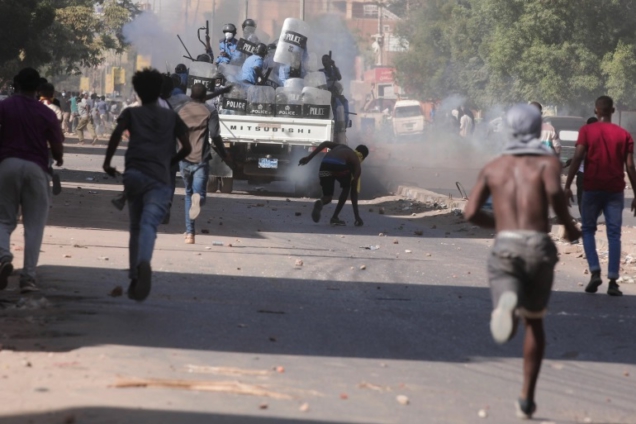
There have been 5 coups in Africa in the last two years. These coups have occurred in the following countries, on the following dates:
Burkina Faso: January 24, 2022
Chad: April 20, 2021
Guinea: September 5, 2021
Mali: May 24, 2021
Sudan: October 25, 2021
It is important to note that coups can be complex events with a variety of causes and consequences, motivated by a variety of factors including: political instability; economic hardship and a desire to seize power.
13 reasons why Ghana doesn’t need a coup in 2023 or any other year
Citizens
1. Coups can lead to instability and violence. This can make it difficult for a state to maintain its territorial integrity and to protect its citizens from harm.
2. Coups can overthrow democratically elected governments and establish dictatorships. This can deprive the people of their right to self-determination and their right to live under a government of their own choosing.
3. Coups can lead to human rights abuses. The military or other groups that carry out coups often use violence and intimidation to suppress dissent.
4. Coups can damage a state's reputation and make it more difficult for it to attract foreign investment and aid. This can further weaken the state and make it more vulnerable to external interference.
World and African geopolitics
5. Coups can destabilize entire regions. They can lead to the spread of conflict and violence, and they can make it more difficult for states to cooperate on issues of mutual interest.
6. Coups can undermine international law and norms. The international community has condemned coups as a violation of a state's sovereignty and the right of its people to self-determination.
7. Coups can damage Africa's reputation on the world stage. They can reinforce negative stereotypes about the continent and make it more difficult for African states to attract foreign investment and aid.
Economy
8. Coups can damage a state's economy. They can lead to a decline in foreign investment and tourism, and they can disrupt economic activity.
9. Coups can increase poverty and inequality. They can lead to job losses, higher prices, and a decline in government services.
10. Coups can make it more difficult for a state to achieve sustainable development. They can disrupt economic and social development programs, and they can create a climate of uncertainty and instability.
Violence and displacement
11. Coups can lead to violence and bloodshed. The military or other groups that carry out coups often use violence and intimidation to suppress dissent.
12. Coups can lead to displacement. People may be forced to flee their homes due to the violence and instability caused by a coup.
13. Coups can create a humanitarian crisis. The displacement of people and the disruption of economic activity caused by a coup can lead to a humanitarian crisis, with people lacking access to food, water, shelter, and medical care.
Here are some examples of coups in Africa that have been linked to outside interference:
Ghana (1966): The overthrow of President Kwame Nkrumah was allegedly supported by the United States and the United Kingdom, who were concerned about Nkrumah's socialist policies and his close ties to the Soviet Union.
Congo (1965): The assassination of Prime Minister Patrice Lumumba was allegedly supported by the United States and Belgium, who were concerned about Lumumba's communist sympathies and his plans to nationalize the country's copper mines.
Angola (1975): The overthrow of President Agostinho Neto was allegedly supported by the United States and South Africa, who were concerned about Neto's close ties to the Soviet Union and his support for the Cuban-backed Angolan government.
Burkina Faso (1987): The overthrow of President Blaise Compaoré was allegedly supported by Libya, which was interested in gaining control of Burkina Faso's uranium deposits.
Rwanda (1994): The Rwandan genocide was allegedly triggered by the assassination of President Juvénal Habyarimana, which was allegedly supported by France and Uganda.
It is important to note that it is often difficult to determine the full extent of outside interference in coups. Coup plotters may try to conceal their foreign ties, and foreign governments may deny their involvement. However, the evidence suggests that outside interference has played a significant role in a number of coups in Africa.
Conclusion
Although Ghana is nowhere near a coup we hope, it is still something that can come upon us and something that should be monitored on all levels and something society should lead on in terms of ensuring that it doesn’t happen because bloodshed in a nation and years and years of recovery, and years of economic woes and human rights abuses is something we do not want to labour under particularly under an undemocratic system and particularly if it is orchestrated.
Latest Stories
-
Robot seized by German police after allegedly groping teenage girl
14 minutes -
Subject EC appointment to ‘Akufo-Addo test’ – Kwapong
24 minutes -
English football’s independent regulator would quit over Man City interference
41 minutes -
Anthropic seeks rehearing of case over Pentagon’s security risk branding
52 minutes -
NDC Deputy National Organizer Aspirant Hamza Umar targets grassroots mobilisation
2 hours -
Partisan appointment cycle will persist without meaningful reforms – Osae-Kwapong
3 hours -
‘This cycle is not going to be broken any soon’ – Osae-Kwapong on partisan appointments
3 hours -
Partisan appointments won’t help restore trust in EC – Osae-Kwapong
3 hours -
Villarreal fight back to beat Napoli and end losing run
4 hours -
Tresoldi nets hat-trick as Club Brugge win Inter thriller
4 hours -
PSG’s Luis Enrique hopes Man City avoid sanctions
4 hours -
Lisandro Martinez issues scathing attack on Man Utd board – has he made things worse?
4 hours -
Saka responds to Arteta’s challenge with ‘huge impact’
4 hours -
Viking hold Bayern in thriller as Kane breaks Messi record
4 hours -
Gordon scores as Barcelona beats Galatasaray
5 hours