

Audio By Carbonatix
African leaders and development partners have renewed their commitment to restoring Africa’s depleted soils as a pathway to food security, climate resilience, and economic transformation.
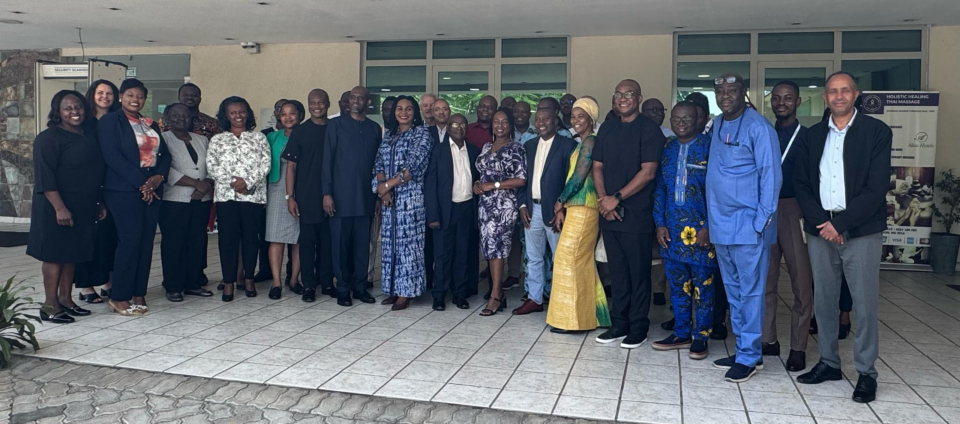
This came to the fore at a high-level convening held in Accra, Ghana, where stakeholders gathered to chart a clear path for implementing the Africa Fertiliser and Soil Health Action Plan (AFSH-AP).
The workshop, co-hosted by the African Union Commission (AUC), Forum for Agricultural Research in Africa (FARA) and AGRA, brought together technical experts, policy institutions, and advocacy leaders to align on national and continental priorities.
The event follows the adoption of the AFSH Declaration by African Union Heads of State in Nairobi in May 2024—marking a decade-long continental commitment to increase fertiliser efficiency, regenerate degraded lands, and ensure sustainable food production.
“At the heart of Africa’s transformation agenda lies our most valuable yet overlooked asset—our soils. We cannot end hunger or build resilience without restoring them,” said Prof. Fatunbi Oluwole, Acting Director of Research and Innovation at the FARA.
Africa currently loses more than 65% of its cropland to degradation. Across the continent, farmers face declining yields, rising input costs, and erratic weather patterns.
Without urgent investments in soil health, these challenges will continue to undermine national efforts toward food security and economic growth.
AGRA, a long-standing champion of sustainable farming, serves as a key partner and a member of two coalitions among the five of the AFSH-AP. AGRA is part of the Coalition for Policy and Advocacy and the Coalition of Extension and Advisory Services.
AGRA’s role is to bridge science, policy, and partnerships to support the localisation of the AFSH-AP across member states.
“AGRA is proud to belong to this advocacy movement. We are here not to lead alone but to co-create solutions with other stakeholders,” said Asseta Diallo, AGRA’s Senior Specialist on Soil Health and Integrated Management.
In line with its commitment to country-led agricultural transformation, AGRA is supporting the Ghanaian government to align fertiliser strategies with soil-specific needs, promote regenerative land management, and develop local intelligence systems that guide input use.
The emphasis is not only on fertilizer access, but also on soil stewardship, farmer training, and inclusive market systems that benefit women and youth.
A key outcome of the Accra workshop was the reaffirmation of local ownership as the engine for change. Participants called for deeper investment in local institutions, fertiliser blending facilities, and data systems that reflect the country’s agroecological diversity.
Participants emphasised that the AFSH-AP cannot succeed without trust, coordination, and African leadership.
“This is not just a policy dialogue. It’s a call to action to shift how we work—moving from fragmented programs to shared accountability, long-term partnerships, and results that farmers can feel,” said Dr. Godfrey Bahiigwa, Director of Agriculture and Rural Development at the African Union Commission.
With FARA, AGRA, the five coalitions, and other technical partners on board, Ghana has the opportunity to become a model country for localised fertiliser systems rooted in soil health.
The meeting also provided space for the coalitions to begin shaping 2025 work plans that support the implementation of the Nairobi Declaration.
As part of its mandate, AGRA is committed to elevating farmer voices, celebrating partner contributions, and making knowledge open and actionable.
The organisation will continue to serve as a technical convener, strategic ally, and trusted advocate for inclusive soil health and fertiliser systems in Africa.
The Africa Fertiliser and Soil Health Action Plan (AFSH-AP) is a 10-year continental strategy adopted by African Union Heads of State to address declining soil fertility and improve sustainable input systems.
It was developed through a multi-stakeholder process and is guided by principles of inclusiveness, African ownership, African led and partnership.
The African Union brings together leading African and global institutions committed to translating the AFSH Declaration into coordinated action.
Latest Stories
-
Prioritise cocoa sector with better prices, timely payments-Annoh-Dompreh urges NDC
20 minutes -
Lands and Mines Watch Ghana endorses Heath Goldfields’ mining capacity
35 minutes -
Gbintiri residents protest alleged diversion of 24-hour market project
1 hour -
Justin Bieber headlines Coachella with nostalgia-fuelled set
1 hour -
Ukraine and Russia accuse each other of hundreds of ceasefire violations
1 hour -
Asha Bhosle: The sound of Bollywood dies aged 92
2 hours -
Fire destroys section of 4-bedroom apartment at Tantra Hill
2 hours -
Safe city: Unnoticeable protection
2 hours -
North East Regional Police Commander raises alarm over burning of checkpoints
2 hours -
Free Primary Healthcare Programme set for take-off — Health Ministry confirms readiness
2 hours -
3 co-wives, 5 children perish in canoe disaster – Maritime Authority insists life jackets use mandatory for all water transport
3 hours -
Iran war lands ‘triple blow’ to flood-ravaged Sri Lankans
3 hours -
Gunmen kill at least 11 people at Afghanistan picnic spot
4 hours -
Woman, 25, in court for stealing baby at Bogoso
4 hours -
Trump unveils giant gold-accented victory arch design for US capital
4 hours