


Audio By Carbonatix
Bangladesh's former prime minister has been sentenced to death for crimes against humanity over her crackdown on student-led protests which led to her ousting.
Sheikh Hasina was found guilty of allowing lethal force to be used against protesters, 1,400 of whom died during the unrest last year.
Hasina was tried in absentia by the International Crimes Tribunal (ICT) in Bangladesh, having been exiled in India since she was forced from power in July 2024.
Prosecutors accused her of being behind hundreds of killings during the protests. Hasina has denied all charges, calling the trial "biased and politically motivated".
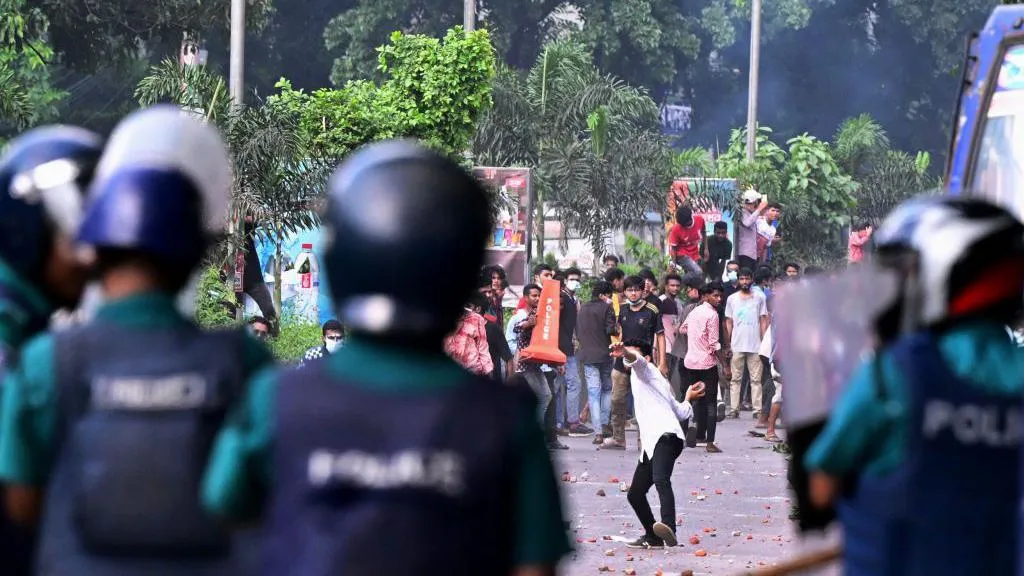
The verdict marks a pivotal moment for Bangladesh, as the protests unleashed anger over years of repression. Families of those killed and injured had called for tough penalties.
Reacting to the verdict in a five-page statement, Hasina said the death penalty was the interim government's way of "nullifying [her party] the Awami League as a political force" and that she was proud of her government's record on human rights.
"I am not afraid to face my accusers in a proper tribunal where the evidence can be weighed and tested fairly."
The capital, Dhaka, where the tribunal took place, was under tightened security ahead of the verdict on Monday, with many of Hasina's critics staging a rally and cheering as the verdict was read.
The city has seen a recent spike in unrest, with dozens of bombs exploding and buses set on fire in the days leading up to the verdict.
At least one bomb explosion was reported in Dhaka on Monday morning, with no casualties reported, local police official Jisanul Haque told the BBC.
The student-led uprising last year started with demands to abolish government job quotas but morphed into a wider anti-government movement.
UN human rights investigators said in a report in February that the approximately 1,400 deaths could amount to "crimes against humanity".
The report documented the shooting at point-blank range of some protesters, the deliberate maiming of others, arbitrary arrests and torture.
Leaked audio of one of Hasina's phone calls, verified by BBC Eye earlier this year, suggested she had authorised the use of "lethal weapons" in July 2024. The audio was played in court during the trial.
Ahead of the verdict, family members of those killed during the protests told the BBC they wanted Hasina to be punished severely.
Ramjan Ali, whose brother was shot dead in July 2024, said he wanted "exemplary punishment" for Hasina and others who have "committed acts of vengeance and abused their power".
Lucky Akther, whose husband was killed near Dhaka in August 2024, said she wanted Hasina's sentence to be "carried out before the election".
"Only then the families of those killed [in the protests] will find peace in their hearts."
Since Hasina's ousting, an interim government led by economist Muhammad Yunus has taken charge. A parliamentary election is scheduled for February 2026.
However, the Awami League, Hasina's political party, was banned by Bangladesh's interim government in May.
Hasina warned last month that if the party's candidates were banned from standing in the upcoming election, millions would boycott the vote.
The verdict now poses a diplomatic challenge for India and Bangladesh. Dhaka has formally requested her extradition, but so far India has shown no willingness to comply.
Hasina's state-appointed lawyer, Mohammad Amir Hossain, said he was "sad [and wishes] the verdict had been different".
"I even cannot appeal because my clients are absent; that's why I am sad," he added.
Last week, Hasina's lawyers said they had filed an urgent appeal to the UN, raising serious fair trial and due process issues at the ICT.
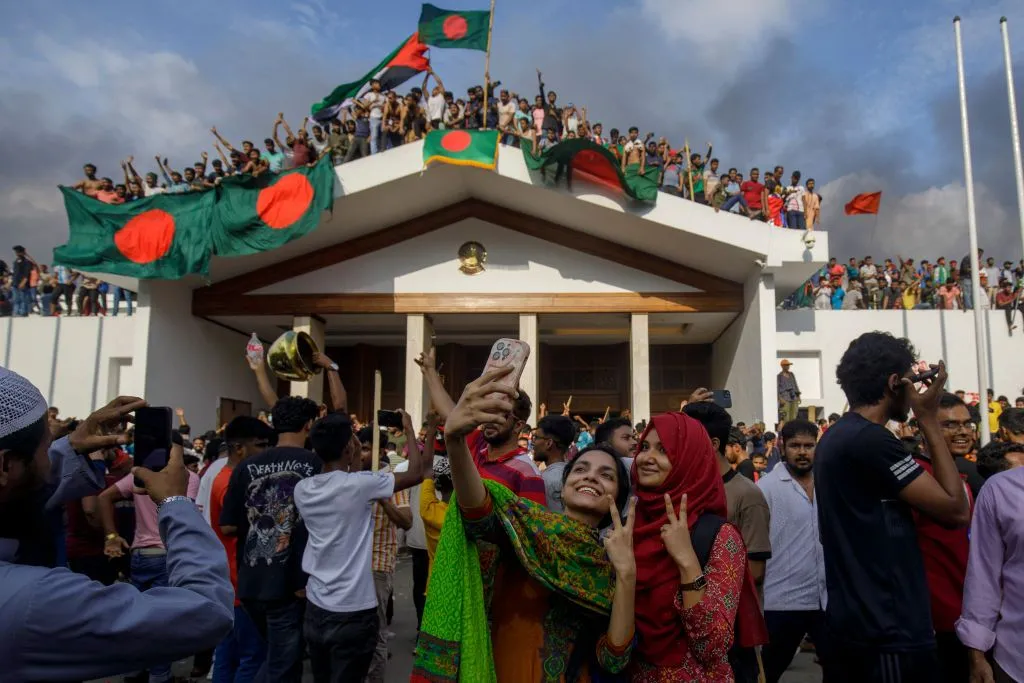
Hasina was tried alongside her former home minister and police chief.
While the sentence offers some closure to families of those killed in the protests, it may do little to soothe the country's political divisions.
"The anger against Sheikh Hasina and the Awami League has not subsided," Shireen Huq, a Dhaka-based rights activist, told the BBC. "Neither she nor the party has apologised or shown any remorse for the killings of hundreds of people."
She said, "It makes it difficult for the party to be accepted by a majority of people in this country."
Ms Huq added that the punishment was not closure for the families of those killed and injured.
"We work with several people who lost their limbs forever; they are amputees now, due to the crackdown. They will never be able to forgive her."
David Bergman, a journalist and a long-time Bangladesh watcher, said the "very nature of the conviction could make it even more difficult" for the Awami League to become a normal feature of Bangladeshi politics again.
This may change if "there is some kind of apology and a distancing from Sheikh Hasina and the old leadership", he said.
Latest Stories
-
Power restoration fault suspected in Kumasi Central Market fire
2 hours -
The 7-foot giant of Ngleshie Amanfro: Seven-foot Ghanaian Ephraim Saawa dreams of joining the national basketball team
3 hours -
Government promises support for Kumasi Central Market fire victims
3 hours -
Vibes The Movie: Big Ghun’s Ghanaian film earns five nominations at 2026 REFFA
4 hours -
MamaCare CEO warns unresolved conflicts among health workers could undermine maternal and neonatal care
4 hours -
Health professionals urged to translate medical knowledge into practice to save mothers
4 hours -
Conflicts among care providers linked to maternal, neonatal deaths – Expert
6 hours -
GIS marks 10th TIME conference, champions improved teaching practices
6 hours -
BRICS Or Balance? What Ghana’s bid really means
6 hours -
GPRTU wants full TRAFFITECH-GH implementation to start in 2027
7 hours -
Mahama announces plans to import electric wheelchairs for PWDs
7 hours -
KGL U17 Colts 2026: Western beat Prempeh Elite Academy to set up final final with Greater Accra Region
7 hours -
Late Solanke strike salvages 10-man Spurs draw at Man United
7 hours -
Gender Ministry to monitor welfare of Nana Akua Addo’s children amid domestic violence case
7 hours -
Benedict Okyere Yeboah: Ghana’s football problem goes beyond sacking a coach
7 hours