

Audio By Carbonatix
Engineer Eric Atta-Sonno has issued a strong call for Ghanaians to embrace positive attitudinal change both in workplaces and in homes, stressing that such transformation is indispensable to improving leadership and governance across the country.
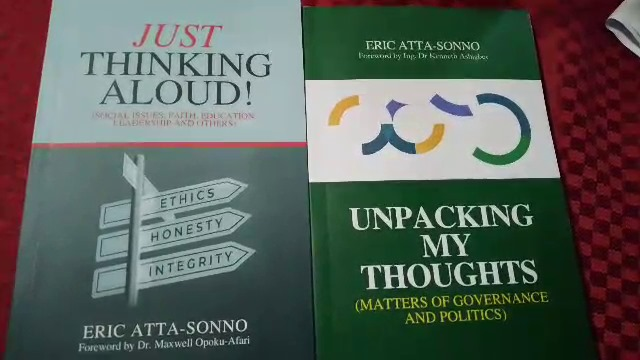
He said this at the launch of his new books, “Just Thinking Aloud” and “Unpacking My Thoughts,” where he highlighted the deep-rooted behavioural shortcomings affecting national progress.
According to him, many of the governance failures Ghana faces stem not only from leadership weaknesses but from societal habits that gradually shape those who eventually rise to lead.

Drawing from personal experiences, Engr. Atta-Sonno recounted his 2018 visit to the La Dade-Kotopon Municipal Assembly, which exposed him to worrying attitudes—delays, indiscipline, and a general lack of urgency in public service.
He also pointed to misconduct within institutions such as the Ghana Police Service, citing instances of indiscriminate parking at intersections, driving on road medians, and the frivolous use of sirens even in non-emergency situations.
“These behaviours are not isolated,” he remarked.
“Leaders emerge from the same communities in which such attitudes are normalized. If our society continues to tolerate indiscipline, we cannot expect transformational leaders to emerge from it.”

He emphasised that national development depends on individuals choosing to act responsibly, uphold standards, and hold those in authority accountable for the country’s progress.
Engr. Atta-Sonno’s newly launched books tackle a broad range of issues affecting the nation.
“Just Thinking Aloud” explores Social Issues, Faith, Leadership, and Education, while
“Unpacking My Thoughts” examines Economic Management, Social Justice, Rights and Equality, the Constitution, Democratic Consolidation, Electoral Politics, Decentralization, and Local Government.

At the same event, legal practitioner and governance expert Lawyer Eric Oduro-Osae underscored the urgent need to strengthen Ghana’s local governance systems.
He argued that effective decentralisation remains a key pillar of sustainable national development and must therefore be prioritised.
Latest Stories
-
Why Muzic Mensah walked away from gospel and embraced highlife
2 hours -
Ayariga rallies public, private sector support for Jamestown waste evacuation
2 hours -
NSMQ 2026: Three schools, one trophy – PRESEC, AUGUSCO and Accra Academy set for grand finale
3 hours -
Government directs TDC to comply with TMA development control authority
3 hours -
Recognition of reparatory justice creates responsibility for Ghana – Vice President
3 hours -
KNUST SHS defeats Osei Adutwum SHS to win Luv FM High School Debate
3 hours -
Afenyo-Markin, A-Plus unite to restore peace after New Winneba clashes
4 hours -
A-Plus, Afenyo-Markin to visit families affected by New Winneba violence
4 hours -
A-Plus urges calm as authorities move to end New Winneba tensions
4 hours -
Customs explains red, green channels at Accra International Airport
4 hours -
Agyeman‑Rawlings calls for stronger child protection in armed conflict
4 hours -
History made! Accra Academy book first-ever NSMQ final spot after dominant semi-final display
5 hours -
Woman’s decomposed body found in gutter near Haatso DVLA office
5 hours -
Residents of Akaa, surrounding communities demand improved network coverage
5 hours -
‘Chief Justice’s role is to administer justice, not protect any agenda’ – Haruna replies Franklin Cudjoe
5 hours