

Audio By Carbonatix
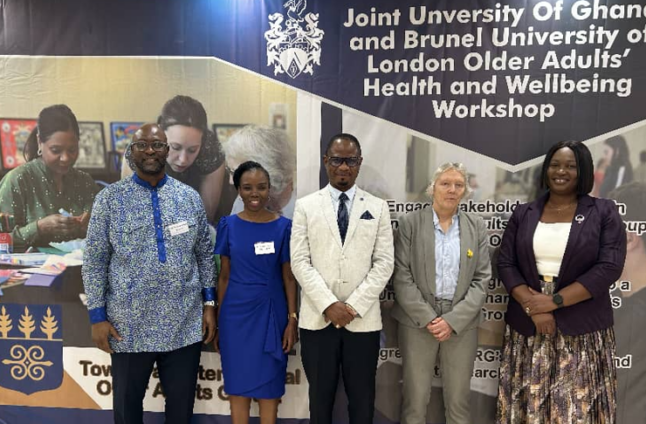
Brunel University of London, in partnership with the University of Ghana, successfully hosted a three-day workshop in Accra aimed at improving the well-being of older adults.
The workshop focused on establishing an Older Adults Reference Group in Ghana through a Patient and Public Involvement and Engagement (PPIE) initiative.
This initiative seeks to amplify the voices of older adults, ensuring that their perspectives shape healthcare policies, research, and well-being programmes.
The reference group is expected to play a crucial role in guiding research from conceptualisation to implementation, ensuring that interventions are tailored to the needs of Ghana’s ageing population.
Academics from Brunel University of London shared insights on the structure and impact of the Brunel Older Adults Reference Group (BORG), a model that has significantly influenced health and well-being research in the UK. Sessions covered topics such as health literacy on sarcopenia, diet and exercise considerations, and pain research, with the aim of adapting these approaches to the Ghanaian context.
BORG has been instrumental in shaping Brunel University’s health and well-being research by incorporating the real-life experiences and needs of older adults. Inspired by its success, the workshop aimed to replicate this model in Ghana, ensuring that older adults’ voices inform research, educational programmes, and healthcare initiatives.
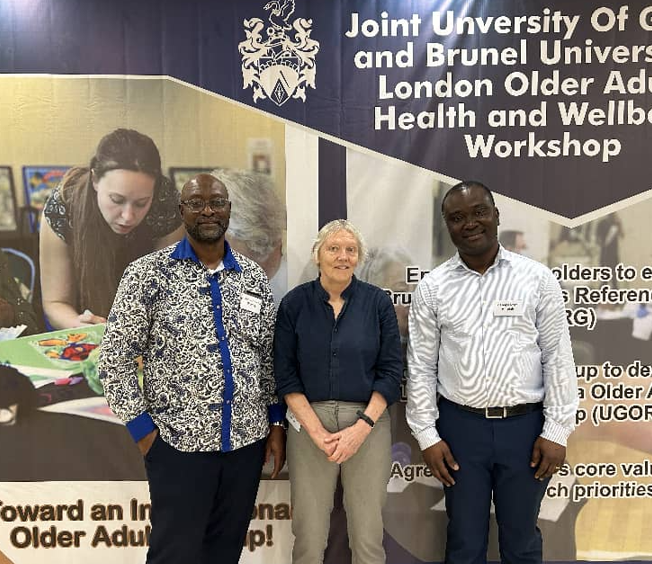
The delegation from Brunel University was led by Dr Paapa Kwesi Ampiah, a lecturer at the institution, while Professor Jonathan Quartey, an Associate Professor of Physiotherapy and Chair of the Health Education Unit at the College of Health Sciences, University of Ghana, spearheaded the initiative in Ghana.
Speaking at the event, Dr Ampiah highlighted the significance of the initiative:
"Our goal is to establish an Older Adults Reference Group to ensure that older adults play a key role in shaping research, healthcare, and well-being initiatives designed for them in Ghana."
Professor Christina Victor, a leading figure behind BORG, explained the motivation behind the collaboration:
"The University of Ghana was the ideal partner for this initiative. The response has been fantastic, and we are hopeful that the workshop will yield meaningful results."
Dr Salamatu Attah Nantogma, a representative of the Ghana Health Service, praised the collaboration, expressing optimism about its impact:
"As a health practitioner, I am excited to see this partnership between Brunel University and the University of Ghana. I strongly believe this initiative will have lasting benefits for current and future generations of older adults."
Professor Elsie Effah Kaufmann, Dean of the School of Engineering Sciences and founding head of the Department of Biomedical Engineering at the University of Ghana, emphasised the role of technology in enhancing older adults' lives:
"I believe this workshop will empower older adults by introducing them to assistive technologies that will significantly improve their daily lives."
Rev. Joseph Amoako, a representative of the Older Adults Group in Ghana, commended Brunel University for its commitment to supporting older adults through research and policy development.
Dr Peter Ndaa, from the Centre for Disability Studies and Advocacy at the University of Ghana, expressed enthusiasm about the workshop’s potential impact, particularly for older adults living with disabilities.
Professor Quartey also highlighted the broader significance of the initiative:
"The outcomes of this workshop will not only benefit older adults but also serve as a vital resource for academicians and researchers."
Held from Monday, 24th February to Wednesday, 26th February, the workshop engaged stakeholders in focused group discussions to ensure its effectiveness and long-term impact. Participants expressed hope that the initiative would bridge existing gaps in healthcare research and policy development for older adults in Ghana.
As the initiative takes shape, stakeholders remain optimistic that this collaboration will lead to a more inclusive healthcare system, where older adults are not just recipients of policies but active contributors to their own well-being.
Latest Stories
-
Ghana to honour Christina Hammock Koch for historic Artemis II mission
18 minutes -
Supreme Court appointments require more than 15 years’ experience – Justice Adjei-Frimpong
35 minutes -
Fire destroys 3-bedroom house at Bogyawe
58 minutes -
Why the Supreme Court is a “policy court” – Justice Richard Adjei-Frimpong breaks it down
1 hour -
Playback: The Law discussed Supreme Court @150
2 hours -
MTN Momo staff walk to promote wellness and fitness
2 hours -
Assafuah: Sedina Attionu’s return from Nevada will test government’s commitment to accountability
3 hours -
How GRA’s Modified Taxation Scheme is boosting revenue compliance & SMEs competitiveness
3 hours -
Stonebwoy Can Do It: A call to unite behind 2026 BHIM Fest
3 hours -
World Shea Expo returns to Tamale for 2026 edition
3 hours -
Prioritise cocoa sector with better prices, timely payments-Annoh-Dompreh urges NDC
4 hours -
Lands and Mines Watch Ghana endorses Heath Goldfields’ mining capacity
4 hours -
Gbintiri residents protest alleged diversion of 24-hour market project
4 hours -
Justin Bieber headlines Coachella with nostalgia-fuelled set
4 hours -
Ukraine and Russia accuse each other of hundreds of ceasefire violations
5 hours