

Audio By Carbonatix
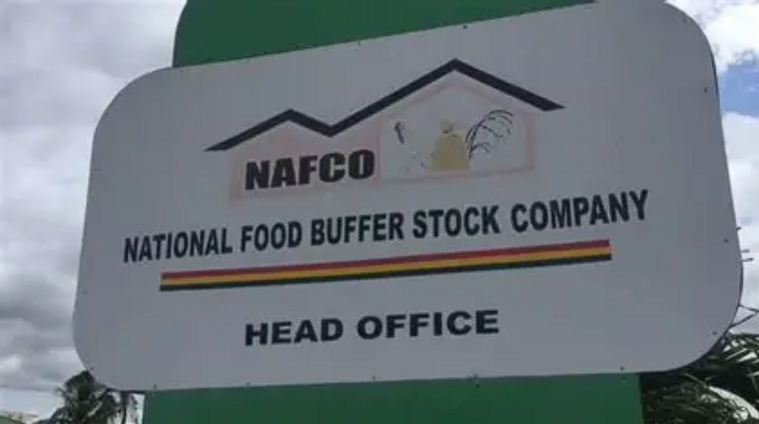
The Head of Corporate Affairs at the Ghana National Buffer Stock Company (NAFCO), Emmanuel Arthur, has dismissed concerns that food is supplied to senior high schools without clear disclosure of pricing to school authorities.
He explained that food procurement and pricing for senior high schools follow a structured process involving multiple stakeholders, rather than being determined unilaterally by the Buffer Stock Company.
Speaking in an interview on Joy FM's Newsnight on May 19, Mr Arthur said that at the start of every academic year, a pricing committee is convened to agree on food prices for supply to schools under the second-cycle feeding arrangement.
He said the committee includes representatives from the Ministry of Education, Ghana Education Service, the Conference of Heads of Assisted Secondary Schools (CHASS), and the Buffer Stock Company.
“At the beginning of the academic year, what we call the pricing committee meets. This committee comprises the Ministry of Education, Ghana Education Service, CHASS and Buffer Stock. Together, we fix the prices,” he explained.
He added that once the committee agrees on the prices, the Ghana Education Service forwards them to the Public Procurement Authority (PPA) for approval before implementation.
“When approval comes, it is communicated to all parties and then supply takes place. So all parties are aware of the prices,” he stated.
His comments follow concerns raised by some school heads who claimed they were not aware of the cost of food items supplied to their institutions.
However, he insisted that CHASS representatives are part of the process and are expected to relay decisions back to their members, noting that not all headmasters attend the meetings directly.
He also clarified that food supply under the programme is not handled by Buffer Stock alone, but also involves the Ghana Commodity Exchange as part of the distribution chain.
On current supply levels, he stated that no senior high school is experiencing food shortages.
“As we speak, no school can say they have food challenges. For the first time in many years, schools have more than they even need,” he said, adding that some schools are even facing storage constraints due to excess supply.
Latest Stories
-
Ghana explores centre of excellence for hearing, communication and cochlear implant care
1 hour -
Schizophrenia-related disorders lead mental health cases recorded in Ghana
1 hour -
Dutch authorities enlist Ghana in hunt for fugitive drug lord Bolle Jos
2 hours -
Ghana housing finance conference adopts communiqué to improve affordable housing access
6 hours -
Special Initiatives Minister urges Wa Technical Institute to enrol more girls as EU-backed solar training lab opens
7 hours -
In the matter of my first year at the Bar
7 hours -
ActionAid Ghana calls for an end to child marriage, greater investment in girls’ rights
7 hours -
Newsfile to tackle World Cup visa scandal, beach demolitions, education strikes, BRICS bid
7 hours -
UK-Ghana Trade & Investment Summit: Trade Resource Centre to help businesses maximise UK-Ghana trade opportunities
8 hours -
Embassy of Denmark celebrates World Maritime Day
8 hours -
Linking LEAP to productive inclusion could cut extreme poverty by 2030 – UNICEF
9 hours -
Trade Ministry backs use of creative arts to rehabilitate prison inmates
9 hours -
Negotiations with government to continue despite strike suspension – GNAT
9 hours -
‘Ghana cannot afford to waste public resources; every cedi has a job’ – Ato Forson
9 hours -
Ghana expects economic boost as World Assemblies of God Congress brings 10,000 delegates to Accra
9 hours