

Audio By Carbonatix
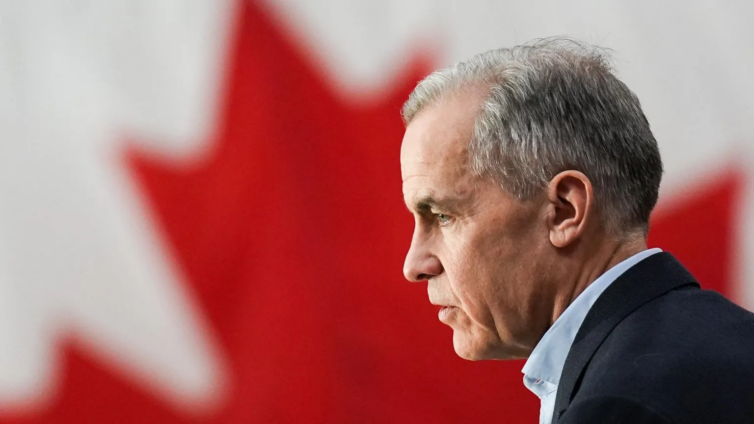
Canadian Prime Minister Mark Carney has said his country "will not accept a bad deal" simply to reach a trade agreement with the US, as a deadline of 1 August looms before US President Donald Trump begins to impose new tariffs.
"Our objective is not to reach a deal whatever it costs," Carney told reporters in Ontario. "We are pursuing a deal that will be in the best interest of Canadians."
US importers buying goods from Canada will face a 35% tax if no deal is reached before the deadline.
The neighbours are among each other's largest trading partners, but have been in a standoff after Trump returned to the White House earlier this year and unleashed a sweeping programme of tariffs.
He has argued that these will boost American manufacturing and protect jobs. But the move has disrupted the global economy, and prompted warnings from critics that products could become more expensive for US consumers.
Trump has already imposed a blanket 25% tariff on imports of certain Canadian goods, as well as a 50% tariff on aluminium and steel imports.
Speaking on Tuesday, Carney said he would consider taking action to protect aluminium and lumber companies, two of the country's key industries, and hinted at the possibility of other protectionist measures as the full effect of US tariffs kicked in.
The prime minister previously announced counter-measures including higher tariffs on imports of steel to Canada.
"It will probably be the case in the next couple of months... we'll see other needs for support for the sectors that have been the most affected," the prime minister said at a gathering of Canadian province leaders.
Canada sells about three-quarters of its goods to the US. In addition to metals and lumber, Canada exports large quantities of oil, cars and car parts, other machinery, food and pharmaceuticals.
According to the Office of the US Trade Representative, in 2024 the US exported nearly $350bn (£258bn) in goods to Canada, and imported more than $412bn from its northern neighbour.
Trump has announced a large array of tariffs both on specific product categories and countries, alleging that the US has been treated unfairly by its foreign trading partners.
He has also given other justifications for the tariffs, including that he is trying to exert pressure on his neighbours to curb illegal shipments of fentanyl into the US.
According to data from the US Customs and Border Patrol, about 0.2% of all seizures of fentanyl coming into the US occur at the border with Canada, with almost all of the rest confiscated at the border with Mexico.
Since unleashing a global programme of tariffs, Trump has announced a handful of deals - including with the UK, Japan and Indonesia - but those agreements have kept in place some higher tariff rates.
On Tuesday, for instance, the White House announced a deal with the Philippines including a 19% tariff on goods from the country – up from a 17% rate initially announced, but lower than a 20% tariff Trump threatened in a letter earlier this month.
Latest Stories
-
NDC threatens sanctions over oversized campaign posters, gives aspirants 5 days to comply
14 minutes -
Star Oil paid GH¢2.7bn in taxes, levies in nine months of 2026
29 minutes -
Samson’s Take: The rule of law is cheaper before the bulldozer
30 minutes -
GRA blames system failure for delay in issuing receipt over passenger’s customs duty
51 minutes -
Livestream: Newsfile discusses World Cup visa scandal, beach demolitions, education strikes, BRICS bid
55 minutes -
NC-PTAs welcomes end of teachers’ strike, urges parents to prepare children for Monday
1 hour -
Government procures over 2,000 transformers as Ghana’s electricity access hits 89.13% – Energy Minister
2 hours -
UTAG-UG threatens strike on October 19 over unpaid allowance
2 hours -
Let The Constitution direct Chieftaincy to deliver “All Development Is Local”
3 hours -
John Jinapor outlines renewable energy, nuclear power priorities for 2027
3 hours -
Ghana explores centre of excellence for hearing, communication and cochlear implant care
4 hours -
Schizophrenia-related disorders lead mental health cases recorded in Ghana
5 hours -
Dutch authorities enlist Ghana in hunt for fugitive drug lord Bolle Jos
5 hours -
Ghana housing finance conference adopts communiqué to improve affordable housing access
9 hours -
Special Initiatives Minister urges Wa Technical Institute to enrol more girls as EU-backed solar training lab opens
10 hours