

Audio By Carbonatix
The United States and Canada have entered into uncharted territory.
The longtime allies and economic partners, who have enjoyed free trade for decades, are now in an escalating trade war with no clear off ramp.
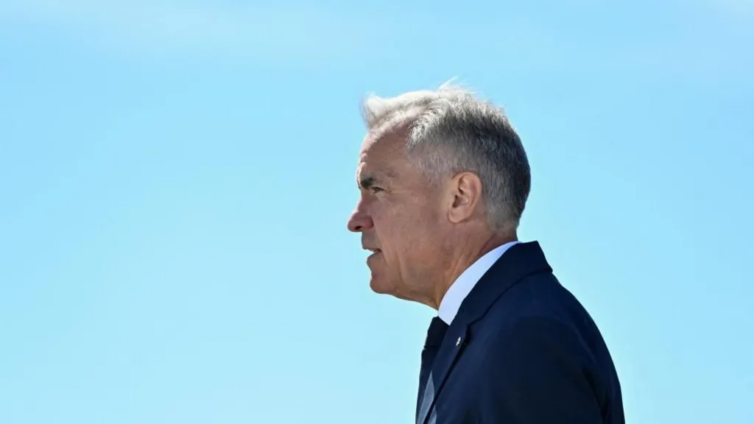
And for Prime Minister Mark Carney, the late night decision to suspend talks with President Donald Trump and to retaliate instead of agreeing to a deal that seemed in reach, will be a significant political test.
He is one of the first world leaders to walk away from the negotiating table with the White House - and the outcome will be closely watched.
Both sides have have blamed last-minute changes for torpedoing the tentative deal.
Carney's decision will also challenge the appetite among Canadians to accept some economic pain as Ottawa pushes for more US concessions.
After rejecting Trump's high pressure tactics, and in choosing to hit back against the latest duties, Carney will need to convince Canadians that the economic pain is worth the cost of standing up to the Trump administration in search of a better agreement in the long run.
There is no doubt this will cause pain on both sides of the border, with business facing more pressure from US duties and Canadian counter-tariffs.
Canada sends about 70% of its exports to the US, and the country is the top trading partner for a number of US states, with Michigan, Kentucky, Indiana and Ohio among the most exposed.
Carney came to power with a call for "elbows up" - an ice-hockey term for an aggressive approach - vowing to fight for Canada in the face of a Trump administration keen to exert economic pressure for its America First agenda.
Many Canadians have told pollsters that they are willing to fight.
A recent survey by Abacus Data suggested that around 36% of Canadians would support retaliating to US tariffs, while a Leger poll indicated that 56% of Canadians want the federal government to take a hard line and make no more concessions.
Canadians frustrated with the US tariffs have already chosen to avoid travelling there. The boycott has meant a loss of about C$3.3bn ($2.35bn; £1.75bn) in travel revenue for the US last year.
A decision by most provinces to remove US alcohol from store shelves has hammered that sector.
Based on US government trade data, US wine exports to Canada fell 78% year over year, a $357m loss in export value. The US distillers association reported similar numbers - saying provincial bans have caused exports of American spirits to drop by more than 70%.
The ban quickly became a point of frustration for the Trump administration.
Canada’s prime minister will also need to convince the provinces who have been less affected by the US trade dispute so far that walking away is a risk worth taking.
He will be meeting them on Saturday to brief them on the current state of affairs.
For a week, it seemed that a deal between Washington and Ottawa was in reach.
It's still unclear exactly how the talks fell apart in the final hours.
Carney said that late US proposed terms "were unfair, uneconomic, and called into question the reliability of any deal".
US trade representative Jamieson Greer pointed to "new demands and walk backs of other commitments by Canada".
In a statement on Friday, the Distilled Spirits Council of the United States suggested "Canadian provinces' continued refusal to return US spirits products to store shelves has led to this outcome".
Both Ontario and Quebec had yet to say whether they were on board with a reversal on the US booze boycott.
There were also reports by Canadian media that US Commerce Secretary Howard Lutnick, was unhappy with the deal.
And as details on an interim trade agreement with the US trickled out over last week, some provincial leaders, industry groups and political opponents raised concerns that the prime minister had not delivered on the fight he promised.
Conservative opposition leader Pierre Poilievre said that any agreement that included "one-sided" tariffs on Canadian industry would be "a bad deal".
On Saturday, he backed Carney's decision to walk away for now, saying: "Canada cannot accept one-sided tariffs that will deindustrialise our country."
Doug Ford, the premier of Ontario and usually one of the most vocal Canadian politicians on US tariffs, had been silent on the tentative deal.
But in a letter sent to Carney this week, and released later by his office, Ford raised concerns that an agreement under pressure from the US would “embolden the United States to seek concession after concession".
The province, which has a large manufacturing and vehicle sector, has been among the hardest hit regions in this trade dispute.
After negotiations broke down, Ford said "the prime minister has my full support for a strong response - tariff for tariff, dollar for dollar".
Now Carney - and Canada - must wait to see how Trump responds.
Latest Stories
-
I do not see myself as better than anyone – NPP’s 1st Vice Chair Kojo Bamba
11 minutes -
Police blur the line between invitations and arrests – Reindorf Twumasi Ankrah
46 minutes -
Turning invitations into arrests is making citizens reluctant to assist police – Twumasi Ankrah
1 hour -
The Traffitech-GH SMS spot-fine system: The good, the sad, and the funny – Bright Simons writes
2 hours -
Hawa Koomson pledges experienced and mature leadership of NPP women’s wing
3 hours -
Young woman found dead at Kasoa Peace Town
3 hours -
Playback: The Law examined lawful arrest in Ghana
4 hours -
Mahama urges African governments to treat healthcare as an investment, not budget cost
4 hours -
Bawumia congratulates John Boadu and new NPP executives, pledges support ahead of 2028
4 hours -
Aksa Energy delegation pays courtesy call on GRA Commissioner-General
4 hours -
‘No talent should be left out’ – Bawumia pledges inclusive NPP campaign for 2028
4 hours -
Prof. Mike Oquaye recounts how he blocked the Special Prosecutor’s attempt to arrest Bawku Central MP
5 hours -
Make health sovereignty a priority for Africa – Mahama
5 hours -
Dorimon Naa, Wa West DCE lead massive clean-up exercise; threaten sanctions against recalcitrant residents
5 hours -
Photos from Adom FM Y2K Jam
5 hours