

Audio By Carbonatix
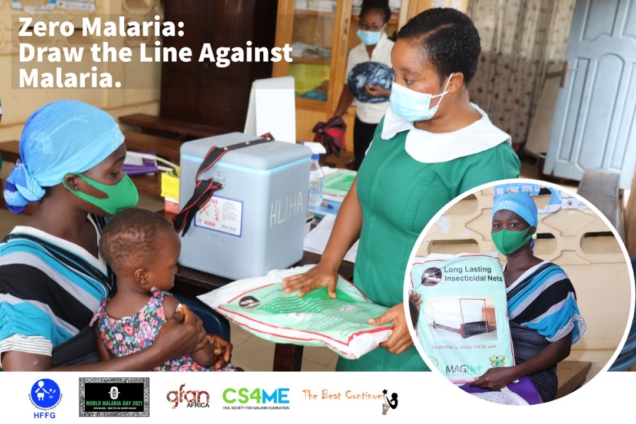
World Malaria Day falls on April 25, 2021. The theme for this year is: Zero Malaria - Draw the Line against Malaria. This is the right time to draw the line against malaria by taking action to end the disease at this time when Covid-19 has made the fight harder.
On this day, let’s highlight and appreciate the efforts that have been made over the years to control malaria and celebrate the gains so far.
Since 2000, the world has made historic progress against malaria, saving millions of lives. According to the World Health Organization’s world malaria report 2020, 7.6 million malaria-related deaths have been averted since 2000.
This is a huge success resulting from concerted efforts by Governments, donors, and multilateral institutions such as the Global Fund partnership, which provides 56% of all international financing for malaria, and has invested more than US$13.5 billion in malaria control programs since the year 2002.
In Ghana, data suggests that the proportion of deaths attributed to malaria per 100,000 population has decreased from 10.8/100,000 in 2012 to 1.1/100,000 in 2019.
Notwithstanding, half of the world still lives at risk of malaria. Ghana remains part of the top countries in the world which contributes to the global malaria burden.
Globally, 409,000 people died from the disease in 2019. An estimated two thirds of these deaths are among children under the age of five.
Every two minutes, a child dies from malaria. These statistics should make us restless, especially because malaria is a preventable and treatable disease.
As malaria continues to cause needless deaths, Covid-19 has complicated the fight to end malaria.
A new report by the Global Fund to Fight AIDS, Tuberculosis and Malaria shows that in 2020, Covid-19 massively disrupted health systems and health service delivery for malaria in low- and middle-income countries in Africa.
Indeed, the COVID-19 pandemic and restrictions related to the response caused disruptions to essential malaria services.
Initial messaging that aimed to reduce coronavirus transmission advised the public to stay at home if they had a fever, potentially disrupting treatment for those who may have had malaria and needed treatment.
The lockdowns slowed down malaria prevention programmes such as the distribution of mosquito nets. This disruption to malaria prevention and treatment is causing increase in deaths from the disease and potentially will lead to a surge in deaths in subsequent years. Children and pregnant women particularly remain at great risk.
The fight against malaria must remain a priority. It is time for rigorous efforts to protect everyone who is at risk of malaria and to guard the tremendous strides made in fighting the disease.
This calls for high impact investments in education, prevention, diagnosis and treatment, including research and development and building stronger health systems.
To achieve this, there is a need for stronger political leadership, more funding including domestic resource mobilization and increased innovation.
Community engagement, robust partnerships with the private sector, foundations, academia, Government, civil society, for joint planning, execution, transparency, and accountability will play an important role in malaria elimination.
Continuing to invest in research & development, scaling up country-driven solutions as well as innovations such as real-time data and next-generation nets will help us stay ahead of the mosquito and its killer tactics.
Social and gender norms that present barriers to accessing healthcare especially among poor and vulnerable women and girls who are often primary caregivers should be addressed.
These actions to beat malaria must strongly engage communities and the youth.
The commendable efforts to beat Covid-19 must not be at the expense of accelerating progress against malaria. Malaria investments can be leveraged to fight Covid-19 and emerging diseases by promoting and facilitating safe and timely treatment of fever and ensuring that health workers are adequately protected and equipped.
Critically, malaria programmes must be integrated with broader efforts to build stronger systems for health, which are anchored on established community health systems.
Further, ending endemic diseases such as malaria will contribute to strengthening fragile health systems and beating pandemics like Covid-19 because ending malaria will reduce the burden on health systems and increase capacity to detect, prevent, and respond to pandemics.
Despite the unprecedented challenges presented by Covid-19, malaria elimination remains a viable goal that will contribute to achieving universal healthcare coverage so that everybody has access to efficient, effective, and affordable healthcare wherever they are and whenever they need it. Malaria elimination is possible. Zero malaria is within reach.
About the author; Mrs Cecilia Senoo is the Executive Director, Hope for Future Generations Ghana; Focal Person, Global Fund Advocates Africa (GFAN Africa) and Developing Country NGO Delegation to the Global Fund Board (DCNGO)
Latest Stories
-
MyJoyOnline Gets Result: FIFA/ FIBA agency Pep Sports moves to admit Ghana’s 7-Foot Basketball dreamer, Mac-Saawa, to its Ultra-Modern Sports campus
1 minute -
GAUA strike disrupts academic plans at University of Ghana as students, parents express frustration
6 minutes -
Dad’s Army/African Polistas crowned champions of 2026 Accra Polo Club Trustees’ Cup
13 minutes -
Mahama approves Integrated Basic Education Model, with funding expected in 2027 under GETFund formula
16 minutes -
Money-driven elections fuelling corruption – Haruna Iddrisu
20 minutes -
Excessive borrowing ‘cracked’ Ghana’s economy under Akufo-Addo – Haruna Iddrisu
29 minutes -
NPP’s silence on economic indicators suggests Mahama is doing better – Haruna Iddrisu
43 minutes -
GoldBod must be more accountable to Ghanaians – Haruna Iddrisu
57 minutes -
Affi Agbenyo’s EC appointment is constitutionally appropriate, but politically, people have the right to remind us – Haruna Iddrisu
1 hour -
Accra Mall brings Soulful Weekend Vibes to October with Live R&B and Jazz
1 hour -
Education is critical to Ghana’s future and development – Haruna Iddrisu
1 hour -
Who’s Emelia Affi Agbenyo, the 43-year-old newly sworn-in Deputy EC Chair?
2 hours -
Haruna Iddrisu calls for limits on annual university accommodation fee increases
3 hours -
Today’s front pages: Tuesday, October 13, 2026
3 hours -
Wealth Over Water: How Galamsey Is Threatening Ghana’s Water Security
4 hours