

Audio By Carbonatix
Covid-19 struck and disrupted health, school, businesses, travel, play, prayer, and livelihoods. We have had to make decisions that affect our health in a way only seen and done in health facilities. While going out to the shop, we have to wear a mask and sanitize and the body temperature had better be right.
Covid-19 has reminded us of basic facts – that we must first secure our health to be able to deal with other facets of our lives. Public health is a pre-requisite to social, economic and political stability. That leads me to emphasize that investing in population-based services for preventing, detecting and responding to disease is needed for development.
Government must increase investments in health
When countries including Ghana were put in lockdown, access to healthcare services dwindled. People were afraid of going to health facilities when they fell ill for fear of having Covid-19 Stigma.
There was fear of catching Covid-19 at the health facility. This has resulted in the possibility of increased incidence of other diseases such as HIV, TB and malaria presenting fresh and unprecedented health challenges.
HIV, TB and malaria services were largely disrupted during the lockdown. A modelling report by the Stop TB Partnership indicates that as a result, global TB incidence and deaths in 2021 would increase to levels last seen in between 2013 and 2016 respectively – implying a setback of at least 5 to 8 years in the fight against TB, due to the Covid-19 pandemic.
A report by UNAIDS posits that the HIV response could be set back further, by 10 years or more, where Covid-19 has caused severe disruptions. Malaria prevention programmes were interrupted such as in the delayed distribution of mosquito nets.
Schools have been closed for months and gladly, they are gradually re-opening. For out-of-school girls, this can mean a greater risk of sexual exploitation, early pregnancy, forced marriage and HIV infection. The longer a girl is out of school, the less likely that she will return. The level of risk is enormous.
Countries must then focus on how best to accelerate the restoration of services, to bring the disease burden under control.
Measures to mitigate the impact of Covid-19 on HIV, TB and malaria should involve a combination of intensive community engagement and maintaining awareness of the importance of services to defeat the three diseases while emerging from the Covid-19 response. Programs must identify and address gender inequalities in their design and response.
One approach is to meaningfully engage women, supporting primary healthcare services needed to reduce child and maternal mortality; and supporting caregivers, who are mostly women, caring for those who fall ill from Covid-19 or other causes. Gender barriers to health must be removed.
Further, as we tackle Covid-19, health advocates, partners and governments must ensure that the response to Covid-19 includes strategies and lessons learned from the fight against HIV, TB and malaria and resources are allocated towards this.
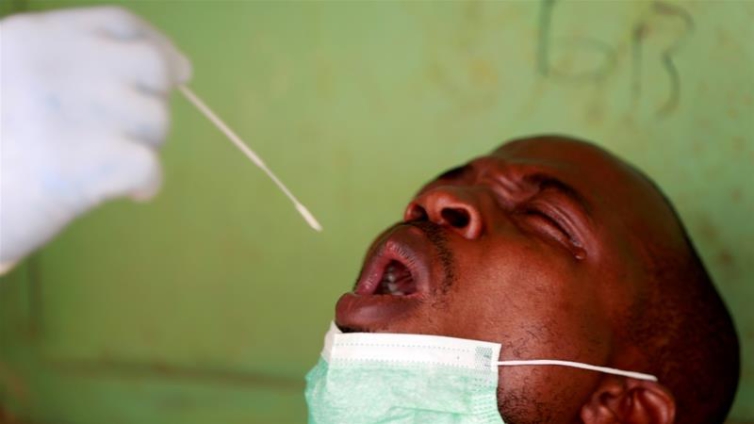
Human rights must be protected; stigma and discrimination must be addressed. The available Covid-19 resources must ensure equitable access to screening, testing and treatment. When treatment and a vaccine is found, it should be available to everyone, one everywhere for free. So that no one is left behind.
This calls for a solid global collaboration to acceleratethe development, production and equitable access to new Covid-19 technologies.
Lastly, Covid-19 will not be the last pandemic. The next pandemic must find us better prepared, ready with strong and resilient health systems with a strong focus on primary healthcare founded on strong community health systems. A rights-based, equitable, people-centred system that is conscious of other factors that affect health and wellbeing such as climate change, food and housing.
To achieve these successes, the government of Ghana must invest additional domestic resources for health to build back better for a healthier and safer future. The government must consider health as an investment in human capital in the realization that health is a key factor in the development of our country.
We unite to fight and the beat continues for efficient, effective and affordable healthcare for everyone, everywhere.
Cecilia Senoo is the Executive Director, Hope for Future Generations
and Focal Person-GFAN-Africa
Latest Stories
-
Muzic Mensah finds healing and renewed love in new single ‘WayƐ Late’
3 minutes -
FIFA to offer extra £2.6bn for football development
5 minutes -
Government backing is no EPA permit – Authority warns GoldBod, ministries
13 minutes -
Real Madrid produce stunning late fightback to down Roma
25 minutes -
EPA orders immediate halt to unpermitted reclamation and dredging nationwide
34 minutes -
Afenyo-Markin’s lawsuit against Sammy Gyamfi takes focus away from development – Kpebu
49 minutes -
FWSC urges media to guard against misinformation in proposed IPEC transition
49 minutes -
MoMo Fest 2026: Shatta Wale to Rock Accra Stadium on October 17
51 minutes -
GTEC’s letter directing public universities to reopen by October 16 is unprofessional – GAUA
1 hour -
Suspect in viral video assaulting wife jailed for 3 months
1 hour -
GAUA insists strike will end only after Fair Wages addresses market premium issue
1 hour -
Kpemka seeks compensation as he sues BOST over alleged unlawful termination
1 hour -
GES asks applicants to check status of 2026 promotion applications on October 15
2 hours -
Kobe Boujee joins Olympics.com team for Dakar 2026 Youth Olympic Games
2 hours -
Slaty egret’s shifting nesting sites offer clues to changing ecosystems
2 hours