

Audio By Carbonatix
The “International Day of Peasants’ Struggles” is celebrated on the 17th of April every year. It commemorates the Caraja Massacre, where 21 peasants were killed by the Pará Military Police, 27 years ago, in Brazil. The day is meant to acknowledge, the critical role of peasants, landless rural workers, pastoralists, artisanal fishers and indigenous communities in feeding us all, as well as the continuing challenges they face.
The International Day of Peasants’ Struggles seems to have passed largely unrecognized in Ghana. I am not aware of any public acknowledgements of the day. On the morning show of one popular radio station, the host discussed the forthcoming World Malaria Day. There was absolutely no mention of the International Day of Peasants’ Struggles. I am also not aware that any of the peasant farmers’ organizations commemorated the day.
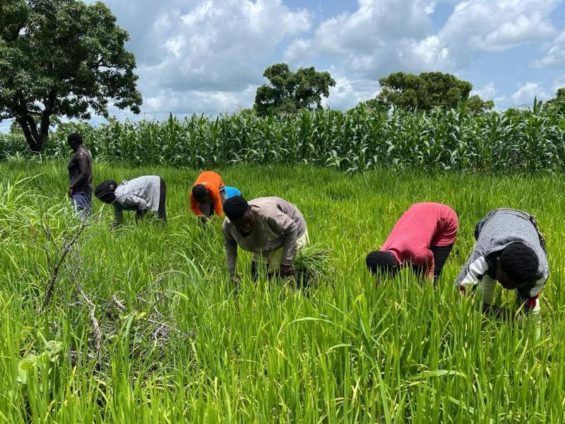
Are there no peasants in Ghana? An umbrella term, “peasants” include smallholder farmers, pastoralists and artisanal fishers. I think they are all around us. As smallholder farmers, they feed us with their cassava, garden eggs, yam, millet, cowpeas, 'ayoyo', coco yam, onions, 'alefu', 'bambara' beans, bitto. As pastoralists, they provide animal-based protein in the form of milk, yoghurt, and meat. As artisanal fishers, they enable access to a plethora of seafood.
Yet, generally, we don’t appreciate them and the critical role they play in feeding us. Some don’t like the term “peasants” nor the people characterized as such. In fact, some long to see peasants disappear.
Recently, I participated in a program, which had as its objective influencing Ghana’s agricultural policy space. I recall one participant asking another when the latter’s organisation was going to stop referring to themselves as peasants. Someone also slyly asked why and how a commercial farmer led a peasants’ organisation. It seems that there is something wrong with both, especially with being a “peasant.”
Across the world, peasants are vulnerable and often subject to discrimination. These are some of the specific causes identified by the United Nation’s Human Rights Council Advisory Committee: the lack of agrarian reform and rural development policies, gender discrimination, expropriation of land, forced evictions and displacement, the absence of social protection and a minimum wage, and the repression and criminalization of movements seeking to protect peasants’ rights.
The largest peasant movement in the world, more than 200 million strong, is La Via Campesina. Along with championing food sovereignty, it has promoted and protected the rights of peasants. Specifically, it has advanced the Declaration of the Rights of Peasants – Women and Men. This builds on already existing rights, such as economic, social cultural, civil, and political rights.
Critically, the Declaration of the Rights of Peasants – Women and Men also advances new rights. These include the right to land, the right to seeds and the right to the means of agricultural production. Their efforts have led to the United Nations Declaration on the Rights of Peasants and Other People Working in Rural Areas which was adopted by the UN’s Human Rights Council on 28 September 2018.
Although largely ignored by the Government of Ghana, the media, civil society and even farmer-based organizations, the International Day of Peasants’ Struggles, should not go unmarked.
Peasants’ rights are being violated all over the world. Ghana is no exception. The development of mining and commercial crop plantations are key drivers of peasants’ land dispossession. Only last year a company involved in an oil palm plantation tried to dispose of peasants’ land. The globalisation of food systems is central to the violation of peasants’ rights.
The interest of agribusiness and multinational corporations are often promoted at the expense of rural populations. In fact, government agricultural programs on agribusiness investments often enable practices of land grabbing, and the biopiracy of seeds, as well as deepening the reach of the extractivist industrial agriculture model and its impoverishment of farmers through the creation of dependencies on off-farm inputs.
Promoting and protecting the rights of peasants requires strengthening land tenure systems to protect access to and control of land by smallholder farmers, especially women smallholder farmers as well as landless farmers. Strengthening peasants’ rights requires ensuring the means of agricultural production by expanding public irrigation schemes and rural infrastructure; promoting holistic soil fertility as opposed to fossil fuel-based fertilizers and building farmer-based seed sovereignty rather than enabling agribusiness monopolization of seeds.
Promoting peasants’ rights includes ensuring their livelihood with price floors/supports so that farmers are not “coerced” to sell their produce below the cost of production. Additionally, peasants require more research and development conducted in collaboration with them, focused on their priorities and preserved as a public good.
Peasants play very important roles in our society. It is time we truly value them in Ghana and make and implement policies that help them to realize dignified lives, build agroecological food systems and create a more equitable society.
-----------------------
Chaka Uzondu is a researcher and policy analyst. His writings cover topics ranging from agroecology, climate change, economic justice, food sovereignty, health, housing, political ecology/economy, and water, sanitation, and hygiene (WASH).
Latest Stories
-
Struggling Real suffer title blow with Girona draw
2 hours -
Mahama nominates Pamela Graham as Auditor-General
2 hours -
The five big sticking points in US-Iran talks
3 hours -
Melania Trump’s speech propels Epstein crisis back to forefront
4 hours -
What everyone should know about C-sections
4 hours -
Gunmen kill at least four people at Afghanistan picnic spot
4 hours -
Health Ministry engages Ga Mantse ahead of Free Primary Healthcare launch
5 hours -
We can tackle multiple priorities – Sam George defends Anti-LGBTQ Bill push
5 hours -
Statement: Ghana Chamber of Mines’ Response to Claims in Joe Jackson’s “Ananse Stories about the Economy of Ghana”
5 hours -
GES opens 2026 teacher recruitment for licensed B.Ed graduates
5 hours -
Ghana must value skilled trades, build resilient learners — Ibn Chambas
5 hours -
Ghana must rethink education around relevance, resilience and responsibility — Ibn Chambas
6 hours -
Prince Harry faces defamation lawsuit from charity he co-founded
6 hours -
South Korea deploys thermal cameras to track escaped zoo wolf
6 hours -
Calls for royal meeting with Epstein survivors grow ahead of US visit
6 hours