

Audio By Carbonatix
These are dark days for the aviation industry but if there is a ray of light it might be this: the country where it all started is showing signs of recovery.
China’s domestic passengers are starting to once again take to the skies.
IATA chief economist Brian Pearce sees that a “turning point” could be in sight for airlines in the world’s second biggest economy.
From January 23, when the city of Wuhan was locked down by authorities, China’s aviation industry has been dealing with the biggest collapse in its history.
The civil aviation market dropped by around 80% between January 23 and the middle of March, according to IATA figures. Nearly 500,000 domestic and international flights to and from China were cancelled.
But we are now seeing the first tentative green shoots of a recovery. It’s early, it’s fragile and it’s certainly not guaranteed but domestic passenger numbers in China have been showing signs of a potential turnaround.
Load factors which hit a low of 40% on sharply reduced operations during the lockdown of key areas of China in February, have now climbed to 60% and more flights are taking to the skies.
“China is now returning to work and relaxing domestic travel restrictions. We've seen a slow resumption of domestic air services. Load factors of 60% show that passenger confidence is returning too, albeit slowly,” said Pearce.
But the nascent signs of recovery are clearly still confined to the domestic market.
Internationally, China has imposed even tighter restrictions on flights. From March 29 Chinese airline will be allowed only one flight per week to any country, and the load factor will be a maximum of 75%.
For the aviation industry as a whole, China matters.
It is the second biggest market in the world behind the United States. Last year the domestic market grew at 7.8%, the fastest of all global domestic markets tracked by IATA, and that was despite a trade war with the US which created global business uncertainty worldwide.
Overall, China’s aviation growth over 20 years from 2018-38 is forecast to grow at 5.3% a year, significantly higher than the 3.8% global average growth.
Within three years, according to IATA, it will be the world’s biggest market, carrying some 1.3 billion passengers a year.
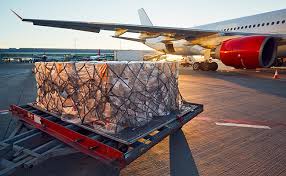
It’s also a cargo heavyweight. China remains the engine room of the global economy, pumping out goods from its factory floors which are consumed worldwide.
And it is a critical link in the global just-in-time manufacturing process. China both exports and imports equipment and components for immediately assembly as part of the global supply chain.
Passenger jets carry about 50% of the world’s air cargo and the near-grounding of the world’s fleet as a result of Covid-19 has severely disrupted that supply chain.
Adding to the problem, passenger planes which are now being used for chartered cargo-only flights are being caught in bureaucratic red tape which is delaying shipment of key medical supplies to fight the coronavirus and putting people’s lives at risk.
But on March 24 in Beijing, the country’s State declared made it a priority to support “unimpeded” cargo flights in China and urged the rest of the world to do the same.
“The last two months has been very challenging for China and the airline industry in particular. The good news is that the government recognizes the importance of having a strong aviation industry, including air cargo.
"We welcome and appreciate the relief measures implemented by the Civil Aviation Administration of China (CAAC) to support the Chinese and foreign airlines.
"While the outbreak in China has come under control, the risk now is imported cases, and the government is taking firm action,” said Ma Tao, IATA’s Regional Vice President for North Asia.
China has been the test case in many ways on how to deal with Covid-19.
It’s draconian lockdowns of cities in affected areas have become to be a model for fighting the virus with many other countries now following suit.
Now, with the aviation industry in China showing signs of picking up, it offers a rare cause for hope as the world battles its worst health and economic crisis in decades.
Latest Stories
-
NPP national elections: 3,000–4,000 police to handle security, traffic in Kumasi – Karbo
2 hours -
Atta Akyea fumes as Manhyia MP is to spend another night in EOCO custody
2 hours -
SSNIT says La Beach clearance was to protect hotel investments, beaches to remain public
3 hours -
APSU congratulates St Augustine’s College after back-to-back National Investment Quiz wins
3 hours -
Renewed flood intervention at Mallam Junction raises hopes among residents, businesses
4 hours -
St Augustine’s College retain National Investment Quiz title after nail-biting grand finale
4 hours -
Education infrastructure investment will drive Banda’s development – Ahmed Ibrahim
4 hours -
Teacher unions strike: Gov’t presents fresh proposals as talks end inconclusively
5 hours -
51,000 teachers’ promotion arrears to be validated for October payment – Education Minister
5 hours -
Kwabena Boamah appointed Board Chair for Impact Investing Ghana
5 hours -
Striking teacher unions to meet Fair Wages and Salaries Commission on October 6
6 hours -
EOCO working with AG to arraign Nana Baffour Awuah before weekend court
6 hours -
Duraplast reassures customers after fire, announces October 5 reopening
6 hours -
Call off strike, gov’t will not renege on promotion arrears pledge – Haruna Iddrisu to teacher unions
6 hours -
Committee set up to validate teachers eligible for 20% deprived-area allowance – Education Minister
6 hours