

Audio By Carbonatix
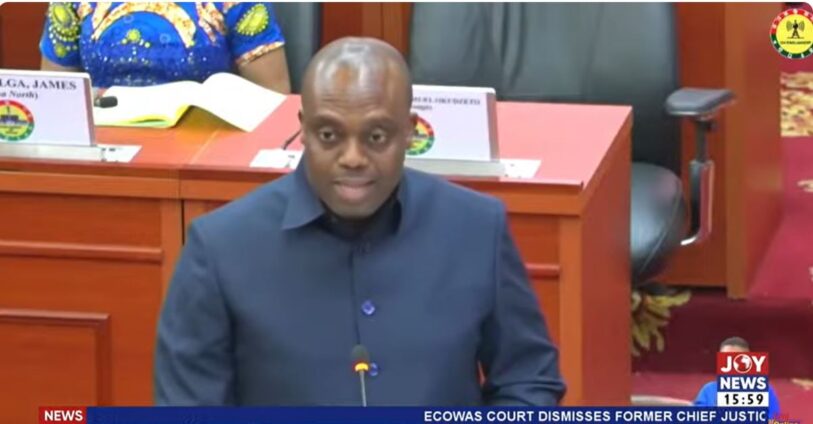
The Deputy Minister of Finance, Thomas Ampem Nyarko, says the indebtedness of the Ghana Cocoa Board (COCOBOD) to suppliers of fertilizers and agrochemicals between 2021 and 2024 forms part of a wider financial challenge inherited within the cocoa sector.
Speaking on the floor of Parliament, Mr. Ampem Nyarko explained that the sector is currently dealing with significant fiscal pressures stemming from procurement commitments that exceeded budgetary allocations in previous crop seasons.
He revealed that for the 2021–2022 crop year, a total of $455.7 million was procured for agrochemicals, while only $312.8 million had been provisioned in the budget for the same period.
According to him, the situation worsened as additional procurement continued in subsequent years despite outstanding payments to suppliers.
“The agrochemicals procured for the 2021–2022 season were not paid for, but COCOBOD continued to procure additional quantities in 2022, 2023, and 2024, all of which were above the budgeted amount in each year,” he stated.
The Asuogyaman MP further disclosed that in the 2023–2024 season alone, while $76.5 million was budgeted, COCOBOD contracted about $668.6 million worth of agrochemicals, raising concerns about fiscal discipline and procurement planning within the cocoa sector.
Mr. Ampem Nyarko noted that the mismatch between expenditure and cocoa output performance has also raised questions among stakeholders.
“While procurement of fertilizers and agrochemicals was increasing, cocoa production was declining, raising questions as to what these fertilizers and agrochemicals were used for,” he said.
He, however, stressed that "COCOBOD’s indebtedness to agrochemical suppliers is part of inherited structural and financial challenges affecting the cocoa sector, rather than an isolated issue."
According to him, government is currently implementing reforms aimed at restoring the financial stability of the cocoa industry and ensuring that COCOBOD meets its obligations in a sustainable manner.
“COCOBOD is approaching the issue systematically. The strategy is to restore its financial capacity so that it can honour its obligations to all creditors, including agrochemical dealers, in a sustainable and transparent manner,” he explained.
According to him, “Government is fixing the system so that suppliers are paid not once, but always, predictably, transparently, and on time,” he assured.
The Deputy Finance Minister emphasised that ongoing reforms are intended to address long-standing inefficiencies and ensure the long-term sustainability of the cocoa sector.
The comments come amid increasing scrutiny of COCOBOD’s financial position and growing calls for tighter oversight of procurement practices in Ghana’s cocoa industry.
Latest Stories
-
Ghana housing finance conference adopts communiqué to improve affordable housing access
2 hours -
Special Initiatives Minister urges Wa Technical Institute to enrol more girls as EU-backed solar training lab opens
2 hours -
In the matter of my first year at the Bar
2 hours -
ActionAid Ghana calls for an end to child marriage, greater investment in girls’ rights
2 hours -
Newsfile to tackle World Cup visa scandal, beach demolitions, education strikes, BRICS bid
3 hours -
UK-Ghana Trade & Investment Summit: Trade Resource Centre to help businesses maximise UK-Ghana trade opportunities
3 hours -
Embassy of Denmark celebrates World Maritime Day
3 hours -
Linking LEAP to productive inclusion could cut extreme poverty by 2030 – UNICEF
4 hours -
Trade Ministry backs use of creative arts to rehabilitate prison inmates
4 hours -
Negotiations with government to continue despite strike suspension – GNAT
4 hours -
‘Ghana cannot afford to waste public resources; every cedi has a job’ – Ato Forson
4 hours -
Ghana expects economic boost as World Assemblies of God Congress brings 10,000 delegates to Accra
5 hours -
Joy in Nayilifong as Farouk Aliu Mahama donates 100kVA transformer to improve power supply
5 hours -
Chief Justice urges employers to tackle mental health stigma in workplaces
6 hours -
Analysis: Ghana’s yellow fever numbers reveal a gap between vaccination and protection
6 hours