

Audio By Carbonatix
At least 37 people were killed after flash floods and cold lava flowing from a volcano hit the western Indonesian island of Sumatra.
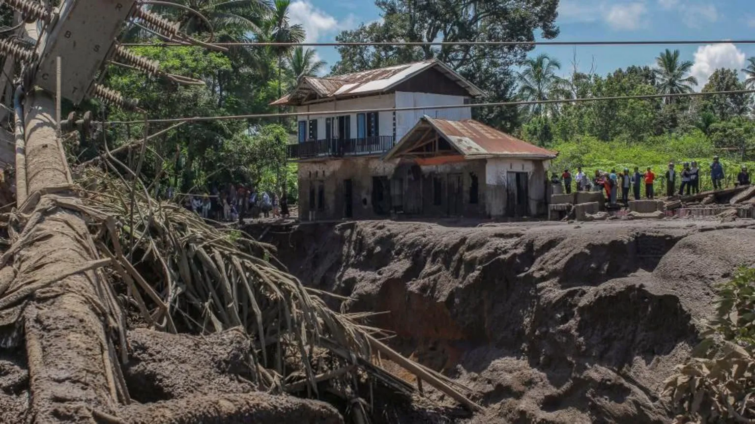
Hours of heavy rain on Saturday swept torrents of ash and rocks down Mount Marapi, the most active volcano in Sumatra.
The cold lava mudslides inundated two districts, swept people to their deaths and damaged more than 100 homes, mosques and public facilities.
Authorities say the death toll could increase given 18 people are missing.
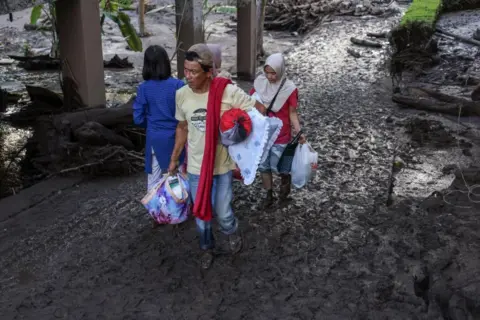
Survivors recounted how they fled as the cold lava - a mixture of volcanic material and pebbles that flow down a volcano's slopes in the rain - flowed towards their homes.
"I heard the thunder and the sound similar to boiling water. It was the sound of big rocks falling from Mount Marapi,” Rina Devina, a 43-year-old housewife from the Agam district told AFP news agency.
“It was pitch black, so I used my cellphone as a torch. The road was muddy, so I chanted ‘God, have mercy’ over and over again,” Ms Devina said.
The mother of three added that a neighbour's house had been "flattened by big rocks" and four of her neighbours died.
By Sunday afternoon, rescuers had found 19 bodies in the worst-hit village of Canduang in Agam district and recovered nine other bodies in the neighbouring district of Tanah Datar, according to the National Search and Rescue Agency.
Berliana Reskyka, another Agam resident, spoke of his experiences helping his injured neighbours.
"There were some who were crying, hysterical, because some of their family members were not yet accounted for. There were also those who discovered their loved ones have died," Berliana told BBC Indonesian.
The deluge is the latest in a series of natural disasters that have resulted, at least in part, from human activities, environment experts told BBC Indonesian.
"Flash floods and cold lava mudslides continue to recur and increase in intensity due to excessive exploitation of natural resources and haphazard development," said Wengki Purwanto, the director of the West Sumatra branch of the Indonesian Forum for Environment.
"As a result, disasters repeat themselves every year. In fact, they increase in frequency every year. The distance between one disaster and the next becomes closer," he said.
The area around Mount Marapi has seen several similar disasters in the past six months.
Last 5 December, 23 hikers were killed when the volcano erupted while in February this year, flash floods damaged dozens of homes in the Tanah Datar.
Just last month, days of eruption threw huge clouds of ash - up to a height of 2km - into the sky. Flights in the region were disrupted, roads closed, and more than 11,000 people were told to evacuate.
Marapi translates from the local Minang language to "Mountain of Fire".
Latest Stories
-
New York Times executive fatally shot allegedly by elderly in-laws
22 minutes -
Teacher Payment Crisis: GES races to protect academic calendar
31 minutes -
US prosecutors reopen case of alleged gang rape at Cornell University
48 minutes -
Journalist to be crowned king in Uganda after bitter succession dispute
58 minutes -
OpenAI scraps rollout of new model over safety concerns
1 hour -
Nigerian attempts to break world record by dancing non-stop for seven days
1 hour -
GES urges government agencies to end blame game over teacher payments
3 hours -
GES sets Oct. 5 deadline to resolve teachers’ payment dispute
3 hours -
GES working around the clock to get teachers back to class, says Daniel Fenyi
4 hours -
French PM warns against escalation of school protests after 164 arrested
4 hours -
UK tries to stop Trump’s diesel export ban
4 hours -
Late Olise goal gives France win over Belgium
4 hours -
Mancini enjoys first win since return as Italy boss
5 hours -
Interest payments to average a high 20% of government revenue over next 4 years
5 hours -
Anthropic warns AI may pose ‘existential risks to humanity’ in IPO filing
5 hours