

Audio By Carbonatix
Smuggling is draining billions from Ghana’s economy, and the Food and Beverages Association of Ghana (FABAG) is warning of a looming collapse if urgent action is not taken.
The Association says criminal networks are thriving while legitimate businesses struggle under heavy taxes and high operational costs.
FABAG says the illicit trade has reached alarming levels, causing the country to lose billions of cedis every month.
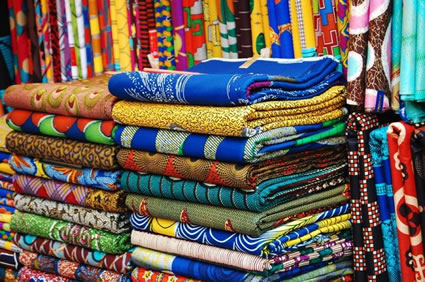
Intelligence from border communities and industry partners reveals that essential goods such as rice, cooking oil, sugar, alcoholic beverages, and textiles are being smuggled into the country in large volumes.
According to FABAG, the unchecked inflow of these untaxed and often substandard products is crippling local industries and robbing the state of critical revenue for development.
“It is disheartening that compliant businesses are subjected to rigorous tax regimes and levies while smugglers thrive unchecked,” the association said.
FABAG estimates that Ghana is losing hundreds of millions of cedis every week through unmonitored smuggling at both official and unofficial entry points.
The group warns that this massive revenue loss threatens the stability of the economy, weakens the cedi, discourages investment, and endangers jobs in the manufacturing and distribution sectors.
The association is calling on the Customs Division of the Ghana Revenue Authority, the Ministry of Trade and Industry, and national security agencies to intensify border enforcement and deploy advanced surveillance technology.
FABAG says smuggling has now evolved into a highly organised and well-funded criminal network that must be confronted decisively.
The group also appealed to the Ministry of Finance to review the import tax regime as part of the upcoming 2026 Budget.
It argues that high import duties and complex port procedures are major drivers of smuggling and must be urgently reformed.
FABAG warns that Ghana cannot continue to lose such vast revenue while burdening citizens and businesses with higher utility tariffs.
It insists the smuggling crisis has become a national security issue, threatening Ghana’s industrial base and the survival of legitimate enterprises.
“The government cannot afford to delay,” the statement concluded. “We must act now to protect our borders, support local industries, and secure the future of our economy before it’s too late.”
Latest Stories
-
Asantehene plants trees to commence Jimi Watercourse Rehabilitation destroyed by galamsey
17 minutes -
15 arrested, 6 trucks impounded over sandwinning activities on Kumasi-Accra Expressway
17 minutes -
OFFICIAL: Vinicius will miss El Clásico, suspended four games
21 minutes -
Prayer vigil held after four arson attack murders
27 minutes -
GRA fully recovers $154k legacy debt owed by foreign entities between 2022 and 2024
29 minutes -
Kwesi Pratt Jr warns bus preachers are adding to passengers’ stress with accident prophecies
30 minutes -
MTN Ghana to spend $1.1bn in 3 years, build 500 new sites as MoMo hits 44% Growth
32 minutes -
I have no regrets joining Assemblies of God – Mahama
32 minutes -
Starlink restrictions in Ukraine war linked to political situation, Zelensky aide says
35 minutes -
Furniture boost for Techiman North schools as MP donates to 20 institutions
36 minutes -
Assemblies of God to loan 10,000-seater dome for Ghana@70 celebrations
36 minutes -
Government to audit 2,016 community network sites – Communications Minister
36 minutes -
Heritage Series notes: BoG promises more inclusive cedi with improved sizes, tactile features
53 minutes -
‘We want answers’ – Family seeks probe into 14-year-old’s death 12 days after starting SHS
1 hour -
No preacher has the right to impose beliefs on bus passengers – Kwesi Pratt Jr backs preaching ban
1 hour