


Audio By Carbonatix
Severe air pollution in Indian capital Delhi has led to the formation of "black crusts" on the walls of the Red Fort, one of the city's most iconic Mughal-era monuments, a study has found.
Researchers found that the crusts - deposits formed due to chemical interactions between pollutants and the walls of the red sandstone fort - were between 0.05mm and 0.5mm thick, and could damage its intricate carvings if no action was taken.
The study is the first of its kind to comprehensively examine the effects of air pollution on the 17th Century monument.
One of the world's most polluted cities, Delhi frequently makes headlines for its worsening air quality, especially during the winter months.
Conservationists have frequently warned about the detrimental impact of pollution on heritage structures in the capital and a few other states.
In 2018, the Supreme Court said that the Taj Mahal - the famous 17th Century mausoleum built from white marble - had turned yellow and greenish-brown due to air and water pollution and urged the Uttar Pradesh state government to take steps to conserve it.
The study on the Red Fort, published in the peer-reviewed open access scientific journal Heritage in June, was conducted between 2021 and 2023 by researchers in India and Italy.
The Red Fort, built by Mughal Emperor Shah Jahan, is one of Delhi's most iconic heritage monuments and a popular tourist attraction.
India's first Prime Minister Jawaharlal Nehru hoisted the national flag from the fort on 16 August 1947, a day after independence from Britain was declared. Since then, prime ministers have been delivering speeches on Independence Day from the ramparts of the fort.
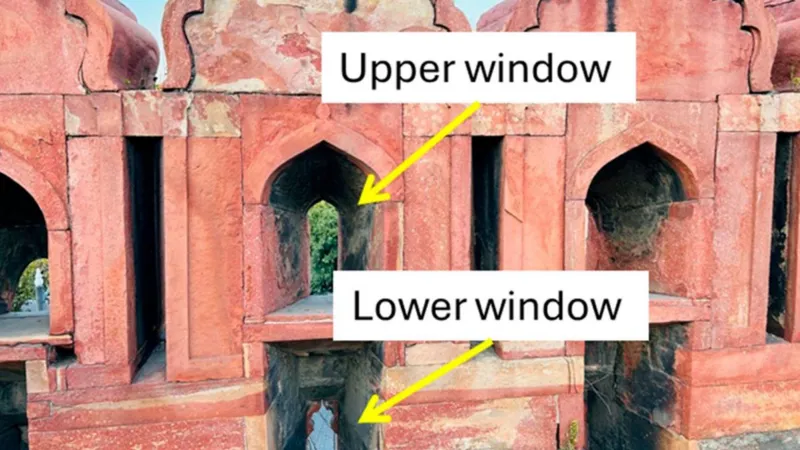
The researchers studied Delhi's air quality data between 2021 and 2023. Then they scraped off the black crust found on various walls of the fort and examined its composition.
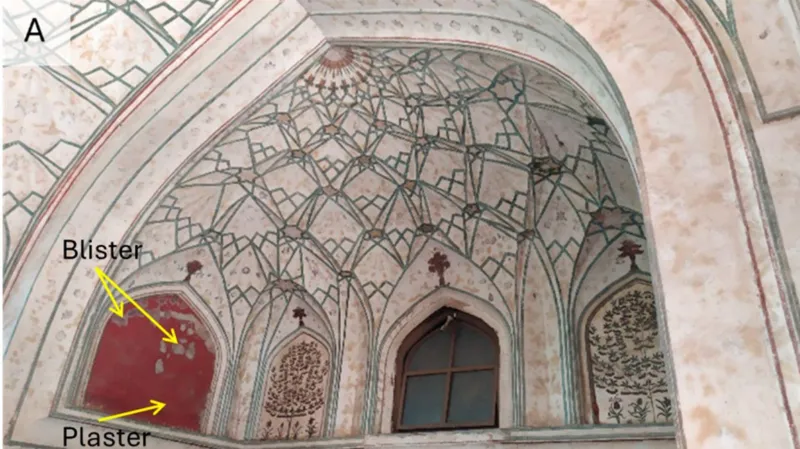
They found that particulate matter and other pollutants in the air had caused the black sediment to form on the fort's walls and also damaged other architectural elements such as vaults, arches and delicate stone carvings.
The researchers also found evidence of blistering and flaking on the walls.
"PM2.5 and PM10 [types of particulate matter] are widely recognised as significant contributors to the soiling of surfaces exposed to ambient air. This phenomenon occurs when particulate matter settles and accumulates over time, leading to visible discolouration and blackening of these surfaces," the study notes.
The study recommends the timely implementation of conservation strategies to protect the fort.
"The formation of a black crust is a progressive phenomenon that usually begins with a thin black layer or deposit, which can be removed, at least in the early stages," the study notes.
It also says that stone protectives or sealants could be applied to highly-affected areas to slow down or prevent the formation of black crusts.
Latest Stories
-
Mahama Ayariga wants banks, companies to adopt and brand streets across Ghana
12 minutes -
Small-Scale Fisheries Academy to expand to 20 communities as stakeholders push for greater fisher participation
17 minutes -
Kumasi needs 4 to 5 waste transfer stations – ESPA
17 minutes -
Bawa-Rock gives GH¢700,000 to flood-hit poultry farmers
18 minutes -
Rahim Ibrahim extends contract with Slovan Bratislava until 2030
49 minutes -
Gender Minister highlights increased investment, reforms in School Feeding Programme
51 minutes -
Black Starlets travel ordeal: Have we failed our young talents? – Former NSA Board Chair quizzes
55 minutes -
Belgian-American physicist Francis Halzen wins 2026 Nobel Prize in Physics
57 minutes -
OSP to rely on bank, mobile money records in Mustapha Hamid case
1 hour -
PMI launches free course to help entrepreneurs build sustainable businesses
1 hour -
PURC replaces 10 damaged transformers affecting over 60,000 customers in Central Region
1 hour -
NAIMOS finds illegal miners replacing destroyed Changfan machines along Pra River
1 hour -
Black Starlets travel over 20 hours by road to Burkina Faso for WAFU B Championship
1 hour -
Government can create jobs across waste management chain under 24-hour economy – Dr Annang
1 hour -
150 women acquire digital, coding skills under African Girls Can Code Initiative
1 hour