

Audio By Carbonatix
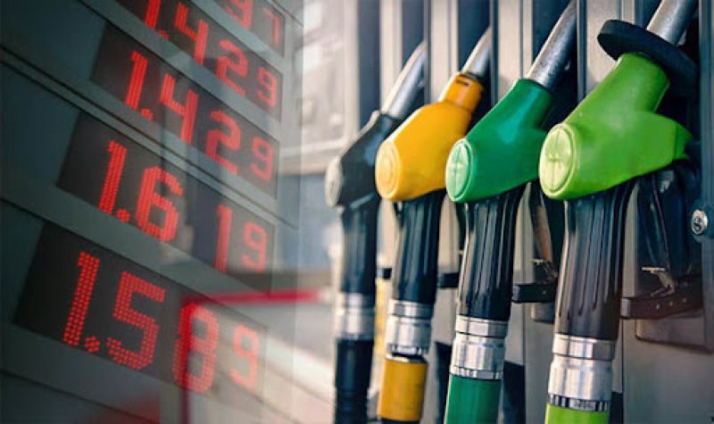
Executive Director of the Institute of Energy Security (IES), Nana Amoasi VII, says deregulating the petroleum industry is not an answer to the skyrocketing fuel prices.
According to him, deregulation is not responsible for the fuel price hikes as the situation is a direct result of the poor performance of the cedi against the dollar and also global market prices.
He noted that tampering with the existing deregulation policy now would negatively affect.
“The deregulation is to ensure that there is full cost recovery and that government is not paying any subsidies that will go and compound the energy sector debts.
"And so the deregulation is to ensure efficiency for all the players on the market and also to ensure that, traders or the distributors and the marketers get their fair share of the margin on each product and also to ensure that we have some form of supply stability and so it’s not something that we’ll push for the deregulation to go.
“It is something that has come to stay and it is helping very well. For the past six years, the BDCs and the marketers have been the ones that have held us and ensured that we have a consistent supply of products on the market because the system or the era of subsidies is gone and government owes them less or owes them nothing at all and so they can put more on the market.”
Nana Amoasi VII stressed that deregulation should not be blamed for the fuel price hikes stating that the deregulated market has rather contributed to a more stable petroleum economy since its inception in 2015.
He has rather advised that government properly manage the nation’s forex and find a solution to the depreciating cedi to ease the situation.
“Nobody should blame deregulation for the price increase we are seeing at the pump because in May 2015 when deregulation kicked in up to the end of 2016, fuel price was almost stable.
"When deregulation started, Goil was selling at around ¢3.4 per litre. At the end of 2016, it was selling for ¢3.70 per litre and so we cannot blame deregulation for what we are seeing currently.
“We should rather be concerned about our forex and be concerned about the international prices and how we would want to mitigate it. Is it through BOST? Is it through TOR? Or through the price stabilization and recovery levy? This is where we should be concerned with,” he said.
Latest Stories
-
Former NPP Chairman and Minority Leader Samuel Odoi-Sykes passes on
4 minutes -
Ayawaso West Assembly cracks down on unauthorised market near Villagio
17 minutes -
Lastec CEO Lasisi Oseni nominated for Ghana Auto Fix Award
22 minutes -
Polo Beach Club land belongs to La Traditional Council, not Labadi Beach Hotel – Freddie Blay
22 minutes -
‘Don’t speculate’ – Upper West Minister charges SOCO facilitators as project delivers 127 projects, 173 more underway
24 minutes -
Finance Ministry approves 3 months’ rent allowance for security personnel
38 minutes -
Ten people linked to Kenya’s first-ever Ebola case quarantined as screening concerns grow
52 minutes -
Ghana warns medical travellers to South Africa to obtain visas for treatment beyond 90 days
58 minutes -
Canada suspends plans to expand assisted dying to people with mental illness
59 minutes -
Minority accuses Sports Ministry, NSA of creating fake portfolios for VISA applicants
1 hour -
6th Inter Tourism Expo comes off in Cape Coast this October; register now
1 hour -
Afenyo-Markin accuses government of diverting attention from cocaine seizures linked to Ghana
1 hour -
GJA gives Armed Forces 14 days to account for alleged assaults on Sika Official, Bullet TV’s Philip Abutiate
1 hour -
PAC gives CWSA 30 days to recover GH¢10m in unpaid water bills from police, army, hospitals, other public institutions
1 hour -
Major Accra roads to get facelift ahead of Ghana’s 70th Independence anniversary – Agbodza
2 hours