

Audio By Carbonatix
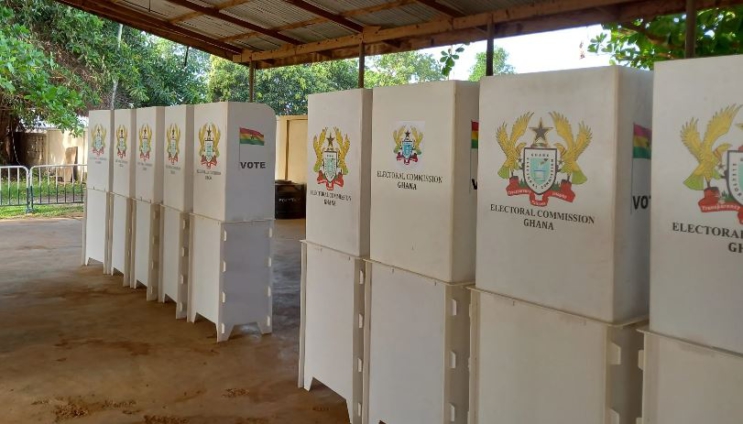
The Electoral Commission (EC) has rescheduled the district-level elections in some electoral areas in the Ashanti and Eastern Regions.
According to available information, the development is due to technical challenges involving the printing of ballots by the EC's contractors.
JoyNews' correspondent in the Ashanti region reports that some districts including Bantama, South Sontreso, Atwima Nwabiagya, Atwima Mponua, Dadeso and Santasi, will not be participating in the exercise today.
These areas have been exempted from the exercise due to the Electoral Commission's delay in delivering their voting materials.
In a statement signed by the Acting Head of Public Relations for the EC, Michael Boadu, the Commission said the affected areas are scheduled to participate in the exercise on Thursday, December 21, 2023.
Meanwhile, the exercise was expected to cover 6,215 electoral areas across 216 metropolitan, municipal, and district assemblies except the Nkoranza North and South in the Bono East Region.
Over 66,000 people are competing for the District Assembly and Unit Committee positions in the District Level Elections.
The EC’s data indicates that there are 18,755 assembly member candidates and 47,502-unit committee member candidates, totaling 66,257 candidates.
Out of the 18,755 assembly candidates, 17, 474 are males representing 94 percent, whilst the females are 1,106 representing six per cent.
Also, out of the 47,502-unit committee candidates, 40,923 are males representing 88 per cent and the females are 5,413 representing 11.6 per cent. This will be an appreciable increase in the number of candidates who contested the elections four years ago.
However, this enthusiasm from the candidates has not trickled down to the voters yet.
The exercise, since its inception in 1988, has always been met with voter apathy and lack of enthusiasm though it has been touted as one of the best platforms for citizens to participate actively in selecting their local representatives.
Data shows that in 1998/89 when the DLE commenced, voter turnout was 59.3 per cent. However, in 1994, the figure reduced drastically to 29.3 per cent.
It jumped up again from 29.3 to 41.6 per cent in 2002.
Unfortunately, whatever measures that were put in place in 2002 could not be sustained and this led to a decline in the numbers in 2006. The voter turnout for that year was 33.1 per cent. In 2010, the turnout increased slightly to 35.5 per cent and decreased again to 30.6 per cent in 2015.
The low participation of women has also been one of the woes associated with this election.
Latest Stories
-
Mahama’s proposed airline looks to South America, Caribbean as Ghana confronts mounting drug trafficking cases
4 minutes -
5% progress on Suame Interchange Phase One inadequate – Roads Minister tasks contractor to speed up work
7 minutes -
Photos: Vice President joins GAAS Awards to celebrate outstanding women leaders
8 minutes -
OSP vs Ken Ofori-Atta, SML and others: Court gives OSP four more weeks to serve Ofori-Atta with summons
10 minutes -
High Commission sends caution to Ghanaians in South Africa ahead of planned protests
12 minutes -
Okai Mintah outlines vision for NDC Youth Wing as he engages MMDCEs
18 minutes -
Mahama Ayariga leads renewed push for stronger local governance through partnerships
22 minutes -
NDC youth organiser aspirant Okai Mintah consults MMDCEs ahead of elections
23 minutes -
PHOTOS: Ayikuma Methodist Basic School wins National Juniors Challenge
25 minutes -
Silence has entered our homes : Salomey Awiti Bafoh and the chilling effect of free expression in Ghana
26 minutes -
UG Pro-VC calls for stronger research funding to curb brain drain
28 minutes -
Woman in critical condition after shooting at funeral grounds in Yeji
30 minutes -
Breast Cancer awareness must lead to action – Deputy Health Minister
32 minutes -
UK identified as leading destination for Ghana’s illicit cannabis exports – Report
34 minutes -
Drug money allegedly finances Ghana’s political parties and real estate – Global Organised Crime Index
39 minutes