

Audio By Carbonatix
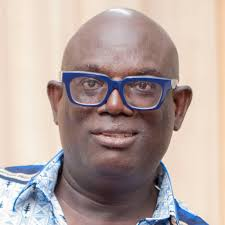
A lecturer at the Department of Statistics and Actuarial Science at the University of Ghana, Prof. Ezekiel Nortey, has urged political parties and candidates not to dismiss opinion polls, stressing that scientifically conducted polls remain a vital tool for understanding voter behaviour and strengthening campaign strategies.
Speaking on Prime Morning on Wednesday, January 28, Prof. Nortey said recent criticisms of opinion polls by some political actors were misplaced. He advised them to focus on using the findings to improve their campaigns rather than discrediting the data.
“We shouldn’t discount what happens in the poll. I saw that many of the representatives of the candidates are saying that some of the polls are not correct. They shouldn’t discount it. What they should do is to look at the positives about their candidate, and then they deepen their campaign strategies around it,” he said.
Prof. Nortey explained that all opinion polls come with margins of error but emphasised that properly conducted random sampling provides a reliable picture of public opinion, regardless of sample size, once scientific principles are followed.
“Polls have margins of error, and then anybody who collects data in a random manner, it tells the whole story. It doesn’t matter whether you collected 10% or 5% or whatever. Once it is random, it tells the story,” he stated.
Addressing concerns about the number of delegates in relation to sample sizes, he noted that samples that may appear small can still be statistically significant if they are randomly selected.
“They should be careful of some of the utterances that… it is 210,000 delegates who are going to vote, and you’ve just collected 10,000. 10,000 is so huge; if it is collected randomly, it can tell the story,” he added.
Beyond polling, Prof. Nortey cautioned contestants against excessive personal attacks, warning that such remarks could have legal and political consequences.
“I would urge each of the contestants to be very mindful of the jabs. The jabs are becoming too many, and they will be used against them, as they say, in the court of law,” he cautioned.
He encouraged political actors to maintain professionalism in their campaigns and to rely on data-driven strategies rather than public attacks and dismissive rhetoric to win the confidence of delegates and voters.
Latest Stories
-
National Investment Quiz: Corpus Christi, Wesley Girls, advance to semi-finals
12 seconds -
Is Ghana losing the fight to protect children online?
10 minutes -
Ghana Institution of Surveyors pushes for Governing Council Bill, conference reforms
10 minutes -
Professional collaboration key to Ghana’s land, property development – Western Regional Minister
21 minutes -
UPSA holds first session of 18th Congregation.
27 minutes -
Why demand another country’s medical records? – Mahama on Ghana’s rejection of ‘humiliating’ US health compact
30 minutes -
Mentorship critical to survival and growth of MSMEs – Sinapi Aba Trust
31 minutes -
Nsawam Adoagyiri MP joins residents to oppose Agbogbloshie waste relocation to his constituency
43 minutes -
New monitoring system rolled to step up fight against child labour in Ghana
45 minutes -
Patrick Donkor
46 minutes -
GHS, Oxfam sensitise young people in Ekon on contraception, reproductive health to mark World Contraception Day
47 minutes -
Let private sector drive economic transformation – Alan Kyerematen
50 minutes -
GoldBod changes gold assay regime, makes XRF testing definitive from October 1
54 minutes -
Ghana sees geopolitical tensions as opportunity to end dependence – Ablakwa
56 minutes -
Empower community radio stations to strengthen public engagement – Former Sports Minister
1 hour