

Audio By Carbonatix
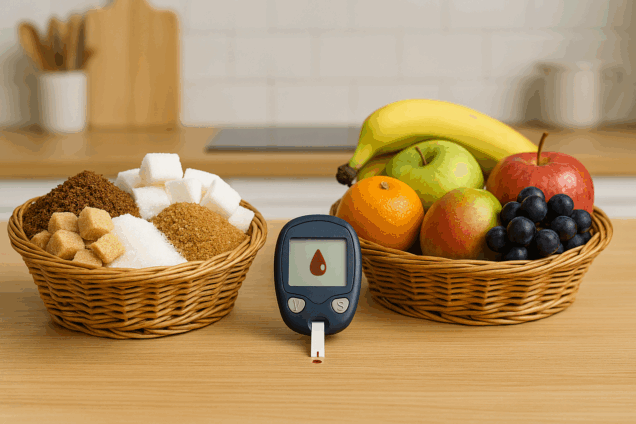
Every November, as we mark Diabetes Awareness Month, one question resurfaces: Does eating sugar cause diabetes? For decades, this question has driven nutrition debates, yet the science reveals a far more layered answer than a simple yes or no.
The popular belief that “sugar causes diabetes” oversimplifies a complex metabolic condition. Type 2 diabetes (T2D) develops primarily due to insulin impairment or insulin resistance, influenced by genetics, excess calorie intake, and lifestyle factors such as low physical activity, and not sugar alone per se. However, sugar plays a role, particularly in how it is consumed. Before we get to the sugar issue however, let us try to understand what the terms insulin impairment and insulin resistance mean.
Insulin resistance happens when your body’s cells stop responding well to insulin - the hormone that helps move sugar from your blood into your cells for energy. Imagine insulin as a key and your cells as locks. In insulin resistance, the locks become rusty, so your body needs to make more keys (insulin) to open them. Over time, this leads to higher blood sugar because glucose stays in the bloodstream instead of entering the cells. Insulin impairment, on the other hand, occurs when the pancreas can’t make enough insulin or the insulin it produces doesn’t work properly. This often develops after years of insulin resistance, when the pancreas becomes overworked, or in type 1 diabetes, where insulin production stops completely. In short, resistance is about the body ignoring insulin, while impairment is about the body not having enough effective insulin to do the job.
Now back to the link between sugar and diabetes. Recent research confirms that sugar itself may not be a direct switch for diabetes, but certain forms of sugar intake can accelerate pathways leading to insulin resistance and metabolic dysfunction. So, what does the latest evidence say?
The Brigham Young University Study
In a recent study which has been referred to as the largest of its kind, a group of researchers from Brigham Young University looked at results from several (25) studies covering more than half a million people. They found that each additional 12-oz (355 ml) serving of sugar-sweetened beverages (SSBs) per day increased type 2 diabetes risk by 25%, while fruit juice (yes, the 100% fruit juice, nectars and juice drinks etc) raised risk by 5% per 8-oz (237 ml) serving. Interestingly, total sugar and sucrose intake from solid foods did not show a consistent harmful association. This shows that not all sugars are created equal. The fibre and phytonutrients in whole fruits and complex carbohydrates (like whole grains and tubers) slow down absorption of sugar and offer protective effects. Liquid sugars on the other hand cause rapid spikes in blood glucose and overwhelm the liver’s capacity to handle sugar thus, promoting fat accumulation and consequently insulin resistance.
Added Sugar Alone Does not Tell the Whole Story
The Ghana diabetes guidelines emphasize that overall calorie excess and fat buildup around organs remain the strongest predictors of diabetes, not sugar in isolation. In other words, eating too many calories and storing fat around vital organs are the biggest drivers of diabetes and not sugar alone. Simply cutting sugar without changing overall eating habits and lifestyle does not offer much protection.
So, Does Eating Sugar Cause Diabetes?
The short answer: No, sugar alone does not cause diabetes. However, how and where you get your sugar is what matters.
- High intake of sugary drinks is strongly linked to diabetes risk.
- Added sugars in processed foods contribute indirectly by promoting weight gain and insulin resistance.
- Sugar obtained from whole foods like fruits, unpolished cereals and tubers do not have much influence on blood sugars and can be eaten in moderation.
So, Can People Living with Diabetes Eat Sugar?
I usually prefer to answer this question face-to-face because it often requires personalized guidance. However, here’s the general principle: Yes - but with caution and context. People with diabetes can eat sugars that naturally occur in whole foods like fruits, dairy, and cereals as part of a balanced diet. However, they natural sweeteners such as cane sugar, honey, date powder, or brown sugar, though often seen as “healthier”, raise blood glucose almost the same way as regular sugar. The key to managing diabetes is focusing on fibre-rich foods to slow sugar absorption, monitoring total carbohydrate intake within an individualized meal plan, and using non-nutritive sweeteners like stevia when appropriate. Most importantly, it is best to work with a registered dietitian, who can tailor recommendations to your health needs and lifestyle.
Click here to join Full Proof Nutrition WhatsApp channel to receive more educative content. Send us a mail on fullproofnutrition@gmail.com
Written by Dr. Laurene Boateng (PhD, RD)
Dr. Laurene Boateng is a Registered Dietitian and Senior Lecturer in the Department of Dietetics, University of Ghana. She is the founder and editor-in-chief of Full Proof Nutrition, a Nutrition Consultancy committed to providing reliable, evidence-based, and practical healthy eating advice through its website www.fullproofnutrition.com. Click here to join Full Proof Nutrition WhatsApp channel to receive more educative content. Send us a mail on fullproofnutrition@gmail.com
References
Della Corte, K. A., Bosler, T., McClure, C., Buyken, A. E., LeCheminant, J. D., Schwingshackl, L., & Della Corte, D. (2025). Dietary Sugar Intake and Incident Type 2 Diabetes Risk: A Systematic Review and Dose-Response Meta-Analysis of Prospective Cohort Studies. Advances in Nutrition, 100413.
Ministry of Health. (2023). National guidelines for the management of diabetes mellitus (1st ed.). Accra, Ghana: Ministry of Health. ISBN: 978-9988-3-6797-8.
Latest Stories
-
Fiabci-Ghana inaugurated to promote professionalism and global collaboration in real estate sector
17 minutes -
‘No flying in just for matches’ – Kofi Adams sets conditions for next Black Stars coach
21 minutes -
Ghana and BRICS: Strategic opportunity, economic imperative or geopolitical gamble?
26 minutes -
SML vs GRA: Court grants preservation order in dispute over US$500 million investment
27 minutes -
Spotify brings audiobooks to Ghana
30 minutes -
GPL 2026/27: ‘We are the team to beat’ – Medeama boss Tanko ahead of Samartex clash
31 minutes -
Parliamentary Select Committee on Health assesses progress of work on KATH maternity block
37 minutes -
Ghana’s fertility rate too high for development – Reproductive health specialist warns
52 minutes -
NLA/KGL Licence Contract: Why Ghana must reform the law to maximise the state’s benefit
57 minutes -
Association of Small-Scale Industries empowers trade executives in Bono East with a mentorship programme
1 hour -
AMA evacuates refuse along Graphic Road, warns against indiscriminate dumping
1 hour -
STC interdicts driver over Pokuase overtaking incident
1 hour -
Ekumfi: How $6m EXIM participation built a $53m industrial asset — now poised for a 24-Hour Economy breakthrough
1 hour -
4 arrested, 142 parcels of suspected Indian hemp seized as officers reject GH¢50k bribe
1 hour -
No MMDCE can say they don’t see galamsey – Local Government Ministry
1 hour