

Audio By Carbonatix
Fasting season is here again, and I set out to explore the health effects of fasting, particularly the type of fasting commonly practised in churches during this season. I did not find much in the published literature. The closest match to what I was looking for was a small short-term study examining a 21-day religious fast.
How the Study Was Designed
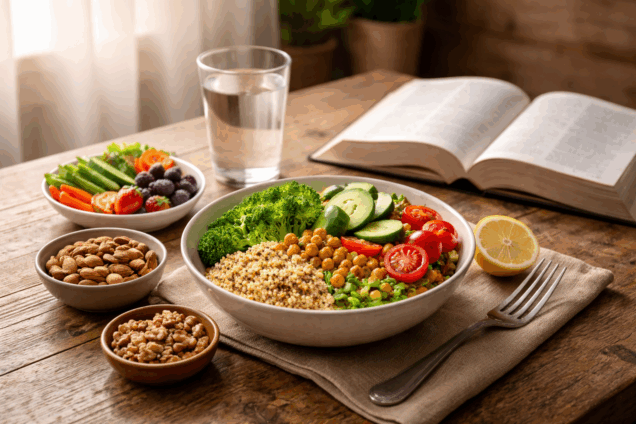
In the study, researchers followed 43 adults (13 men and 30 women) between the ages of 20 and 62 years over a 21-day religious fast, specifically the Daniel Fast. In this fast, participants were not instructed to eat less food or abstain from food for a specified number of hours. Instead, they were asked to eat freely from a clearly defined list of foods. Their meals were built around:
- Fruits and vegetables
- Whole grains
- Beans, peas, and lentils
- Nuts, seeds, and plant oils
Participants avoided animal products, refined and processed foods, added sugars, alcohol, and caffeine. Before and after the fast, researchers assessed body measurements, blood pressure, blood fats, blood sugar regulation, inflammation, and markers of oxidative stress. Participants also reported how well they adhered to the fast and how they felt throughout the period. Adherence was reported to be high with most people indicating that they felt satisfied and emotionally well during the fast.
What the study found
After 21 days, the following changes were observed (See reference for the actual study).
- Blood sugar regulation became more favourable
The body handled blood sugar more efficiently, with lower insulin levels and improved insulin sensitivity. - Inflammation and internal stress reduced - Markers of inflammation and oxidative stress declined, while the body’s antioxidant capacity improved. In simple terms, the body appeared to be under less physiological strain.
- Weight changes were modest - There was slight weight and fat loss, but this was not significant.
- Heart health markers improved - Participants experienced reductions in blood pressure and in total cholesterol and LDL (“bad”) cholesterol. Interestingly “good” HDL cholesterol also decreased. This appeared to reflect the overall drop in total cholesterol rather than a negative effect, and the researchers suggested that future dietary adjustments could address this.
What This Means for Those Fasting Today
The fast carried out in this study may or may not resemble the fast you may currently be undertaking. However, the findings point to a clear message; when food choices become simpler, less processed, and more intentional, the body often responds very well with improvements in blood pressure, cholesterol levels and inflammation markers. Note however that this was a small short-term study.
More robust studies, involving larger numbers of participants and varied fasting types, are needed to draw firm conclusions. Furthermore, everyone responds to fasting differently. People with medical conditions, those who are pregnant or breastfeeding, and individuals on certain medications should approach fasting with care and appropriate guidance.
Here are some helpful tips for this fasting season
- Quality of food always matters - Even when eating less, what you eat matters. Prioritise fruits, vegetables, legumes, whole grains, nuts and seeds, fish and lean meats. These provide fibre, vitamins, and minerals that help stabilise energy and support heart and metabolic health. Living on white bread, sugary drinks, pastries, or heavily processed foods may reduce hunger temporarily, but offers little nourishment.
- Stay well hydrated - Water becomes especially important when food choices change. Adequate hydration supports digestion, circulation, and concentration during fasting periods.
- Know when to modify or pause - If you are pregnant, breastfeeding, living with diabetes, hypertension, or other medical conditions, fasting should be approached thoughtfully and, where needed, with professional guidance.
- Know your body’s limits – Ideally, fasting should be done under conditions of low to moderate physical activity. Where this is not possible, adjustments to the fast may be necessary to avoid excessive fatigue, dizziness, or poor concentration.
Wishing you a meaningful fasting season. And for those who enjoy engaging with the science, I would be glad to learn of any similar studies on fasting that you come across. You can share with me at the email below.
Written by Dr. Laurene Boateng (PhD, RD)
Dr. Laurene Boateng is a Registered Dietitian and Senior Lecturer in the Department of Dietetics, University of Ghana. She is the founder and editor-in-chief of Full Proof Nutrition, a Nutrition Consultancy committed to providing reliable, evidence-based, and practical healthy eating advice through its website www.fullproofnutrition.com. Click here to join Full Proof Nutrition WhatsApp channel to receive more educative content. Send us a mail on fullproofnutrition@gmail.com
Reference
Bloomer, R. J., Kabir, M. M., Canale, R. E., Trepanowski, J. F., Marshall, K. E., Farney, T. M., & Hammond, K. G. (2010). Effect of a 21 day Daniel Fast on metabolic and cardiovascular disease risk factors in men and women. Lipids in health and disease, 9(1), 94.
Latest Stories
-
Ghana explores centre of excellence for hearing, communication and cochlear implant care
41 minutes -
Schizophrenia-related disorders lead mental health cases recorded in Ghana
1 hour -
Dutch authorities enlist Ghana in hunt for fugitive drug lord Bolle Jos
1 hour -
Ghana housing finance conference adopts communiqué to improve affordable housing access
6 hours -
Special Initiatives Minister urges Wa Technical Institute to enrol more girls as EU-backed solar training lab opens
6 hours -
In the matter of my first year at the Bar
6 hours -
ActionAid Ghana calls for an end to child marriage, greater investment in girls’ rights
7 hours -
Newsfile to tackle World Cup visa scandal, beach demolitions, education strikes, BRICS bid
7 hours -
UK-Ghana Trade & Investment Summit: Trade Resource Centre to help businesses maximise UK-Ghana trade opportunities
7 hours -
Embassy of Denmark celebrates World Maritime Day
7 hours -
Linking LEAP to productive inclusion could cut extreme poverty by 2030 – UNICEF
8 hours -
Trade Ministry backs use of creative arts to rehabilitate prison inmates
8 hours -
Negotiations with government to continue despite strike suspension – GNAT
9 hours -
‘Ghana cannot afford to waste public resources; every cedi has a job’ – Ato Forson
9 hours -
Ghana expects economic boost as World Assemblies of God Congress brings 10,000 delegates to Accra
9 hours