

Audio By Carbonatix
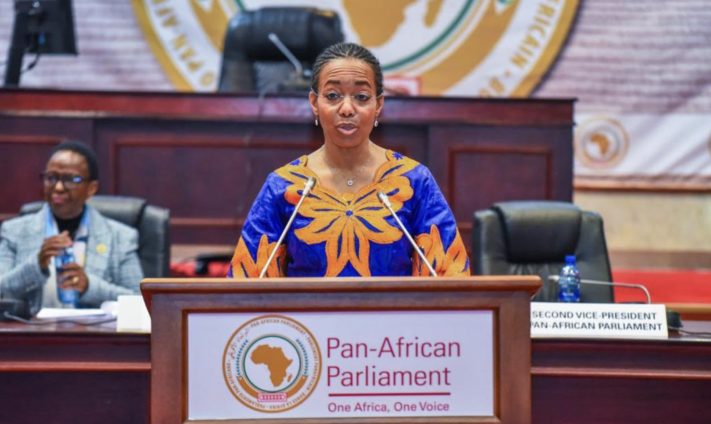
Dr Zanetor Agyeman-Rawlings, Second Vice-President of the Pan-African Parliament, has urged African governments to ratify and implement the African Union Convention on Ending Violence Against Women and Girls.
She said the Convention was essential to strengthening legal protection for women and girls and advancing Africa’s peace, security, democracy and development objectives.
Dr Agyeman-Rawlings, also Member of Parliament for Klottey Korle, made the call in a keynote address at a High-Level Dialogue on the Ratification, Domestication and Accountability of the African Union Convention on Ending Violence Against Women and Girls in Johannesburg, South Africa, on Saturday.
“Africa cannot achieve the aspirations of Agenda 2063 while more than half of its population continues to live under the threat of violence, exploitation and discrimination,” she noted.
Dr Agyeman-Rawlings said the Convention should inspire governments, parliaments, communities and institutions to prevent violence against women and girls and ensure effective implementation of its provisions.
She described women’s rights as fundamental human rights and urged African Heads of State to demonstrate political commitment by facilitating the ratification and domestication of the Convention through their respective legislative institutions.
Dr Agyeman-Rawlings said governments should also recognise the economic value of unpaid care and domestic work undertaken by women across the continent.
“Perhaps it is time to redesign our household census instruments so that this invaluable contribution can finally be measured.
“Once quantified, it provides governments with a far more accurate understanding of women’s contribution to national economies and allows for genuinely representative gender-responsive budgets,” she recommended.
Dr. Agyeman-Rawlings said parliaments had an oversight responsibility to promote gender-responsive budgeting, including investments in education, healthcare, economic empowerment, protection services, access to justice and women’s participation in peacebuilding, governance and leadership.
“It requires us to invest deliberately in girls’ education, women’s health, economic empowerment, protection services for gender-based violence survivors, access to justice and programmes that strengthen women’s participation in peace building, governance and leadership,” she said.
On emerging technologies, Dr. Agyeman-Rawlings cautioned that artificial intelligence should be governed by ethical standards and effective oversight to prevent discrimination and harmful content.
“We must be vigilant to misogynistic algorithms embedded in AI systems, particularly those that amplify harmful stereotypes, promote misogynistic content or reinforce extremist narratives.
“Such technologies can shape the attitudes and behaviours of young people, especially young men, in ways that normalise discrimination, hatred and, ultimately, violence against women and girls.
“As we embrace technological innovation, we must also ensure that it is guided by ethical standards, accountability and a firm commitment to gender equality and human dignity, by instilling safeguards in the form of legal frameworks and oversight mechanisms,” she said.
Dr Agyeman-Rawlings reaffirmed the Pan-African Parliament’s commitment to supporting the Convention.
“As the Parliamentary voice of the African Union, we will continue to utilise parliamentary diplomacy, legislative engagement, policy dialogue, peer learning and strategic partnerships to encourage Member States to expedite the signature, ratification, domestication and implementation of this landmark convention,” she said.
The dialogue, organised by the Women’s Caucus of the Pan-African Parliament, brought together parliamentarians, representatives of African Union institutions, Regional Economic Communities, development partners and civil society organisations.
The African Union Convention on Ending Violence Against Women and Girls was adopted during the 38th Ordinary Session of the Assembly of Heads of State and Government in February 2025.
It provides a legal framework for preventing and eliminating all forms of violence against women and girls across the continent.
Latest Stories
-
Turning invitations into arrests is making citizens reluctant to assist police – Twumasi Ankrah
13 minutes -
The Traffitech-GH SMS spot-fine system: The good, the sad, and the funny – Bright Simons writes
24 minutes -
Hawa Koomson pledges experienced and mature leadership of NPP women’s wing
2 hours -
Young woman found dead at Kasoa Peace Town
2 hours -
Playback: The Law examined lawful arrest in Ghana
2 hours -
Mahama urges African governments to treat healthcare as an investment, not budget cost
3 hours -
Bawumia congratulates John Boadu and new NPP executives, pledges support ahead of 2028
3 hours -
Aksa Energy delegation pays courtesy call on GRA Commissioner-General
3 hours -
‘No talent should be left out’ – Bawumia pledges inclusive NPP campaign for 2028
3 hours -
Prof. Mike Oquaye recounts how he blocked the Special Prosecutor’s attempt to arrest Bawku Central MP
3 hours -
Make health sovereignty a priority for Africa – Mahama
4 hours -
Dorimon Naa, Wa West DCE lead massive clean-up exercise; threaten sanctions against recalcitrant residents
4 hours -
Photos from Adom FM Y2K Jam
4 hours -
Praye Tiatia steals the show at Adom FM Y2K Jam [Watch]
4 hours -
Boakye Agyarko congratulates John Boadu, pledges support for NPP leadership
4 hours