

Audio By Carbonatix
Before the big machines came. Before the dust filled the rivers. There was a mountain. The people of Techiman called it “Bungalow” because from far away it looked like the roof of a house—green, strong, and giving shade.
Now that the mountain is almost gone. In less than twenty years, we have destroyed what nature took millions of years to build. Truck by truck, blast by blast, the Bungalow mountains are disappearing.
A View That Changed Forever
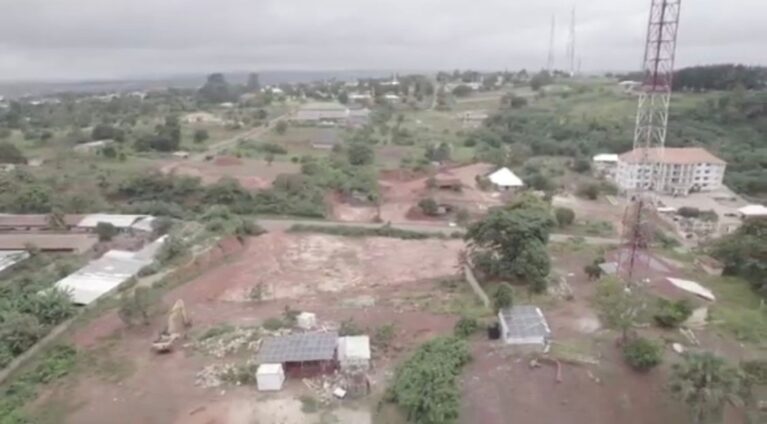
If you fly over Techiman, you can see the damage clearly. Green hills have turned into brown holes. Streams that used to flow from the mountains are now dry.
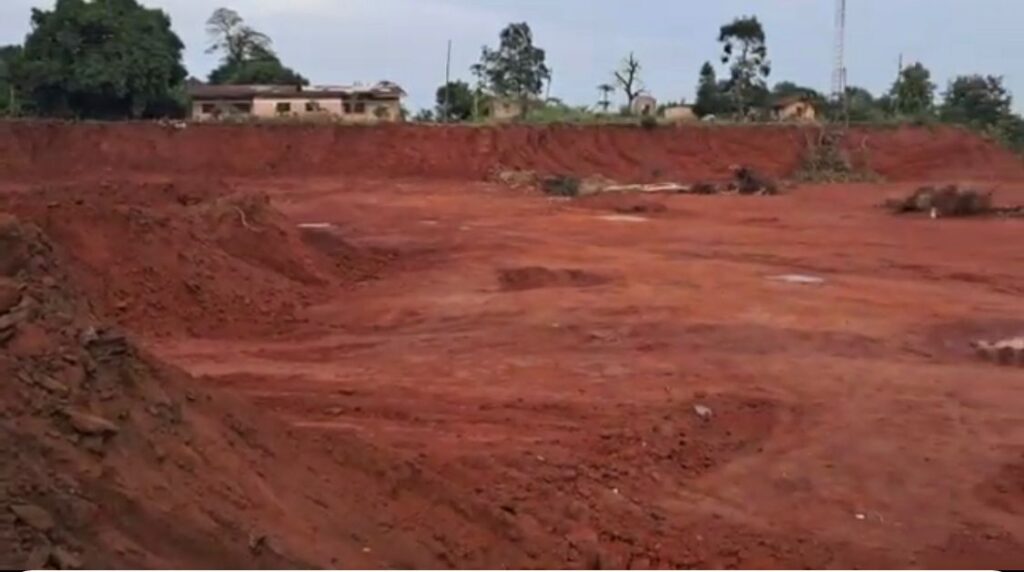
But to really understand what is lost, you have to talk to the people who grew up under these mountains.
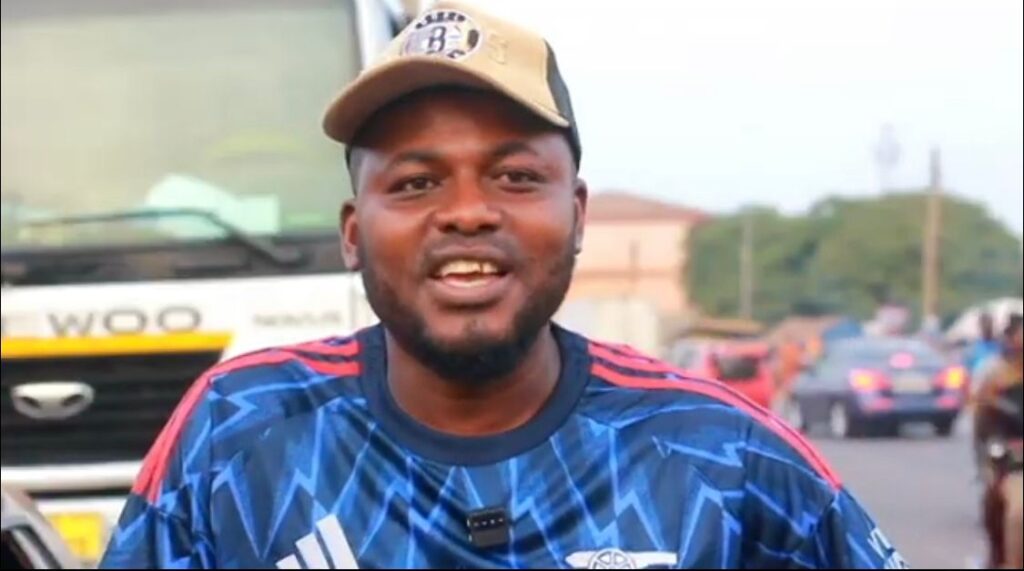
“When we were children, we would wake up and the mist would cover those hills. It was green. There was a stream that flowed from there—we drank from it. Now? Look at it. It is like a wound that won’t heal. The water is gone. The birds are gone.”
That is Mohammed Mukarram, a resident in the community. For him, the loss is not just about feelings. It is about life. The mountain gave them water, shade, snails, and medicine. Today, women walk long distances to buy water. The heat stays even after the sun goes down. The mountain that once stood tall is now being sold as sand and stone.
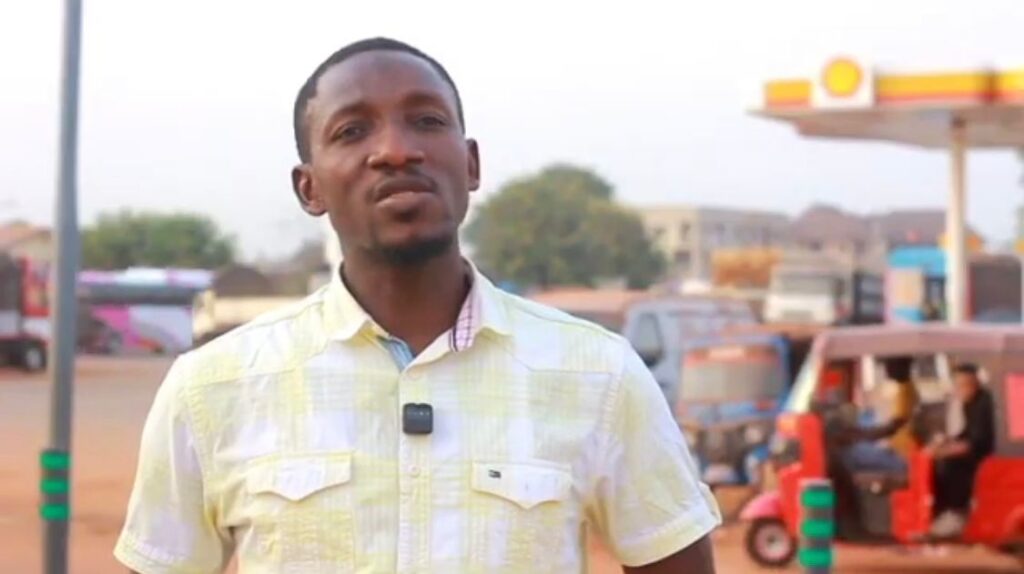
“When I last visited the site, what I saw was sad and heartbreaking. We are really not helping at all. Another resident, Abdul Hamid, said
What the EPA Says
Emmanuel Lignule works for the Environmental Protection Agency (EPA). His job is to track the destruction. He sees the numbers before the rest of us see the scars.
“Mountains are not just rocks. They are water towers. They are homes for plants and animals. When you remove the trees and break the rocks, you harm the climate. You cause floods when it rains. You dry up the streams.”
He explains that mountains cool the air and store water. When we destroy them, the whole system breaks. The people who live downstream—and that means all of us—suffer.
’We Failed’ — A Chief Speaks Out
It is not common to hear a leader say, “We failed.” But Osahene Obiri‑Korang Antwi Boasiako, a chief in the area, is not here to protect his image. He is here to tell the truth.
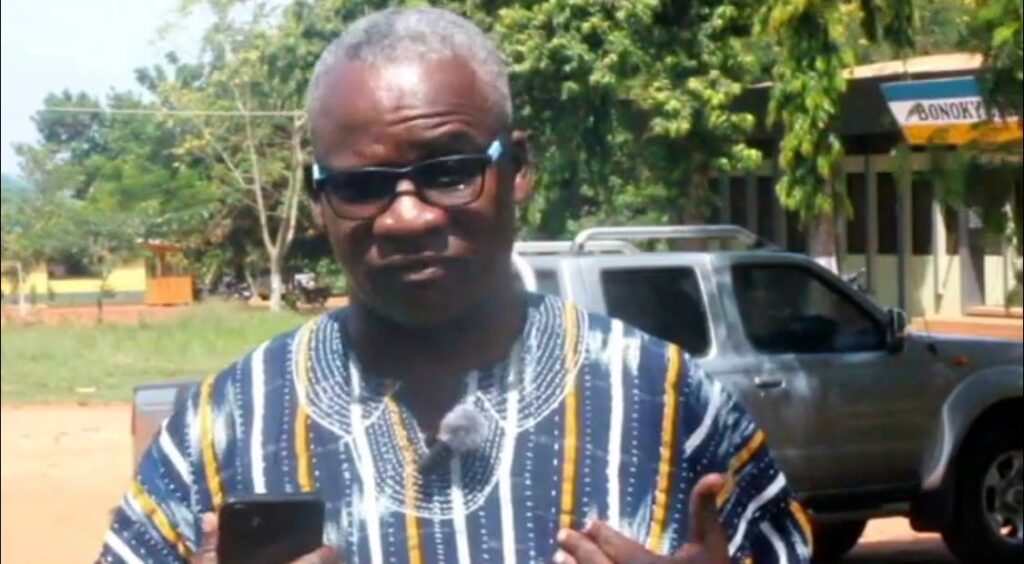
“Let us be honest. Who sold the land? Who looks the other way when the trucks pass? We, the traditional authorities, have a lot to answer for. We have allowed money to blind us.”
He says some chiefs and landowners have sold land to miners for quick money. But he calls what is happening “retrogressive development.” That means moving backward, not forward.
“People see a hill and they think ‘development’—they see bricks and roads. But if you destroy every natural place, you are not developing. You are going backward. We need to educate everyone—chiefs, government people, miners, young people. Everyone must understand that a dead planet has no economy.”
What Needs to Be Done?
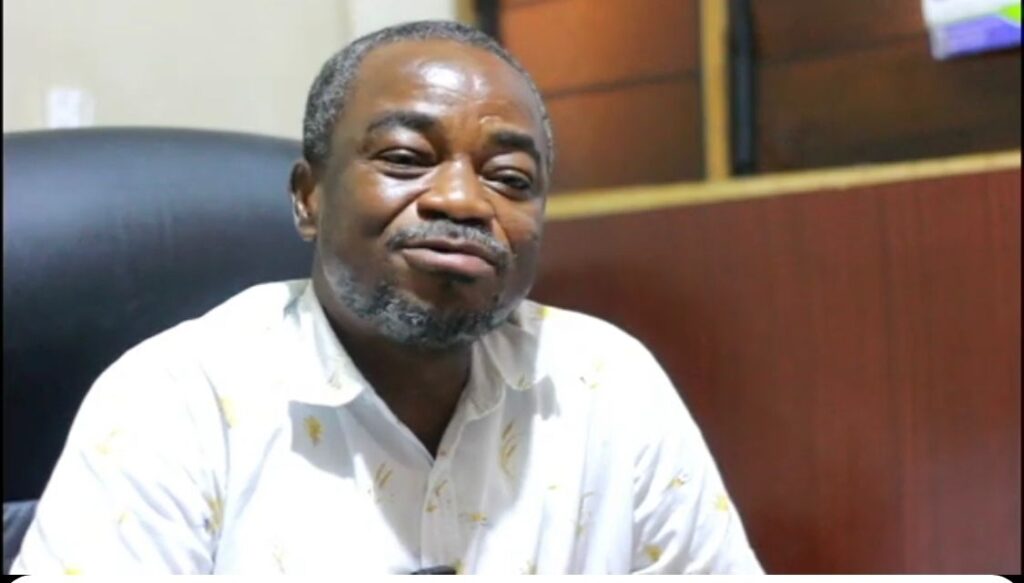
Emmanuel Lignule from the EPA agrees. He says arrests alone will not solve the problem.
“The solution is not just arrests. It is education. We need people to see the mountain not as something to use up, but as something to pass on to our children. If we do not teach this, enforcement alone will not work.”
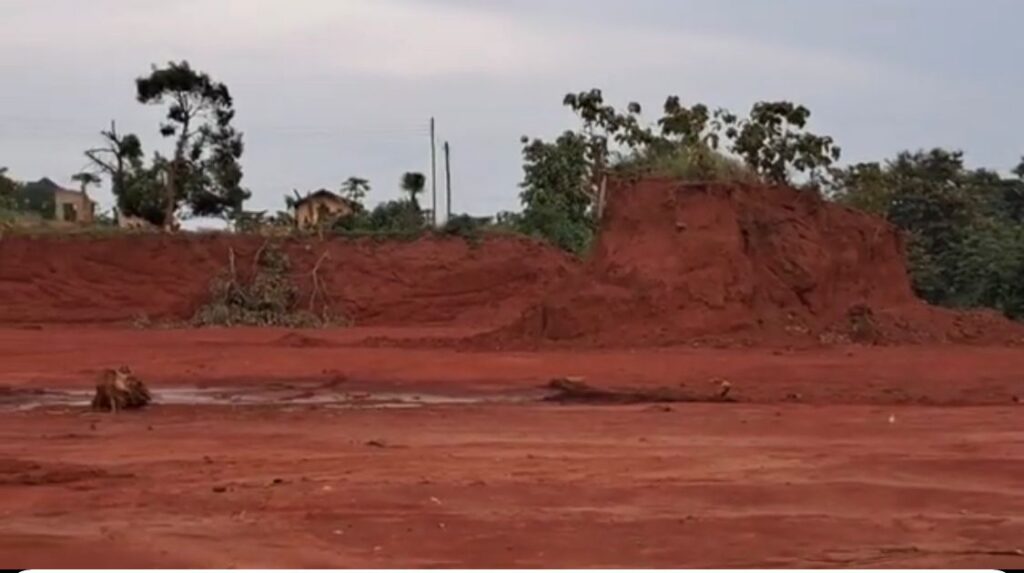
Nana Korang Antwi adds that we also need accountability. He wants all the key people—chiefs, officials, miners, and residents—to sit together and look at what has happened. Then they can decide what to do.
The Silence After the Digging
If you stay around the mountain for a while, you notice what is missing. No birds. No animals. No cool breeze from the hills in the evening. What remains is heat, dust, and the sound of trucks.
One elder put it simply:
“When you cut a tree, you leave a stump. Our ancestors’ mountain… there is no stump. It hurts.”
A Final Question
The EPA says education is key. Nana Korang says accountability is key. The residents we spoke with say they just want their mountain back.
There is still time. Not for the parts already destroyed—those are gone forever. But for what is left.
These hills cannot speak. They cannot fight. They cannot run. They depend on us.
“The question is: Are we worthy of that trust? Or will the last stone fall, and the last elder pass, and the last child ask: ‘Mama, what was a mountain?’”
—
This story is brought to you by JoyNews in partnership with CDKN Ghana and the Centre for Climate Change and Sustainability at the University of Ghana, with funding from the CLARE R4I Opportunities Fund. It is co-authored by Dr. Yaw Agyeman Boafo and Doreen Larkailey Lartey of the University of Ghana.
Latest Stories
-
Global economy’s resilience nearing limits – IMF
7 minutes -
Trust-building is crucial for sustaining confidence with communities – Police Commander
12 minutes -
Government to redevelop Aboabo Market in Tamale – Mahama Ayariga
18 minutes -
We haven’t handed over our forex role to Goldbod – BoG Governor Asiama
22 minutes -
AG urges Legal Aid Commission to expand services to districts
23 minutes -
Ghana calls for stronger African cooperation to tackle maritime threats
28 minutes -
‘Trust but verify’ – MTN Ghana urges SMEs to guard against cyber fraud
30 minutes -
Let us all be mentors to our younger generation – Mahama
35 minutes -
Assemblies of God Congress: Mahama urges churches to promote compassion, integrity
41 minutes -
North Korea and China open new bridge after 12-year delay
51 minutes -
Anthropic flags revenue surge to investors ahead of stock market debut
60 minutes -
Norway’s wealth fund set to overhaul ethical rules after US scrutiny
1 hour -
‘There can be no mistake, regardless of who is picked’ – Bentil on CJ contenders
1 hour -
Ghana needs a Chief Justice who inspires public confidence – Bentil
2 hours -
Government to introduce integrated basic education model schools from 2027 – Haruna Iddrisu
2 hours