

Audio By Carbonatix
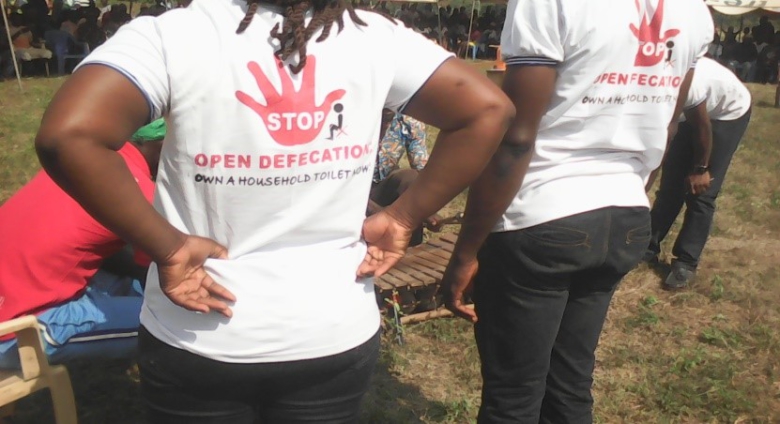
The Environmental Health and Sanitation Unit (EHSU) of the Tamale Metropolitan Assembly (TaMA) has announced that it is considering to re-institute its spot fines regime to sanction persons caught defecating in the open in the metropolis.
As part of the spot fines regime, the EHSU of TaMA would deploy security personnel to patrol targeted open defecation areas in the metropolis to arrest people in the act and charge them to pay the fines before being set free.
Environmental Health Officer at the Assembly, Madam Sumayatu Alhassan said the Unit is abreast with such areas hence eradicating such issues would not be difficult.
“We know the open defecation areas, and we know the time they go to defecate at these places. So, we will be patrolling these areas and arrest them to pay the fines to deter others from the act,” she said.
According to her, the Sanitation Sub-committee of TaMA would hold its usual quarterly meeting for this quarter to consider the issue and set the spot fines to be collected from culprits as part of the exercise.
She noted that the Unit had to resort to this strategy to stop open defecation in the metropolis because the prisons could not contain the numbers of people engaging in open defecation in the area if they had to be prosecuted and imprisoned.
Checks by GNA reveal that EHSU of Tamale Metropolitan Assembly implemented the spot fine regime in 2019 and collected ₵100.00 fine from each person caught in the act.
Statistics show that under an ongoing Urban Sanitation project, out of about 60,000 households in the metropolis, 16,401 have toilets.
It is common to see people park cars, tricycles and motorbikes in known areas such as the Tamale High Court area, and opposite the regional National Health Insurance Authority office to engage in open defecation.
Madam Alhassan said besides media campaigns, the EHSU has deployed 32 officers to the field to educate residents on the dangers of open defecation and the need to construct household latrines to stay free from water-borne diseases.
She said open defecation in the metropolis is a behavioural issue, which must be tackled from all angles hence the move to reinstitute the spot fine.
Also, she highlighted some measures instituted to support residents to construct household toilets, which included the institution of basic sanitation fund and social fund with support from development partners such as the United Nations Children’s Fund to give soft loans to poor households to construct their latrines and pay back in instalments.
Latest Stories
-
T-bills auction: Government exceeds target marginally; yield on 91-day bill remains unchanged
3 hours -
GPL 2026/27: 10-man Aduana hand Kotoko defeat in Kumasi
3 hours -
GPL 2026/27: Medeama ease past Basake Holy Stars
4 hours -
Appiah Adomako writes: Why DVLA must stop treating every expired licence holder as delinquent
4 hours -
Localization must transfer decision-making power, not just project responsibilities
4 hours -
Modernising Ghana’s traditional markets through the 24-Hour Economy markets initiative
4 hours -
New economy will boost local production and create jobs – Finance Minister
4 hours -
Real-Time VAT on cross-border digital services – not a new tax and does not violate double taxation principle
5 hours -
Digitalisation, AI key to Ghana’s tourism transformation – GHATOF
5 hours -
Stronger GTA-private sector partnership needed to grow tourism – GHATOF
5 hours -
Amazon eyes Ghana for broadband expansion after talks with Mahama
6 hours -
National Investment Quiz 2026: Six schools qualify for quarter-finals
6 hours -
‘Do not let Russia pay for its madness with lives of your people’ – Zelensky to Ghana, 46 other countries
6 hours -
6,079 promotion cases fully processed and paid – CAGD says amid nationwide teachers’ strike
7 hours -
Teacher unions to meet government Monday over nationwide strike
7 hours