

Audio By Carbonatix
A former Nigerian oil minister has been cleared of taking bribes from wealthy oil executives in the form of luxury home stays and lavish spending sprees in the UK.
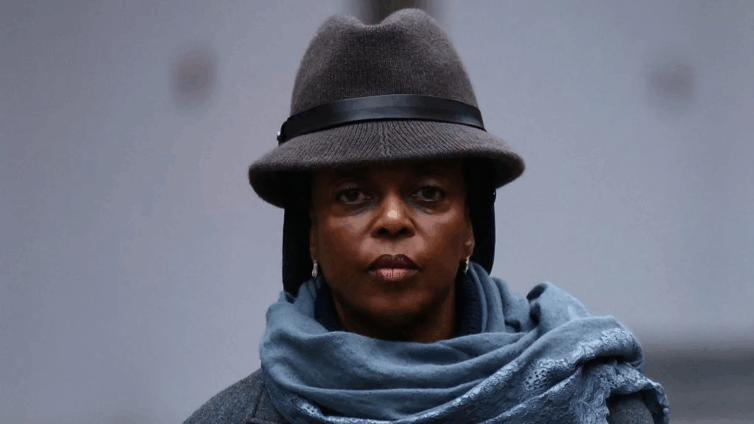
Diezani Alison-Madueke, 65, was found not guilty after a trial at London's Southwark Crown Court of five counts of accepting bribes and a charge of conspiracy to commit bribery.
Alison-Madueke was Nigeria's oil minister between 2010 and 2015 and the first female president of the oil exporters group Opec.
The verdict is a blow for the UK's National Crime Agency (NCA), which had been investigating one of Africa's most prominent political figures for 13 years.
From the start of the trial in January, defence lawyers questioned the fairness of the prosecution's case, suggesting vital documents showing Alison-Madueke's innocence had gone missing in Nigeria.
They also said the long delay in bringing the case to court was unjust and a sign of Britain's "broken criminal justice system".
Also cleared by the jury was Alison-Madueke's older brother, Doye Agama, 69, an archbishop at a Pentecostal church in Manchester, who was acquitted of conspiracy to commit bribery.
Oil industry executive Olatimbo Ayinde, 54, was found not guilty of bribery and bribery of a foreign public official.
She had faced prosecution despite being an informant in an anti-corruption probe by the Nigerian authorities.
'Madam due process'
Alison-Madueke portrayed herself in court as a role model for women, a tireless fighter against corruption, and someone so much of a stickler for the rules that she was nicknamed "Madam due process".
She became the first female member of the Nigerian board of oil and gas giant Shell in 2006, and four years later was appointed oil minister, the country's second-most senior politician. She became president of OPEC in 2014.
"In a very patriarchal society, to have a woman sitting at the helm was a major no-no," she told the court, suggesting this had made her a target for unnamed male opponents.
Prosecutor Alexandra Healy KC said the former minister improperly allowed powerful men with lucrative government contracts in the oil business to bankroll her extravagant lifestyle.
Six of them were named on the indictment, although none were charged.
But the prosecution failed to provide evidence that she awarded contracts to any of the oil tycoons named because of bribes.
"At no time did I ask, take, or seek a bribe or bribes of any sort," Alison-Madueke told the court, saying many of the luxury items purchased were not for her, and that she had been with the oil men to offer advice on interior design in their own properties.
Alison-Madueke told the court that Nigerian ministers were not allowed to hold foreign bank accounts while serving overseas, and that her department's office in London was in such disarray that she relied on wealthy businessmen to fund her living expenses.
She said they were always reimbursed in Nigeria, and evidence proving this had been seized from her home in Abuja, but never produced by the authorities there.
Former Nigerian president Goodluck Jonathan, who had appointed Alison-Madueke, did not appear as a witness. But he provided a statement in which he said that third parties would often pay for transport, accommodation, and other expenses for ministers on official overseas business.
Questions raised by the case

There were a number of unanswered questions that seem to have fatally undermined the prosecution.
Defence barrister Jonathan Laidlaw KC questioned why the Nigerian government had not sought to prosecute Alison-Madueke.
He said Alison-Madueke had "effectively been kept prisoner in this country for almost 11 years… unable to work, unable to travel" while the NCA had "done nothing to bring about the extradition" of the six oil men said to have paid bribes to her.
The jury was not told why they had not been charged.
The defence claimed the investigation had been compromised from the start because the NCA was denied access to the search of Alison-Madueke's Abuja home in 2015.
They relied on work done on their behalf by Nigeria's Economic and Financial Crimes Commission (EFCC).
But while the prosecution told the jury to trust how the EFCC had gathered evidence against Alison-Madueke, at the same time it advised them to disregard the commission's evidence in relation to a co-defendant in the trial.
The defence case of Olatimbo Ayinde, the oil industry executive who was also found not guilty by the jury, was that she had been working as an informant for the Nigerian authorities to expose corruption.
Ayinde, a Nigerian businesswoman with British citizenship, said she had been encouraged by the West African country's security services to "play along" with those in government who were asking her for bribes.
An EFCC investigator, who had travelled from Nigeria to London, told the court that Ayinde had given "vital information that assisted the investigation".
"Miss Ayinde's plan was to help law enforcement, and now she's there in the dock," said her barrister, Jonathan Lennon KC, who had sought unsuccessfully to have his client's case thrown out of court.
In a statement after the verdict, Alison-Madueke said her "nightmare is over".
She said: "For 11 long, gruelling years this case has hung over my head and has tormented my family and me. But today, the past decade of relentless and unjust vilification, condemnation and scrutiny has finally come to an end."
Latest Stories
-
‘I don’t hire coaches, and I don’t fire coaches’ – Kofi Adams
58 minutes -
NPP sets up 31 voting centres to speed up national executive elections
1 hour -
Demolition begins at La Pleasure Beach amid heavy security presence
2 hours -
Senyocue: Highlife will dominate global music in the next 20 years
2 hours -
Innovare Limited congratulates Ahantaman Community Bank PLC on ISO/IEC 27001:2022 certification urges others to follow suit
2 hours -
Today’s front pages: Friday, October 2, 2026
2 hours -
GPL 2026/27: Opoku Agyemang strike sends Kotoko third after Karela win
3 hours -
Government ‘cannot dissolve’ GFA – Sports Minister Kofi Adams
3 hours -
“Every genre we create doesn’t have to be ‘Afro’ something” – M.anifest
4 hours -
GMTF marks first anniversary with lifesaving equipment for 9 more hospitals
4 hours -
NAIMOS seizes 10 excavators in raid on illegal mining sites blocking River Pra’s flow
4 hours -
Pump prices may stay unchanged as government holds TOR, Sentuo prices
4 hours -
Akra Reads! 2026: Ladé Wosornu poetry contest expands to JHS
4 hours -
K9 dog sniffs out 72lbs of prohibited Ghanaian food items at JFK
4 hours -
If family planning is our choice, why isn’t it in our budget?
4 hours