


Audio By Carbonatix
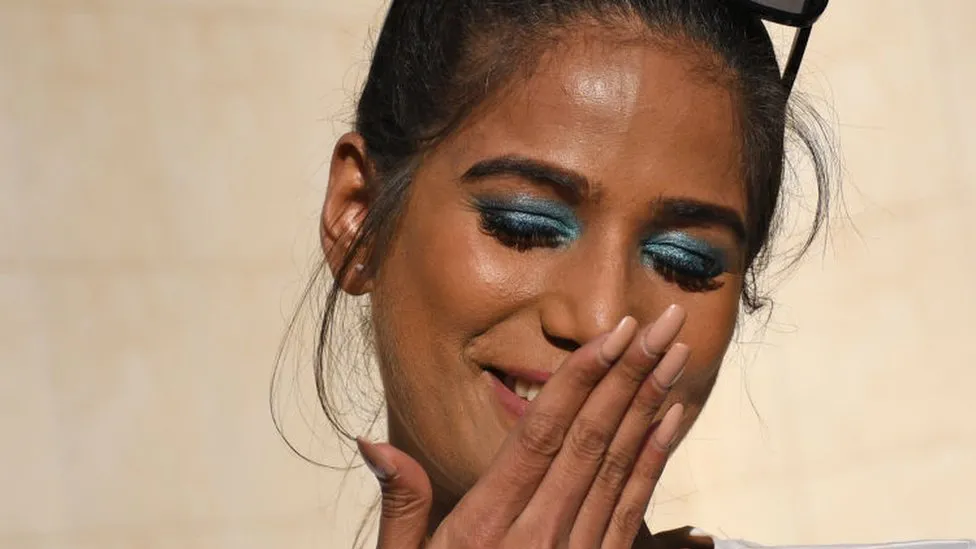
A social media post claiming that an Indian actress had died due to cervical cancer and a subsequent video announcing that she was alive has sparked a furious debate on the ethical conundrums surrounding online publicity campaigns.
On Friday, Poonam Pandey's official Instagram account released a statement saying that the 32-year-old actress had "bravely fought the disease" and died.
Many trusted the post; news outlets reported the news of her death within minutes and social media was full of tributes for the actress.
Pandey has acted in a few films but she became an online sensation due to her controversial posts and publicity campaigns. In 2011, the actress promised to strip naked if the Indian cricket team won the World Cup, though she didn't stick to it.
Just a day after her "death", Pandey posted a video saying that she had "faked her demise" and that the Instagram post for her 1.3 million followers was part of a social media campaign to create awareness about cervical cancer.
"Suddenly we all are talking about cervical cancer, aren't we?" Ms Pandey says in the video, adding that she was "proud" about what the news of her death "was able to achieve".
Cervical cancer is often called a "silent killer" because it shows no noticeable symptoms in its early stages. After breast cancer, it is the second-most common cancer in women in India, with over 77,000 dying from the disease every year.
But it is also one of the most preventable cancers, as the HPV (human papilloma virus) vaccine protects against high-risk cancer-causing strains of the virus. But women are advised to continue regular cervical cancer screenings as the vaccine doesn't protect against all cancer-causing HPV strains.
On Thursday, a day before Pandey faked her death, India's Finance Minister Nirmala Sitharaman announced that the government was taking steps to vaccinate girls between nine to 14 years of age, though she didn't mention specific details about the campaign.
The timing of Pandey's post led many social media users to speculate that it was part of the government's strategy to publicise the HPV vaccine but neither the government nor Pandey have drawn a link between the two.
Over the weekend, her post and video generated a debate around the method used to draw attention to a serious issue like cervical cancer.
While a few people praised the social media campaign for "shocking" people enough to make them care about the disease, many criticised it for being insensitive towards those battling cancer or people had lost family members to the disease.
"Death is not a joke," one user wrote on X (formerly Twitter), while another, who had lost his father to cancer when he was a child, said that he found the campaign distressing as it brought back difficult memories.
Some also criticised the media for reporting on Pandey's death without verifying the news.
"Poonam Pandey's death was followed by the death of the Indian media. No verifications, no fact checks... None of it mattered. She has come back to life today. Can't say the same about our journalism," wrote one user on X.
However, some journalists defended their decision by saying that it had been shared by the actor's "official Instagram account".
On Saturday, Schbang - the social media agency responsible for creating the campaign - apologised to those who were "triggered" by the campaign.
"Our actions were driven by a singular mission - to elevate awareness about cervical cancer," the agency said in a statement while also sharing statics related to the prevalence of the disease in India.
It also said that Pandey's mother had battled cancer and that she "understands the importance of prevention and the criticality of awareness, especially when there's a vaccine available".
But the backlash over the campaign hasn't died down yet.
It has made people question whether it's all right for effectiveness to trump ethics when it comes to creating "viral" campaigns such as this one. Some have also asked that who's responsible for setting these standards - is it advertisers, the media or viewers?
Latest Stories
-
GTA sensitises taxi drivers in ‘Know Ghana’ tourism campaign
1 hour -
Archbishop Agyinasare calls for responsible speech amid growing social media abuse
1 hour -
‘It will be inexcusable for gov’t not to honour payment of teachers’ arrears by 30th October’ – Haruna Iddrisu
1 hour -
Forbes’ World’s Best Employers 2026: No Ghanaian firm ranked among 900 companies
1 hour -
Electronic processing of teachers’ data: ‘The decision is the Controller’s’ – GES boss
1 hour -
Teachers’ Strike: Haruna Iddrisu questions paper-based processing of promoted teachers’ data
2 hours -
Savannah Region: Kunfusi bridge collapses again, leaving nearly 4,000 residents cut off
2 hours -
Teachers’ strike: GES targets Monday deadline to submit promotion data to Controller
2 hours -
Inflation to average 11.3% in 2027 – Fitch Solutions
2 hours -
‘I didn’t campaign for NDC to come and do this nonsense’ – Kpebu on EOCO’s conduct
2 hours -
Fitch Solutions maintains policy rate forecast of 14% by December 2026
2 hours -
Diaspora Nasara Caucus congratulates Mohammed Ali Suraj, new NPP executives
4 hours -
Dr Antwi-Boasiako’s cybersecurity book showcased at UN crime prevention congress
4 hours -
We will empower the grassroots and protect every vote – NPP’s 1st Vice Chair Kojo Bamba
4 hours -
I do not see myself as better than anyone – NPP’s 1st Vice Chair Kojo Bamba
5 hours