

Audio By Carbonatix
The holy month of Ramadan is observed by practising Muslims all around the world as it holds profound significance for them. It’s the time of the year in the Arabic calendar for spiritual reflection, self-discipline, and increased devotion to prayer and charitable acts.
Surat Baqarah, 2:183 of the Holy Quran says “Oh, you who believe! Fasting is prescribed to you as it was prescribed to those before you, [so] that you may learn piety and righteousness.”
Just like the saying, “The woman is the caretaker of the home”, many working Muslim women during this period are faced with unique challenges as they strive to balance their professional commitments with religious obligations. In this article, we delve into the experiences of working Muslim women during Ramadan while honouring the spiritual significance of this sacred month.
In Islam, fasting is the practice of abstaining, usually from food, drink, sexual activity, and anything which substitutes food and drink. During the holy month of Ramadan, sawm (fasting) is observed between dawn and sunset when the adhan of the Maghrib prayer is sounded.
For many Muslim women, juggling the demands of a career alongside the rituals of Ramadan can be daunting. From fasting during daylight hours to attending nightly prayers at the mosque, the obligations of Ramadan require careful planning and time management.
Additionally, cultural expectations and familial responsibilities may add further layers of complexity to their daily routines. It could be noted that the energy level of an individual during a fasting period cannot be compared to other times.
Fasting from dawn to sunset can be physically demanding, especially for those engaged in mentally or physically taxing work. In Ghana, the average work duration is from 9 am to 5 pm, which means that the woman spends approximately 64% of her time at the workplace.
Many working women find themselves grappling with fatigue and decreased productivity during this period. Cultural expectations surrounding Ramadan, such as hosting or attending Iftar gatherings, can create additional time constraints for working women.
Unfortunately, some working Muslim women may face discrimination or lack of understanding from colleagues or employers regarding their religious practices during Ramadan. Mrs. Kahadijah Abubakar, a pharmacist sharing her first Ramadan experience as a new wife mentioned that she has had to take breaks from work to make time for home duties.
“Juggling with fasting, prayers, and taking care of the house is stressful in this Ramadan season, I have to pause work or take some days off from work just to work at home.
“I wake up as early as 3 am to cook and prepare for Ramadan, I don’t get enough rest during this period. My partner’s time is very limited at home, he spends most of his time at work so I have to do all the chores at home but he sometimes helps during the weekend,” Mrs Khadijah Abubakar noted.
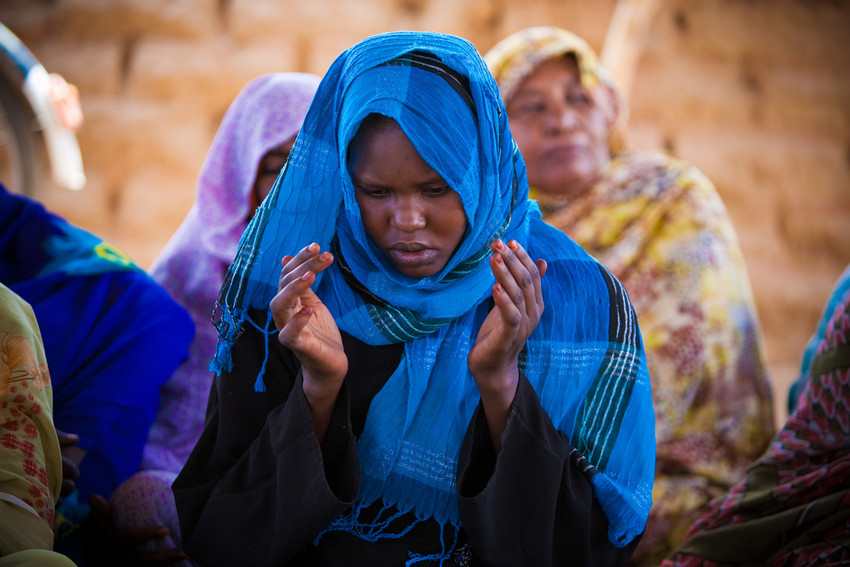
Mother of two and business owner, Mrs Zakeeya Garba also highlighted some struggles she faced during this time.
“It’s not that easy but I try my best. I still work during Ramadan just that I open my shop late and close earlier than usual. After Suhoor, I lay down a bit and wake up at 7: 00 am, bath the kids send the elder one to school before I go to work (on a normal day I wake up at 5:30). The only rest I get is night rest that is from 10 pm – 3 am, then I have to wake up again and continue the cycle. My husband takes care of the kids while I’m in the kitchen cooking until I finish and then I continue” Mrs Zakeeya Garba noted.
Despite these challenges, many working Muslim women find ways to effectively manage their professional responsibilities while fully participating in the spiritual aspects of Ramadan.
The founder of the Muslim Network, Sheikh Yahaya Tuntunba, addressed some of these concerns from the Quranic perspective.
He highlighted the obligations of a woman during Ramadan adding that Islam encourages a man to help his wife with her house chores.
“Primarily, the setup of the majority of matrimonial homes demands the supervision of the woman over house chores, probably because they are good at acquiring such skills right from their childhood. However, Islam encourages a man to help his wife with her house chores. Helping your wife with household chores is a neglected Sunnah (teachings of the prophet). Any man who sees it beneath him or is too arrogant to help his wife around the house is acting against the Sunnah and is guilty of chauvinistic behaviour. In essence, it is the teaching of Islam for a man to help his wife with her chores,” he said.
“The Messenger of Allah, peace and blessings be upon him, said, “Whoever helps break the fast of a fasting person, he will have the same reward as him without decreasing anything from the reward of the fasting person.” this reward applies also to women who do the role of helping their families to break the fast.”
Sheikh Yahaya also advises Muslim women to find time for Ibadah (worship) even amid these challenges as it grows once faith in Allah.
“A woman can effectively achieve a just equilibrium in her Ibadah (worship) and chores by first making a sincere intention that whatever service she renders to her husband and kids is an act of worship to her Creator from which she seeks reward and blessings. She can also keep her tongue busy with simple Azkaar( supplications and praises of Allah) such as Subhanallah, Alhamdulillah, and Allahu Akbar. Above all, she can prepare a comfortable prayer corner in her room or house, where she will observe her prayers on time. She will sit in it and recite her Quran intermittently whilst waiting for a task in the kitchen. And so on…”.
Despite the demands of work and fasting, making time for spiritual reflection and prayer is essential for connecting with the deeper meaning of Ramadan. Incorporating moments of mindfulness or gratitude into daily routines can nurture spiritual growth.
Ramadan serves as a profound opportunity for spiritual renewal and self-improvement for Muslims around the world. For working Muslim women, navigating the demands of both career and faith during this holy month requires resilience, creativity, and support from their communities.
By employing effective strategies and fostering understanding in the workplace, working Muslim women can successfully honour their religious obligations while thriving in their professional endeavours.
As society continues to embrace diversity and inclusion, workplaces must recognize and accommodate the diverse religious practices of their employees, ensuring that all individuals can fully participate in the richness of their faith traditions, including Ramadan.
*****
The writer, Faridatu Seidu, is a young Muslim lady doing her National Service with Adomonline.com, a subsidiary of media conglomerate, Multimedia Group Limited.
Latest Stories
-
Fire destroys belongings in Akweteyman apartment
9 minutes -
Baffour Awuah to turn himself in to EOCO today – JoyNews sources
15 minutes -
Government identifies payment discrepancy holding up teachers’ strike resolution
33 minutes -
BoG signals no FX intermediation for October as GoldBod plans $1bn support for banks
36 minutes -
When share ownership becomes personal: The African mindset of the Dangote IPO
46 minutes -
Why MFWA Legal Fund matters to Ghana’s democracy
46 minutes -
Fuel prices to rise from October 1; diesel could hit GH¢19.60 – COMAC
47 minutes -
Parliament must investigate how 3.9 tonnes of cocaine left Ghana undetected – Samuel Jinapor
48 minutes -
Government pledges to pay striking teachers as payment dispute is resolved
1 hour -
Government cannot investigate drug exports under its own watch – Abu Jinapor
1 hour -
Government extends GH¢2 diesel subsidy for two more months
1 hour -
GTEC flags over 100 tertiary institutions as unrecognised
1 hour -
Agric Committee chair commends NAFCO for turnaround from GH¢20m debt to GH¢96m profit
1 hour -
NPP: Judicial office requires judges to surrender some personal freedoms
1 hour -
Senyo Hosi: Ghana missed its chance to end galamsey under Akufo-Addo
1 hour