

Audio By Carbonatix
The Food and Drugs Authority (FDA) has emphasised its resolve to support vulnerable and marginalised groups in society through a partnership with key institutions.
The Authority is as well determined to empower and create alternative livelihood and entrepreneurial skills for young people with the creation of industry growth-enabling provisions for 'Kayayei' (head porters), unemployed youths and young entrepreneurs.
Gubkatimali, a Tamale-based NGO and the Ghana Kayayei Association have estimated the population of Kayayei traders in Accra and Kumasi to be over 160,000.
This group of often marginalized women and young girls are among the poorest of urban dwellers in Accra, Kumasi with estimated average daily earnings ranging from $1.20 to $2.20 and $3.20 to $5.20 on a good day.
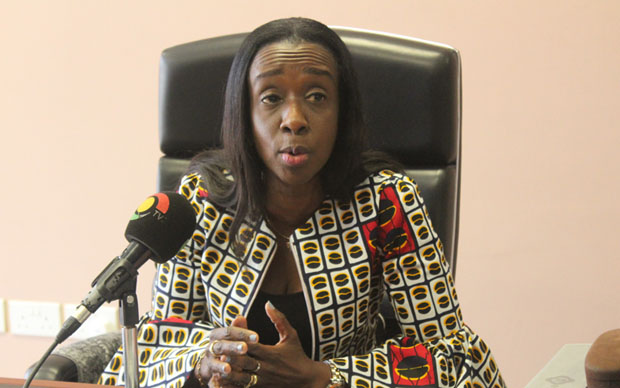
Collaborating with the Purim African Youth Development Platform (PAYDP) the United Nations Population Fund (UNFPA) and the Canada government in this year’s Kayayei Business and Leadership Fair in Accra, CEO of the FDA, Delese Mimi Darko, said nine out of 10 local industries under the purview of the FDA are Micro, Small, and Medium Enterprises (MSMEs) which are operated by women and young entrepreneurs.
A statement read by Olivia Boateng, Head of Tobacco and Substance Abuse Department of the FDA on behalf of the CEO, noted that there is strong potential growth for such MSMEs in the food, cosmetics and household chemical sector across the country, adding, “a key demographic group within this sphere of industrial opportunity is our head porters (Kayayei) who usually operates in the market places”.
The Fair, was to empower the Kayayei, who had gained skillful training to showcase their brand and enlighten other vulnerable colleagues on the need to avail themselves for training opportunities in livelihood development skills to tackle the menace of early child marriage, teenage pregnancy etc.
While Mrs Delese Darko underscored the significance of Kayayei within the economic structure of Ghana, she expressed the FDA’s readiness to facilitate market access and growth of young Kayayei who would venture into entrepreneurship.
“The FDA finds meaning in initiatives such as the integrated model of the UNFPA and PAYDP towards the livelihood empowerment of this vibrant sector, and categorises this sector of Ghanaian women within the framework of MSMEs” she explained.
The Authority, however acknowledged some Kayayei who, through their zeal and passion for growth, have established their own businesses.
Mrs Darko recognized the growth of Amina Shea Butter within the local cosmetic industry as one such example. Amina repackages shea butter harvested from the Northern Region. Her active growth and enthusiasm to meet the competitive demands of the market has birthed all sorts of innovative ideas catapulting in her business success.
Aba’s Palm Oil, which is showing presence on some local supermarkets according to Mrs Darko, has evolved through various support provisions of the FDA.
These supports accordingly include, dedicated client service units to assist customers to complete application submissions and the Industrial Support Department of the FDA, offering tailor made capacity building to all levels of industry.
Other key interventions and supports also include the recently launched Progressive Licensing Scheme (PLS) certification initiative for SMEs, institutional collaboration with the Ghana Enterprises Agency (formally NBSSI), which seeks to partially ease the financial strain of SMEs.
In this collaboration, the FDA and the GEA have together absorbed part of the licensing fee of 500 member facilities amounting to GH¢2.5 million.
Other benefits in this collaboration offers businesses appropriate level training in Good Manufacturing Practice, food hygiene practices and good storage practices.
Instructively, there is an increase in MSMEs whose products have received approvals from the Authority in recent years.
Over 250 MSMEs across several manufacturing spectra have benefitted immensely from the technical support offered by the FDA in the regularization of their work operations and the corresponding business growth.
Accordingly, Reverend Aku Xornam Kevi, Executive Director of PAYDP has said the vulnerabilities of girls can be improved and empowered through the change of economic status and provision of alternative livelihood skills when key institutions like the FDA, consistently takes interest in partnerships that build the capacity of underprivileged groups in society.
Latest Stories
-
NDC Deputy National Organizer Aspirant Hamza Umar targets grassroots mobilisation
26 minutes -
Villarreal fight back to beat Napoli and end losing run
2 hours -
Tresoldi nets hat-trick as Club Brugge win Inter thriller
3 hours -
PSG’s Luis Enrique hopes Man City avoid sanctions
3 hours -
Lisandro Martinez issues scathing attack on Man Utd board – has he made things worse?
3 hours -
Saka responds to Arteta’s challenge with ‘huge impact’
3 hours -
Viking hold Bayern in thriller as Kane breaks Messi record
3 hours -
Gordon scores as Barcelona beats Galatasaray
3 hours -
Bumble bought for $1.3bn in ‘bet on the future of humanity’
4 hours -
Imagination Africa, Mentors Chess Academy to host second African Genius Chess Championship at Ghud Park
4 hours -
Paradigm Initiative steps up calls over digital rights, internet freedom in Africa
4 hours -
Saudi man charged with planting ‘sophisticated’ recording device in OpenAI office
4 hours -
Ghana wins UN Human Rights Council seat as calls grow for action against atrocities
4 hours -
Royal Mail losing 400 postal workers a week, says union
4 hours -
Techiman South MP ends decades of water struggle in Asutia
4 hours